
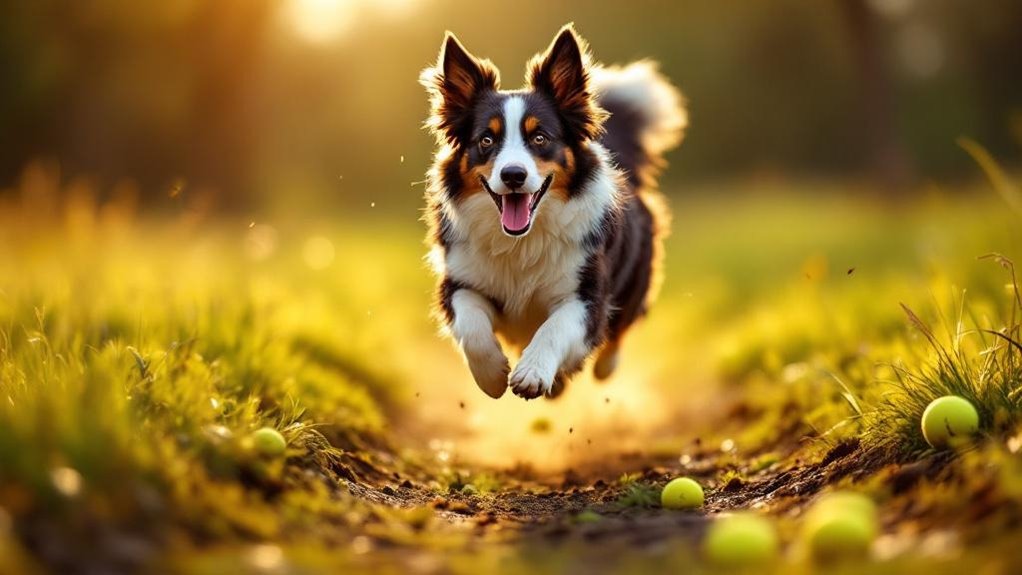
You watch your Border Collie pace the fence at dusk, still sharp-eyed after a long walk. That’s the clue: this breed often needs more than simple exercise, but more isn’t always better. You need the right mix of movement, thinking work, and rest. Push too hard and you can create soreness, stress, or a dog that gets more wired instead of calm. The hard part is knowing where that line sits.
- Key Takeaways
- How Much Exercise Does a Border Collie Need?
- Why Border Collie Exercise Needs Are Different
- Why More Exercise Can Backfire
- Border Collie Exercise by Life Stage
- How Much Exercise Does a Border Collie Puppy Need?
- How Much Exercise Does an Adult Border Collie Need?
- How Much Exercise Does a Senior Border Collie Need?
- Why Border Collies Need More Than Walks
- Physical vs Mental Exercise
- Why Off-Lead Border Collie Exercise Feels Different
- How to Balance Intensity and Duration
- Best Physical Exercise for Border Collies
- Best Mental Enrichment for Border Collies
- Signs Your Border Collie Needs More Exercise
- Signs Your Border Collie Is Getting Too Much Exercise
- Why Your Border Collie Gets Wired After Exercise
- Why Some Border Collies Can’t Switch Off
- Common Border Collie Exercise Mistakes
- How to Build and Track the Right Routine
- Frequently Asked Questions
- Conclusion
Key Takeaways
- Most adult Border Collies need 90–120 minutes daily, but quality matters more than simply adding longer or harder exercise.
- Too much intense exercise can build stamina, increase arousal, and worsen settling, recall, or reactive behavior.
- Use short hard sessions, around 20–30 minutes, balanced with sniff walks, training, and recovery breaks.
- Cut back if your dog seems stiff, sore, overly keyed up, reluctant, or cannot settle normally afterward.
- Puppies, adolescents, and seniors need less impact and slower progression; avoid sudden increases, repetitive running, and excessive jumping.
How Much Exercise Does a Border Collie Need?
Most Border Collies need at least 90 minutes of exercise each day, and many do best with 90 to 120 minutes or more. For most adults, that practical minimum helps meet a Border Collie need for hard movement and steady routine.
Quality matters as much as time. You should mix fast physical activity with mental stimulation every day. Try off-lead running, fetch, swimming, training drills, scent games, and puzzle toys. Physical tiredness alone often won’t be enough.
Puppies need much less. Keep sessions short and gentle so you protect growing joints. Many owners use five minutes per month of age as a starting guide.
Watch your dog and adjust. Keep notes on energy, sleep, appetite, stiffness, and ability to settle. Increase work slowly, not all at once. Border Collies also need mental stimulation every day because puzzle work can tire them out faster than a long walk.
Why Border Collie Exercise Needs Are Different
Your Border Collie needs more exercise than many breeds because it was bred to work for hours at a steady pace.
You can’t meet that need with short walks alone, and more running can also build even more stamina if you don’t teach calm habits.
That’s why you need to pair hard exercise with training and other mental work, not use running as the only outlet.
Without enough mental stimulation, bored Border Collies can act out by becoming destructive or finding their own jobs to do.
Working-Bred Endurance
Built for long days of stock work, Border Collies need more exercise than many other dogs. Your Border Collie needs often reach 90 to 120+ minutes of vigorous daily activity. That working-bred endurance also means fitness builds fast, so regular hard running can raise what your dog seems to need over time.
| Trait | What you may notice | What to do |
|---|---|---|
| High stamina | Repeated sprints, little fatigue | Track daily totals |
| Rising fitness | Needs more to feel tired | Increase slowly |
| Puppy risk | Keeps going past safe limits | Limit intensity |
Early socialization and calm routine help puppies learn to settle after activity, which is important for avoiding overdoing exercise.
Watch for restlessness, trouble settling, or clumsy movement. Those signs tell you effort and recovery are out of balance. Adults may handle long sessions well. Puppies can’t, even when they look enthusiastic.
Stimulation Beyond Running
Even if your Border Collie runs hard every day, running alone won’t meet their needs. You also need to give them mental work, social contact, and time to solve problems.
Long runs can build fitness so fast that your dog starts needing even more exercise. That can raise arousal instead of settling them. Brain games do more. Try scent games, trick training, puzzle feeders, and toy-name practice. These tasks tire the mind and help reduce reactive or obsessive habits. Indoor enrichment can also help keep your Border Collie engaged on low-energy days.
Choice matters too. Off-lead play, fetch, and agility exercises often work better than repetitive lead walks. They let your dog change speed, think, and work toward a goal. Keep sessions short and varied. Add new cues and small challenges. Watch behavior after each mix of training and play daily.
Why More Exercise Can Backfire
While it seems like more exercise should solve a Border Collie’s energy, too much hard activity can backfire and make life harder for both of you. With Border Collie exercise, more miles can build more stamina, not calm. Then you must do even more just to get the same result.
Too much intense work can also keep your dog keyed up. If every outing means chasing, sprinting, or nonstop arousal, you may teach reactivity, poor recall, and weak settling at home. Some dogs become adrenaline seekers and rehearse unwanted herding habits.
That’s why balance matters. Use rest breaks, water, shade, and calmer sessions. Add mental exercise and varied tasks so you build fitness without raising future exercise needs. For growing pups, avoid hard repetitive running and keep play low impact. Brain games can also satisfy their need for mental engagement without piling on more physical intensity.
Border Collie Exercise by Life Stage
Because a Border Collie’s body and brain change a lot with age, the right exercise plan should change too. You should match work to development, not just energy.
- With a Border Collie puppy, keep activity gentle and split it into short sessions.
- In adolescence, build toward adult work slowly and vary movement with training games.
- For an adult Border Collie, plan about 90 to 120 minutes of purposeful daily activity.
- In mature years, cut intensity and use lower-impact options like swimming, easy walks, and scent work.
- At every stage, track behavior, stamina, and recovery, then adjust gradually.
- Include impulse training and stop cues to help prevent chasing and nipping.
That approach helps you avoid overload and boredom.
Keep an exercise diary. Watch for excess arousal, destructive habits, stiffness, or reluctance to keep going. If your dog slows down suddenly, ask your vet.
How Much Exercise Does a Border Collie Puppy Need?
Puppies need a different plan than older Border Collies. With Border Collie puppies, use short, low-impact exercise sessions each day. A common guide is five minutes per month of age, so a four-month pup might do 20 minutes per session. Treat that as a starting point, not a fixed rule.
Your puppy’s bones and joints are still growing. Choose play, short leash walks, sniffing time, and controlled fetch instead of long runs or lots of jumping. Keep intensity in mind too. A brisk walk can tire your pup faster than easy exploring.
Many Border Collie puppies need more than the basic rule suggests. Increase activity slowly. Watch for stiffness, limping, extra tiredness, or wild behavior. Add training, puzzle toys, and scent games for mental work too. Short sessions and positive reinforcement can help keep young Border Collies engaged without overdoing it.
How Much Exercise Does an Adult Border Collie Need?
Most adult Border Collies need far more exercise than a casual daily walk, and many do best with 90 to 120 minutes of vigorous activity each day. Some adults thrive on 2 to 3 hours when you mix running, play, and thinking tasks.
- Aim for 60 minutes only as a bare minimum.
- Mix sprinting, fetch, agility, and off-lead running.
- Add training, scent games, and food puzzles.
- Watch sleep, appetite, recovery, and arousal levels.
- Build back slowly after rest or injury.
A Border Collie often won’t feel settled from physical work alone. To exercise a Border Collie well, you need both body and brain work. Calm training with four-paws-on-the-floor rewards can also help reduce jumping and improve manners.
Give water and shade breaks. Avoid endless repetitive drills that only wind your dog up. Adjust the plan to your individual dog’s needs daily.
How Much Exercise Does a Senior Border Collie Need?
As your Border Collie gets older, you’ll usually need to cut back from adult exercise levels and aim for about 30 to 60 minutes a day, based on your dog’s health, comfort, and energy.
Most senior Border Collies do best with reduced exercise split into three to five short sessions. Choose leash walks, gentle swimming, or easy low-impact play. Skip hard running and jumping if your dog has arthritis, hip dysplasia, heart issues, or sight and hearing loss.
Watch your dog closely. If you see lagging, limping, heavy panting, stiffness, or reluctance to move, cut back right away.
Keep vet visits regular and adjust the plan to match any diagnosed condition. Make changes slowly, not all at once, so your dog stays active without putting too much strain on aging joints and muscles.
A Border Collie’s high exercise needs can still make even senior dogs benefit from consistent, gentle activity that keeps them engaged without overdoing it.
Why Border Collies Need More Than Walks
Border Collies usually need more than a daily walk to feel settled. You can’t meet most dogs’ needs with leash time alone, even if you walk far. This breed was built to run, focus, and work for long stretches.
- Off-lead running gives a better outlet.
- Fetch lets your dog chase and return.
- Agility or herding-style games reduce frustration.
- Training and scent work add mental stimulation.
- Puzzle toys help stop self-made bad habits.
For Border Collie Owners, the key is matching activity to your dog’s response. A walk at your pace may tire a pup or fit adult, but it often won’t satisfy them. Track exercise, recovery, and behavior in a simple diary. Then adjust time, intensity, and type as needed. That keeps exercise useful and balanced.
Physical vs Mental Exercise
Even if your Border Collie gets plenty of running time, physical exercise and mental work don’t do the same job. Your dog needs both, physically and mentally, each day.
Most adults still need about 60 to 120 minutes of real movement, and mental stimulation should come on top of that.
Training, scent games, and puzzle toys can tire your dog, but they can’t fully replace hard exercise. Too much pure action can backfire. If you only add miles or fetch, you may build fitness and arousal faster than calm habits.
Watch how your dog responds. Keep notes on exercise, behavior, and settling time. If your Border Collie stays keyed up, reacts more, or invents trouble, don’t just add more movement. Shift some effort toward training, enrichment, and calm routines instead.
Why Off-Lead Border Collie Exercise Feels Different
When you let your Border Collie move off lead, you give it room to run at full stride and use its natural gait. That freedom often burns more energy and eases frustration better than a longer walk on lead.
It also changes how hard your dog works, so you need to watch the balance between a good outlet and too much intensity.
Freedom Vs Lead Walking
Letting your Collie off lead changes the workout in a big way. Off-lead exercise feels harder because your dog can sprint, turn fast, and use a full stride, while lead walking keeps pace steady and movement limited.
- Off-lead running burns more energy per minute.
- Your Collie can chase scents, circle, and explore naturally.
- Lead walking asks for focus, control, and a measured gait.
- Puppies may find that steady pace tiring in a different way.
- Mix freedom with recall and direction work for balance.
That contrast matters. Off-lead play lets your dog choose bursts of speed, then pause and reset. You still need cooldowns, water, and shade. Watch breathing and body language. Short, well-managed sessions usually work better than long, intense ones for most young Border Collies.
Frustration And Energy Outlet
Because a Border Collie was bred to work hard for long stretches, off-lead exercise often feels more satisfying than a lead walk. With off-lead running, your dog can open up its stride, change direction, and use chase instincts in a natural way.
That freedom often burns energy better and cuts frustration faster than walking at your pace. A lead walk can still tire your dog, but it may not meet the need to run and choose movement.
When that outlet is missing, your dog may stay aroused, react more to bikes or joggers, or practice chasing and ignoring recall.
You can help by mixing off-lead runs with fetch, frisbee, and mental stimulation. Watch the intensity, offer water and shade, and aim for exercise that helps your dog settle indoors later.
How to Balance Intensity and Duration
While most adult Border Collies need about 60 to 120 or more minutes of activity each day, the goal isn’t to keep them going hard the whole time. You should mix high-intensity bursts with easy movement and mental stimulation, so your dog works without staying overamped.
- Use 20 to 30 minute hard sessions, not nonstop effort.
- Add sniff walks or wandering time for recovery and calm.
- For puppies, keep exercise short and build up slowly.
- Watch for heavy panting, lagging, stiffness, or irritability.
- Track duration, intensity, and behavior in a simple diary.
If your dog seems more wired over time, cut back on hard sessions. Add rest days or low-demand enrichment instead. That helps you avoid chronic over-exercise and keeps fitness from driving exercise needs higher. Controlled off-lead freedom can help too.
Best Physical Exercise for Border Collies
You should give your Border Collie plenty of off-lead running, because free movement lets your dog sprint, turn, and burn energy in a way lead walks can’t.
Mix that with balanced activity choices like fetch, frisbee, agility, or swimming so you build fitness without putting too much stress on the joints.
Keep the work hard but controlled, and aim for enough intensity and duration each day to match your dog’s age, stamina, and needs.
Off-Lead Running Benefits
Often, off-lead running is the best physical exercise for a Border Collie because it lets the dog move the way the breed was built to work. You give your dog a true outlet for high-intensity work and natural galloping strides.
- It burns energy faster than lead walking.
- Twenty to forty minutes can replace longer walks.
- It helps meet daily activity needs.
- Freedom of pace lowers stress and frustration.
- It can reduce chasing and other self-rewarding habits.
You still need safe conditions. Use secure spaces and reliable recall before off-lead running. Watch for bikes, cars, livestock, and joggers.
Bring water and use shade in warm weather. On hot days, cut sessions short. For puppies, avoid intense running until skeletal maturity, usually around 12 to 18 months.
Balanced Activity Choices
Because Border Collies have both speed and stamina, the best plan mixes hard exercise with easier movement and mental work.
For adults, aim to exercise every day with a mix of running, fetch, and calmer walks. Border Collies thrive when you add outlets that copy real work, like off lead running, frisbee, agility, flyball, or herding practice. These choices let your dog sprint, turn, and think.
You can also use swimming or short sprint and rest games for lower impact cross training. That helps seniors and growing dogs stay active without pounding their joints.
Don’t rely on physical effort alone. Add scent games, obedience, or fetch with simple problem solving. Puppies do better with several short sessions, and adults need conditioning built up over time to stay steady.
Intensity And Duration
Start with a clear target: most adult Border Collies do best with 60 to 120 or more minutes of vigorous exercise each day, and many land near 90 to 120 minutes.
- Watch intensity, not just time.
- Use hard physical exercise with care.
- Avoid repetitive impact for puppies.
- Check recovery later that day.
- Cut back if tomorrow looks stiff.
Fetch, agility, and fast off-lead running stress joints more than sniffy walks.
Puppies should wait for skeletal maturity, often 12 to 18 months, before frequent high-impact work.
More isn’t always better. If you suddenly double workload, you can build fitness fast and raise arousal too. That can increase future exercise needs.
After sessions, look for a normal gait, good appetite, playfulness, and normal sleep.
If your dog can’t settle or seems sore, reduce duration.
Best Mental Enrichment for Border Collies
Daily mental work matters as much as physical exercise for a Border Collie, so plan several short brain sessions of 5 to 15 minutes each day. Use trick training, scent work, and problem-solving games for steady mental stimulation.
Keep the tasks structured and build difficulty over time. Practice target work, short agility sequences, complex obedience, or scent discrimination instead of repeating the same easy drill.
Use interactive food puzzles and slow-feeding toys on rotation. They make meals last longer and give your dog a useful job.
Teach name-and-find toy games by starting with one toy, then adding another name each week. Add nose work too. For best results, pair thinking tasks with brief movement, like a short retrieve or quick sprint between scent hides. This tires the brain and body well.
Signs Your Border Collie Needs More Exercise
If your Border Collie still gets the zoomies, paces the house, or keeps begging for toys after a full active day, you likely need to add more exercise.
You may also see more attention-seeking, like barking at you, nudging you, or inventing games to stay busy.
At home, this often shows up as restlessness first, then poor settling later on.
Restless Home Behaviors
When a Border Collie doesn’t get enough physical and mental work, you’ll often see it at home first. These restless home behaviors show that Border Collies need more than a basic walk.
- pacing, circling, or failing to settle indoors
- staying keyed up for hours after exercise
- herding family members or nipping at heels
- chewing, digging, shredding cushions, or raiding bins
- barking at movement and overreacting to cars or joggers
You may also notice your dog ignores known cues or loses focus in training. That often points to boredom, not stubbornness.
If excitement spikes the moment you grab the leash or a toy, your routine may be too repetitive. In many cases, better exercise quality helps more than just adding time. Try off-lead running, structured fetch, and problem-solving games regularly.
Increased Attention Seeking
Although some Border Collies ask for attention out of habit, a steady rise in pawing, toy nudging, barking, and pushy play usually means your dog still has energy left to burn. This increased attention-seeking often shows that a normal walk didn’t meet your dog’s physical or mental needs.
You may also see spinning greetings, jumping, mouthing, or trouble settling within 30 to 60 minutes after activity. That’s another clue your Border Collie may need a lot more structured exercise and brain work.
Watch for repeated toy drops, pestering family members, and made-up games. In young dogs, these signs can last into ages three or four.
If your dog also ignores recall, bolts, or chases bikes and cars, don’t dismiss it. Add more daily activity, aiming near 90 to 120 minutes for many adults.
Signs Your Border Collie Is Getting Too Much Exercise
Because Border Collies will often keep going past their comfort point, you need to watch for clear signs that exercise has gone too far.
Look for these warning signs:
- Excessive panting that lasts beyond 20 to 30 minutes, plus drooling or stiff movement, can signal over-exertion.
- A reluctance to continue, lagging behind, long rest spells, or muscle tremors means you’ve pushed past current limits.
- Soreness, limping, next-day stiffness, or less interest in jumping or climbing can point to overuse.
- More restlessness indoors or sharper reactions to cars and bikes after hard sessions can mean too much intensity.
- Poor appetite, unusual quietness, or repeated vomiting or diarrhea after exercise needs less activity and a vet check.
If you notice any of these patterns, cut back and give your dog more recovery time.
Why Your Border Collie Gets Wired After Exercise
Even if your Border Collie has just exercised, they can still seem more wired than tired. Hard running, fetch, or agility can build fitness fast. Then your dog needs even more work next time, not less.
A long lead walk may not help much. If your Border Collie wants to run, stop, sniff, and explore, walking at your pace can leave them frustrated and excitable afterward.
Mental work matters too. Training, scent games, puzzles, and toy names help keep them mentally stimulated. But brain work doesn’t fully replace vigorous movement.
Some exercise also boosts arousal instead of settling it. Chasing, barking, or herding joggers can feel rewarding and make your dog buzz afterward.
Puppies and teens are more uneven. Keep a diary, then adjust time and intensity slowly.
Why Some Border Collies Can’t Switch Off
Some Border Collies stay switched on because their bodies and brains are built to keep working, so arousal can keep cycling long after exercise ends.
If your dog never learned how to settle, more running can make that problem worse instead of better.
You help by building calm skills and using the right mix of physical activity, brain work, and careful management.
Heightened Arousal Cycles
When a Border Collie stays revved up after exercise, it often means the dog’s work drive and stress system are still running high. You may see a highly aroused dog pace, scan, bark, or react long after the walk ends.
- Hard running can build fitness fast.
- More fitness can raise future exercise needs.
- Fetch and herding can keep adrenaline primed.
- Mental stimulation tires the brain, not the body.
- Thrill chasing can reward over-arousal.
That’s how a cycle starts. You add more intense activity, your dog gets fitter, and the baseline stays high.
Brain games help, but they often won’t lower that physical buzz on their own. Instead, use a cool-down after hard exercise, add controlled rest, and watch how your dog recovers before increasing intensity again each day.
Missing Calm Skills
Because Border Collies were bred to work for long stretches, many don’t come with strong off-switch skills at home. Your dog may stay keyed up indoors because breeding favored focus and high arousal, not calmness after work.
If you keep adding hard exercise, you can build fitness and arousal at the same time. Then your dog needs more activity and settles less.
These dogs are highly intelligent, but brain work alone won’t teach rest. Training, scent games, and puzzles can tire your dog, yet you still need short pauses, cued settling, and gradual drops in intensity.
Watch for self-rewarding habits like chasing, barking, herding, or blowing off recall. Interrupt them and retrain them.
Keep a simple diary. Note what helps your dog relax, and repeat those low-arousal routines daily.
Common Border Collie Exercise Mistakes
Although Border Collies need a lot of activity, a few common exercise mistakes can leave them overtired, underworked, or stuck in a high state of arousal.
Border Collies need more than a stopwatch, and they also need mental stimulation.
- Don’t rely only on the puppy “5 minutes per month” rule. Watch for fatigue and use short varied sessions.
- Don’t count long lead walks as true running. Add safe off-lead play, fetch, or agility.
- Don’t push hard exercise too young. Repeated long runs and jumps can stress growing joints.
- Don’t use the same drill to wear your dog out. Bored dogs often create their own jobs.
- Don’t skip brain work and social time. Adults usually do best with varied activity, not just miles.
How to Build and Track the Right Routine
To build the right routine, start with a clear baseline and adjust from there. For most adult Border Collies, aim for 60 to 120 minutes of daily exercise, with 90 to 120 minutes working well for many. For puppies, use several short sessions and watch intensity.
Write everything down. Track the activity, time, effort level, and how your dog acts after. Note calm behavior, restlessness, destruction, or over-arousal. That diary helps you spot patterns.
Mix physical work with mental stimulation and social time. Use off-lead runs, fetch, swimming, nosework, trick training, and puzzles. Aim for one hard run and one thinking game each day.
Increase work slowly over weeks. Use water breaks, shade, rest, and cool-downs. Watch for happy fatigue, not long-lasting stress.
Frequently Asked Questions
How Much Exercise Should a Border Collie Get Every Day?
You should give your adult Border Collie about 90–120 minutes of daily exercise, ideally near two hours. If you’ve got a puppy, use several short, gentle sessions and add mental games, not just intense physical activity.
Can You Over Exercise a Border Collie?
Yes—you can over-exercise a Border Collie; because apparently endless motion always ends well. You’ll risk joint strain in puppies, build unhelpful stamina in adults, and notice stiffness, panting, poor recovery, or destructive, unsettled behaviour.
How Much Can a Border Collie Run in a Day?
You can expect a healthy adult Border Collie to run 5–10+ miles daily, often within 1–2+ hours split across sessions. You should limit puppies, vary intensity, and stop if you notice lagging, heavy panting, or reluctance.
How Far Should a Border Collie Walk Each Day?
Like Odysseus, you’ll go farther by pacing wisely: aim for 1–2 hours daily, often around 4 miles, but judge effort over distance. Start near an hour, increase gradually, and watch for fatigue, stiffness, or limping.
Conclusion
You don’t need to run your Border Collie into the ground to meet their needs.
Think of it more like steering than flooring the gas. Aim for steady daily work, mix movement with training, and protect rest like it matters, because it does. Watch your dog’s body and mood. Adjust before small strain becomes a real problem. Like the tortoise, not the hare, you’ll get better results with balance, patience, and a routine your dog can actually sustain.