
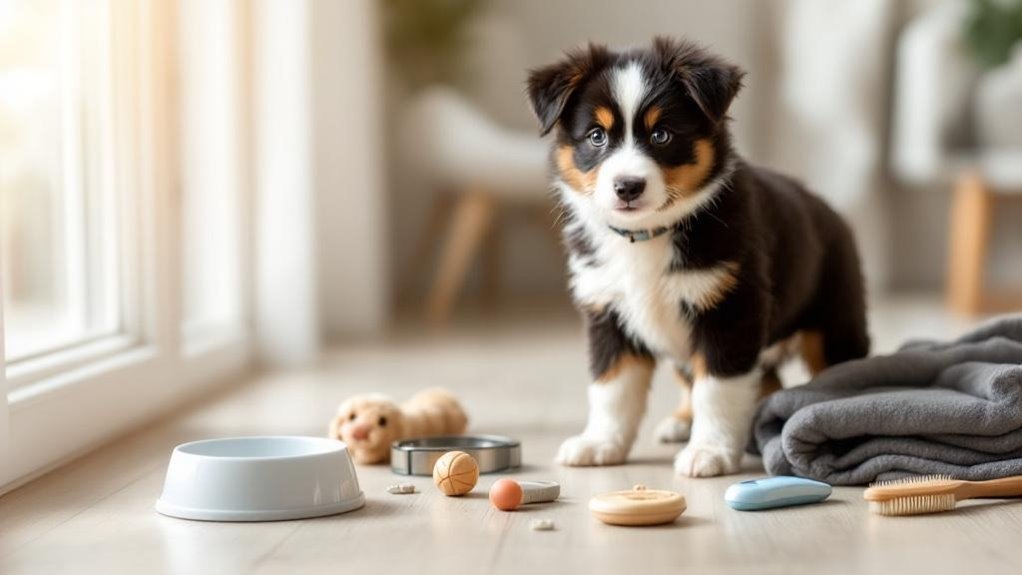
Like setting a stage before the curtain rises, you need a few smart basics in place before your Border Collie puppy comes home. Start with a crate, a small puppy zone, simple food supplies, and safe gear for the ride. Then secure your home, add chew toys and puzzle feeders, and keep health records close. Get these first steps right, and the next choices become much easier.
- Key Takeaways
- Buy These Border Collie Puppy Essentials First
- Puppy-Proof Your Home for a Border Collie Puppy
- Choose Food, Bowls, and Feeders
- Set Up Your Border Collie Puppy Zone
- Pack the Right Gear for the Ride Home
- Crate and Potty Train Your Border Collie Puppy
- Choose Chew Toys and Puzzle Feeders Early
- Exercise Your Border Collie Puppy Safely
- Bring Home Health Records and Grooming Supplies
- Frequently Asked Questions
- Conclusion
Key Takeaways
- Prepare a quiet puppy zone with a divider crate, washable bedding, baby gates, and a blanket carrying breeder or litter scent.
- Bring home essentials: fitted harness, short leash, ID tag, poop bags, collapsible water bowl, and breeder food portions.
- Start feeding the breeder’s food, offer 3–4 small meals daily, and use simple puzzle feeders for slow eating and mental stimulation.
- Begin crate and potty training immediately with frequent trips outside, one potty spot, and instant praise for outdoor success.
- Puppy-proof the home and yard, limit exercise to short low-impact sessions, and organize all vet, microchip, and DNA records.
Buy These Border Collie Puppy Essentials First
Before your Border Collie puppy comes home, buy the basics that support sleep, feeding, training, and calm daily routines.
Start with a crate that has an adjustable divider. It should fit your Border Collie Puppy well enough to support sleep and safety, but not give so much space that accidents happen overnight. Add a soft blanket with litter scent for comfort.
Next, get high-quality puppy food that matches breed size and feeding guidelines. Most pups need 3 to 4 meals each day at 8 to 12 weeks. Use a puzzle feeder or slow-food toy at meals for mental work.
You’ll also need safe chew toys and teething toys.
For walks and early training, choose a quality harness and a 4 to 6 foot leash. This protects the neck and builds loose-lead manners.
Early crate training can also help your puppy settle faster and build a calm routine.
Puppy-Proof Your Home for a Border Collie Puppy
Puppy-proofing your home starts with one small, quiet area where your Border Collie puppy can rest, eat, and settle in. Set up a crate there and use dividers so the space stays just big enough for sleep, not accidents.
Next, puppy-proof every room your pup can reach. Secure cords. Move houseplants up high. Lock away cleaners, medicines, garden tools, and chemicals. Hide trash and recyclables. Put fragile items out of reach.
Puppy-proof each reachable room: secure cords, lift plants, lock hazards away, hide trash, and move fragile items out of reach.
Use baby gates to block stairs and closed rooms. Check your yard fence for gaps before supervised outdoor time. Remove toxic plants and sharp hazards outside.
Make a safe play zone with washable pee pads. Keep a harness, collar, and ID tag ready. Offer plenty of chew toys to guide teething and protect your home.
Add a calm zone with a mat or crate to help your puppy practice relaxing and settling quietly.
Choose Food, Bowls, and Feeders
Start with the food your breeder used for the first few days, then change it slowly if needed so your puppy’s stomach stays settled.
Choose a sturdy stainless-steel or ceramic bowl, keep fresh water available at all times, and measure each meal so you can track growth.
Add a puzzle feeder for one meal each day so your Border Collie puppy eats more slowly and stays mentally engaged.
For the best start, pick a diet with balanced protein and fat to support healthy growth and steady energy.
Choosing The Right Food
While your Border Collie puppy settles in, keep the breeder’s food for the first 5 to 7 days, then switch over 7 days by mixing in more of the new puppy formula each day so you don’t upset their stomach.
Choose a high-quality puppy diet made for medium to large breeds. Your Border Collie Puppy needs balanced calcium and phosphorus for steady growth, plus DHA to support brain development.
When your puppy arrives, feed 3 to 4 small meals each day from 8 to 12 weeks. After about 12 to 14 weeks, move to 2 meals daily. Use the bag’s feeding guide, then adjust by your pup’s body condition.
Add puzzle feeders for at least one meal a day. They slow eating and give your pup useful mental work.
Early mental stimulation also helps Border Collie puppies stay focused and reduces the chance of destructive habits.
Bowls For Easy Feeding
Pick feeding gear that keeps meals clean, steady, and easy for your Border Collie puppy to use. Choose weighted, non-slip, stainless steel bowls to limit tipping and reduce bacterial buildup. Ceramic also works. Keep water in a separate stable bowl. Wash both bowls every day.
| Bowl type | Why it helps | Best use |
|---|---|---|
| Stainless steel | Durable and easy to clean | Daily meals |
| Ceramic | Heavy and stable | Water or food |
| Slow-feed | Slows gulping | Fast eaters |
Use the breeder’s food first, then switch over 5 to 7 days to your puppy formula. Feed 3 to 4 meals a day at 8 to 12 weeks. Move to two meals by 12 to 14 weeks. Follow label portions, then adjust for body condition and activity. Budget-friendly sniff games can also help keep your puppy busy between meals and reduce boredom.
Puzzle Feeders For Enrichment
Work puzzle feeders into every meal from day one so your Border Collie puppy eats more slowly and uses its brain at the same time.
Use puzzle feeders that match your pup’s age and skill. Keep each session short, about 3 to 5 minutes, and follow your feeding schedule. At 8 to 12 weeks, that usually means 3 to 4 meals each day.
Start simple with a slow feeder or the Buster DogMaze for small dogs. You can also try a Kong Gyro if your puppy likes to roll food out alone. Use the same kibble your puppy already eats. Adjust kibble size or add soft treats so pieces fit and stay solvable.
Choose durable, food-safe feeders that clean easily. For steady mental stimulation, rotate multiple puzzle types daily to prevent boredom indoors.
Set Up Your Border Collie Puppy Zone
Give your Border Collie puppy a small, quiet zone with a crate or x-pen, a soft blanket, and a few safe chew toys so it feels secure and can rest well.
Keep the crate in a low-traffic spot, use dividers to limit sleeping space, and set clear boundaries with baby gates and a 4 to 6 foot safe area.
Then puppy-proof the space by moving cords, plants, and small items out of reach. A calm setup also helps with settling training and makes the first day less overwhelming.
Safe Resting Space
Before your Border Collie puppy comes home, set up a small rest zone that feels safe and easy to manage. Use a crate with a divider in a quiet spot that stays cool and steady.
A corner of the living room works well because your puppy can see you without too much activity.
Make the space a comfortable area with washable blankets or a simple bed. Skip fluffy bedding for now since teething puppies often chew and ruin it fast.
Keep the zone small and leave out food and water bowls.
Add a safe chew toy and a blanket that carries the breeder’s scent. If your puppy seems uneasy, try a soft night light or pheromone diffuser.
Keep the area puppy-proofed. Remove cords, plants, and small objects, and block stairs or unsafe rooms nearby.
Border Collie puppies also need mental stimulation along with rest, so short training games can help them stay calm and focused.
Puppy-Proof Boundaries
When your Border Collie puppy comes home, set up a small puppy zone with the crate and a play area about 3 to 4 feet wide. Use a playpen or baby gates to keep it cozy, calm, and less likely to invite overnight accidents.
- Add crate dividers so the bed space stays snug as your puppy grows. Most pups won’t soil where they sleep.
- Secure hazards first. Tuck cords away, remove toxic plants and chemicals, and lock cabinets with cleaners or medicine.
- Put in durable chew toys, a non-slip food and water station, and a blanket with litter scent to lower stress.
- Place the zone near family life, not in busy traffic. This supports supervised social time and blocks stairs and small objects.
Use trigger control and safe outlets early to help prevent chasing and nipping as your Border Collie grows.
Pack the Right Gear for the Ride Home
Because the ride home can feel long and strange to a young Border Collie, pack a few basic items that keep the trip safe and calm.
Bring a well-ventilated crate lined with a familiar blanket so your puppy can stand, turn, and settle more easily. Keep a well-fitted harness, a short leash, and poop bags close for safe exits and quick cleanups. Pack your puppy’s current food in sealed portions so you don’t change meals too fast. Add a collapsible water bowl for small drinks on the road.
A soft toy or chew can help your puppy stay occupied. A calming spray or pheromone diffuser may also reduce stress.
Keep vet records, breeder health papers, and microchip details in a waterproof folder. You’ll want them ready for your first vet visit soon after pickup.
Crate and Potty Train Your Border Collie Puppy
Start crate and potty training on day one so your Border Collie puppy learns a clear routine right away.
Use a crate sized so the puppy can stand, turn, and lie down, but not toilet in one corner. Use dividers as your pup grows.
- Take them outside frequently to the same spot each morning, after meals, after naps, after play, and every 1–2 hours at first.
- Watch indoors for sniffing, circling, or restlessness. If you catch them starting, interrupt gently and carry them out.
- When they finish outside, praise immediately and richly with a treat or happy words for several seconds.
- Avoid punishment for accidents. Clean up calmly, move any temporary pee pads toward the door, and expect steady progress over 8–16 weeks. Stay patient.
Choose Chew Toys and Puzzle Feeders Early
A good crate and potty routine helps, and the next step is giving your Border Collie puppy safe things to chew and work on each day.
Start with several chew toys from day one. Try soft rubber Kongs, nylon chews, and rope toys. Rotate five to seven toys so Puppies stay interested and don’t target shoes or furniture. For young Border Collie Puppies, choose small soft items that protect baby teeth. As your puppy grows, switch to larger tougher options.
Use puzzle feeders for meals to slow eating and build focus. Start with three to five minutes using tools like a Kong Gyro or Buster DogMaze. Then raise the challenge slowly.
Add chew sessions after play, before naps, and during alone time. Clean toys and puzzle feeders weekly, and replace worn pieces fast.
Exercise Your Border Collie Puppy Safely
While Border Collie puppies seem tireless, you need to limit structured exercise to protect their growing joints.
- Follow the 5-minutes-per-month-of-age rule for walks and planned activity. A 3-month-old puppy needs about 15 minutes per session, twice a day.
- Choose low-impact play like controlled fetch, herding-ball work, and supervised yard time. Keep leash walks short and use a harness.
- Skip long runs, frisbee, and repetitive jumping. These high-impact activities can stress growth plates until about 12 to 14 months.
- Put more energy into mental stimulation. Use short training sessions of 3 to 5 minutes, puzzle feeders, scent games, and indoor interactive toys.
That balance helps your puppy stay busy without overdoing physical exercise.
Bring Home Health Records and Grooming Supplies
Before your puppy’s first vet visit, gather every health record and a few basic grooming tools so you can keep care simple and consistent from day one.
Bring MDR1/ABCB1 and CEA DNA test results so your vet can add them to the medical record and choose safe drugs.
Also pack vaccination and deworming papers, the parents’ OFA hip results, microchip forms, and breeder notes.
Keep everything in a waterproof folder or digital scan.
Add parasite-control records and the exact name and dose of any recent treatment.
That helps your vet avoid repeat dosing and set the right schedule.
Your grooming supplies can stay simple.
Bring a gentle puppy shampoo, a soft toothbrush with dog-safe toothpaste, and a slicker brush or comb.
Start short grooming sessions early so your puppy gets used to handling.
Frequently Asked Questions
What Is the 7 7 7 Rule for Puppies?
The 7-7-7 rule means you expose your puppy to 7 types of people, 7 places, and 7 surfaces or objects early on. You should keep experiences positive, gentle, and reward-based so your puppy builds confidence.
What Do I Need for a Border Collie Puppy?
You’ll need a crate with divider, quality puppy food, fresh water, harness and training leash, chew toys, puzzle feeders, and grooming basics. Schedule a vet visit, microchip, preventatives, and ask for breeder health documents.
Where Should a Border Collie Sleep at Night?
You should have your Border Collie sleep in a crate or small bed near your bedroom; puppies often need one nightly potty break. You’ll help your pup feel secure, settle faster, and avoid nighttime accidents.
Which Dog Breed Understands the Most Words?
Border Collies understand the most words. You’ll find they often learn hundreds of verbal cues, and Chaser famously knew 1,022. If you train consistently, you can dramatically expand your dog’s vocabulary through short, repeated sessions.
Conclusion
Start with the basics and keep your setup simple. Your puppy needs a safe space, steady meals, short training, and close supervision. That early structure matters. Studies often cite that a puppy can hold its bladder about one hour per month of age. So if your Border Collie is 2 months old, plan very frequent potty trips. Keep routines calm and clear. When you prepare well from day one, you make learning easier for both of you.