
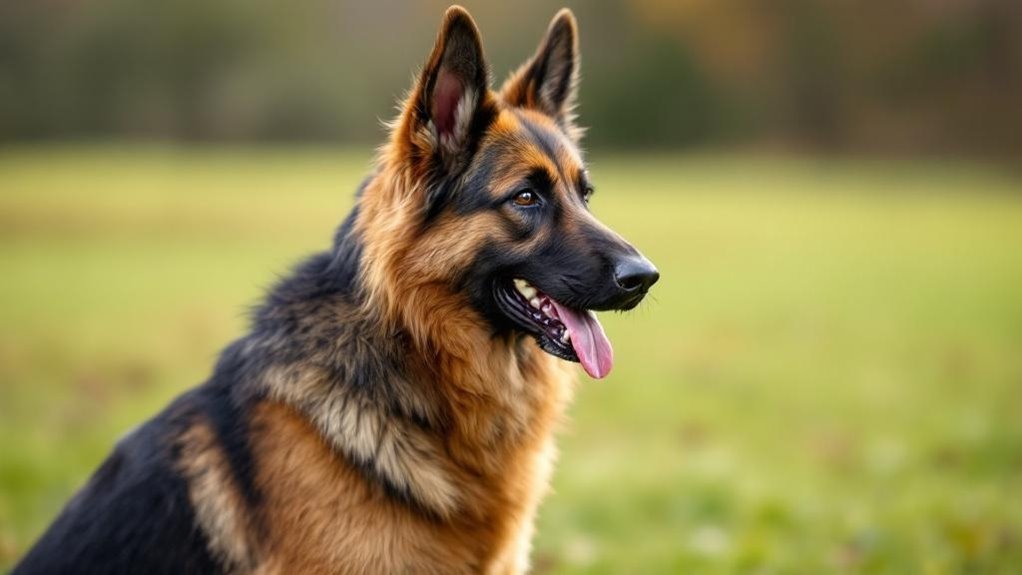
Your German Shepherd is smart but easily distracted. That’s not a flaw — it’s just how their brain works. Short focused training sessions work better than long ones because they match how dogs actually learn. Five minutes done right beats an hour of frustration. You’ll discover exactly why that is and what two simple games can change how your dog pays attention to you.
- Key Takeaways
- Why 5-Minute Training Works Better for German Shepherds
- Why Your German Shepherd’s Brain Learns Better in Short Bursts
- The Only 3 Things You Need to Start German Shepherd Focus Training
- Game 1: The Eye Contact Focus Drill
- Game 2: The Stop and Go Loose-Leash Challenge
- Game 3: The Recall Party Excitement Builder
- Game 4: The Impulse Control Wait Game
- Game 5: The Name Recognition Focus Builder
- Game 6: The Command Rotation Quick Drill
- How to Fit German Shepherd Focus Training Into Your Daily Routine
- What to Do When Your German Shepherd Loses Interest
- Signs Your German Shepherd’s Focus Training Is Working
- How Long Before You See Real Behavioral Changes?
- Frequently Asked Questions
- Conclusion
Key Takeaways
- Hold high-value treats near your eyes to prompt your German Shepherd’s focus during the 5-minute Eye Contact Focus Drill.
- Limit each training session to 5 minutes to prevent mental fatigue and maintain your German Shepherd’s sharp attention.
- Use a clicker or verbal marker to signal correct behavior, reinforcing the desired response immediately and precisely.
- Train in a quiet, low-distraction space first, then gradually introduce distractions as your German Shepherd’s proficiency improves.
- Always end each 5-minute session with praise or play to build enthusiasm for future training sessions.
Why 5-Minute Training Works Better for German Shepherds
German Shepherds learn best in short bursts. Their attention stays sharp when sessions don’t drag on. Five minutes is the sweet spot.
Brief sessions prevent mental fatigue. When your dog stays focused throughout the entire session, learning sticks better. Neuroscience backs this up — short intervals strengthen memory retention.
You’re also building neural pathways each time you train. Consistent five-minute sessions reinforce those pathways without overwhelming your dog.
Always end on a positive note. This keeps your German Shepherd enthusiastic to train again. Working breeds thrive on success and engagement.
The results aren’t immediate but they’re real. Most owners notice behavioral improvements within one to two weeks of consistent practice.
Short sessions work. Long ones often don’t.
Why Your German Shepherd’s Brain Learns Better in Short Bursts
Your dog’s brain has limits — and that’s not a bad thing. Those limits actually help you train smarter.
When training sessions run too long your German Shepherd starts to lose focus. Mental fatigue sets in and new information stops sticking.
Short bursts of learning work differently. They keep your dog’s attention sharp and allow the brain to form stronger memory pathways. Neuroscience backs this up — brief and focused practice builds retention better than extended drilling.
Spaced repetition matters too. Repeating training sessions across multiple days gives your dog’s brain time to process and lock in what it learned.
Five minutes is enough. It keeps your dog engaged and ends before frustration builds. That’s what makes the next session something your dog actually wants.
The Only 3 Things You Need to Start German Shepherd Focus Training
You don’t need a lot of gear to get started with focus training. The three things that matter most are high-value treats you save only for training sessions, a quiet low-distraction space, and a consistent way to track your dog’s progress.
Getting these basics in place sets you up to reward your dog clearly and build focus without confusion.
Essential Training Tools
Starting focus training doesn’t require much. You only need three essential training tools to build a strong bond with your German Shepherd.
First, grab high-value treats. These should be reserved strictly for training so your dog stays motivated. Small pieces of chicken or cheese work well.
Second, use a clicker or a verbal marker like “yes.” This signals the exact moment your dog does something right. Clear timing matters more than fancy equipment.
Third, keep a comfortable leash nearby. It helps you manage your dog’s movement while teaching focus during walks.
That’s it.
A calm training space also helps. Remove distractions and keep sessions short. Your dog learns faster when the environment supports focus rather than competing with it.
Rewarding Your Dog
Rewards are what make focus training click for your German Shepherd. The right treat at the right moment tells your dog exactly what you want.
Rewarding your dog immediately after a correct behavior builds a clear connection in their mind.
| Reward Type | Best Used For | Frequency |
|---|---|---|
| High-value treats | New behaviors | Every correct response |
| Mixed treat varieties | Maintaining focus | Rotate each session |
| Praise and play | Familiar behaviors | As needed |
Keep sessions short and always end on a win. Even small successes deserve a reward.
Consistency matters most. Daily rewarding your dog during 5-minute sessions can produce real behavioral improvements within one to two weeks.
Game 1: The Eye Contact Focus Drill
One of the best ways to build focus in your German Shepherd is teaching eye contact. This drill is a simple but effective dog training exercise that strengthens your dog’s attention and responsiveness.
Start in a quiet area with few distractions. Hold a high-value treat near your eyes and wait for your dog to look at you. The moment they make eye contact reward them right away.
Keep each session to about 5 minutes. Short sessions help your dog stay sharp without getting tired or bored.
As your dog gets better slowly move practice to busier environments. This builds their ability to focus even when distractions are nearby.
Always end on a positive note with praise or a short play session.
Game 2: The Stop and Go Loose-Leash Challenge
When your German Shepherd pulls on the leash you stop moving immediately and wait for slack before stepping forward again.
The moment the leash loosens you reward your dog with a treat or praise so they connect calm walking with good things.
You can practice this during your normal daily walks without setting aside extra time for training sessions.
How Loose-Leash Works
The Stop and Go Loose-Leash Challenge is built around one simple rule: forward movement stops the moment your dog pulls.
When the leash goes tight you stop walking. You don’t yank or scold. You simply stand still.
Your dog learns quickly. Pulling gets them nowhere. Calm behavior moves the walk forward.
The moment the leash goes slack again you start moving. That’s the reward. Progress itself becomes the motivator.
You also reward with treats when your dog walks with a loose leash. This reinforces what you want to see.
Natural consequences do the teaching here. Your dog figures out that pulling halts progress and staying calm keeps things moving.
Practiced consistently, this approach leads to fewer pulling incidents and a much smoother walk for both of you.
Rewarding Slack Leash Moments
Catching slack leash moments early is the key to making this game work. The moment your German Shepherd lets the leash go slack, reward them immediately. Don’t wait. A quick treat or short verbal praise delivered right away tells your dog exactly what earned the reward.
Rewarding slack leash moments consistently is what builds the habit over time. Your dog starts connecting a loose leash with something good happening and that connection gets stronger with each walk.
This is where spaced repetition helps. Practicing across multiple short walks keeps the learning fresh without wearing your dog out mentally.
You’re not correcting bad behavior here. You’re reinforcing the right one. That shift makes rewarding slack leash moments feel natural for both you and your dog.
Real-World Walk Application
Game 2 takes everything you practiced in Game 1 and moves it into the real world. Your walk becomes the training session. Physical exercise and focused learning happen at the same time.
Here’s how it works:
- Move forward only when the leash stays slack — forward motion becomes the reward itself.
- Stop the moment your dog pulls — this teaches them that pulling never works.
- Reward immediately when the leash loosens — your dog learns that calm walking gets results.
Keep sessions short to prevent mental fatigue. Your dog will stay more focused and willing to engage.
Done consistently, this game builds real habits. Your dog learns self-control not on a training field but on an actual walk.
Game 3: The Recall Party Excitement Builder
When it comes to reliable recall, nothing works better than making your German Shepherd genuinely excited to come to you. This is one of the best games to play to build that response.
Start in a low-distraction area. Call your dog once using your recall command. The moment they reach you celebrate loudly. Use treats and praise immediately.
Call your dog once, celebrate the moment they arrive, and reward immediately with treats and praise.
Keep your reaction big and consistent. Your dog needs to associate coming to you with something genuinely rewarding.
Practice this daily and gradually add distractions as your dog improves. Don’t use the recall command outside of training sessions. Overusing it weakens its meaning.
With regular repetition your German Shepherd will respond faster and more reliably even in difficult environments.
Game 4: The Impulse Control Wait Game
Impulse control is one of the most useful skills you can teach your German Shepherd. This game trains your dog to pause before getting a reward.
Here’s how to build that habit:
- Hold a treat and wait for your dog to hesitate instead of lunging for it.
- The moment you see any pause reward that behavior immediately.
- Gradually increase the wait time to strengthen their impulse control in tougher situations.
You can use this in real life too. Try it at meal times or before opening a door.
Consistent practice keeps your dog safer and makes daily routines smoother. It also builds trust between you and your dog through calm cooperative training.
Game 5: The Name Recognition Focus Builder
| Step | Action |
|---|---|
| Start simple | Call their name in a quiet space |
| Reward fast | Give a high-value treat for immediate attention |
| Add distractions | Practice in busier environments |
| Stay consistent | Train five minutes daily |
Begin in a low-distraction area. Say their name once and reward any eye contact right away.
Gradually move to harder settings as they improve.
End every session on a win. Celebrating their success keeps them enthusiastic to respond the next time you call.
Game 6: The Command Rotation Quick Drill
Rotate through commands quickly to keep your German Shepherd sharp and engaged. This drill teaches your dog multiple commands in short one-minute intervals. It uses spaced repetition to build understanding without causing mental fatigue.
Rotate through commands quickly to keep your German Shepherd mentally sharp, engaged, and learning without fatigue.
Here’s how to make it work:
- Use high-value treats to reward each successful command and keep motivation high.
- Integrate the drill into daily routines to create consistent training without large time commitments.
- Track progress with notes or photos to see improvements in responsiveness over time.
Practice each command briefly then move to the next. Keeping sessions short maintains your dog’s focus and enthusiasm. Over time this drill builds strong obedience across many commands without overwhelming your dog.
How to Fit German Shepherd Focus Training Into Your Daily Routine
Fitting focus training into your day doesn’t require extra time. Pair 5-minute focus training sessions with habits you already have. Practice during your morning walk or while waiting for your meal to cook.
Use short breaks throughout the day to run a quick drill. These bursts keep your German Shepherd engaged without burning them out.
Keep high-value treats set aside only for training. Your dog will stay motivated and look forward to each session.
Always end on a win. Reward your dog for good behavior so they stay enthusiastic next time.
Track your progress with a quick note or photo after each session. Watching improvement over time keeps your training fresh and gives you a clear picture of what’s working.
What to Do When Your German Shepherd Loses Interest
Even the most focused German Shepherd will lose interest sometimes. It happens and it’s normal. You often learn more about your dog in these moments than during perfect sessions.
Even the most focused German Shepherd loses interest sometimes — and that’s perfectly normal.
Here’s what to do:
- Switch to high-value treats that you only use during training. Exclusive rewards rebuild motivation fast.
- Change the activity. Introduce a new trick or a variation of a game you’ve already taught. Fresh challenges keep your dog engaged.
- Check the basics. Make sure your dog has had enough exercise and mental stimulation before the session starts.
Frame training as time you both enjoy. Your dog picks up on your energy. Keep sessions short, stay calm, and end on a win.
Signs Your German Shepherd’s Focus Training Is Working
Knowing when to push forward matters just as much as knowing when to pull back. Focus training works when you start seeing real changes in your dog’s behavior.
One clear sign is quicker eye contact. When you ask for attention and your dog responds faster, that’s progress.
Watch for better impulse control too. If your dog waits calmly before getting a treat or toy, the training is sticking.
You’ll also notice calmer walks. Less pulling and less overexcitement around distractions means your dog is applying what it’s learned outside of sessions.
Finally, pay attention to readiness. A dog that shows up prepared to engage is a dog that’s building confidence through consistent focus training.
These signs tell you you’re on the right track.
How Long Before You See Real Behavioral Changes?
How long does focus training actually take to work? The timeline depends on consistency.
Here’s what you can realistically expect:
- Week 1-2: You’ll notice something your dog starts doing differently — eye contact improves and responses feel quicker.
- Week 4-6: Focus becomes more reliable. Your dog holds attention even with mild distractions nearby.
- Week 6-8: Significant behavioral changes settle in. Your dog responds consistently in harder environments.
Short sessions work because dogs retain information better in small doses.
Five minutes daily builds a clear pattern your dog can follow.
Skipping sessions slows progress. Staying consistent speeds it up.
Most owners see early shifts within two weeks. Full results take closer to two months.
Frequently Asked Questions
What Is the 7 7 7 Rule for Dogs?
The 7 7 7 Rule means you should give your dog 7 minutes of training for every 7 hours you spend together, keeping sessions short so they’re engaged and retaining information better.
How to Mentally Stimulate Your German Shepherd?
You’ll train, challenge, and reward your German Shepherd through five-minute focus sessions, interactive impulse-control games, puzzle toys, and high-value treats while exposing them to diverse environments to sharpen their adaptability and mental engagement.
What Is the Hardest Age With a German Shepherd?
You’ll find the hardest age with a German Shepherd is between 6 to 14 months. They’re in their adolescent phase, showing increased impulsivity, boundary-testing, and surges in energy that make training and focus particularly challenging.
What Is the Hardest Command to Teach a Dog?
“Stay” is your toughest command to teach. It demands sustained focus and impulse control, challenging your dog’s natural instincts. Distractions make it even harder, requiring consistent practice before your dog truly masters it.
Conclusion
You’ve got everything you need to get started. Five minutes a day is a small investment but it pays off fast. Think of focus training as planting a seed — with consistency it grows into something solid. Your German Shepherd wants to engage with you. Keep sessions short. Stay calm. Reward the wins. The changes will come and when they do you’ll wonder why you waited.