
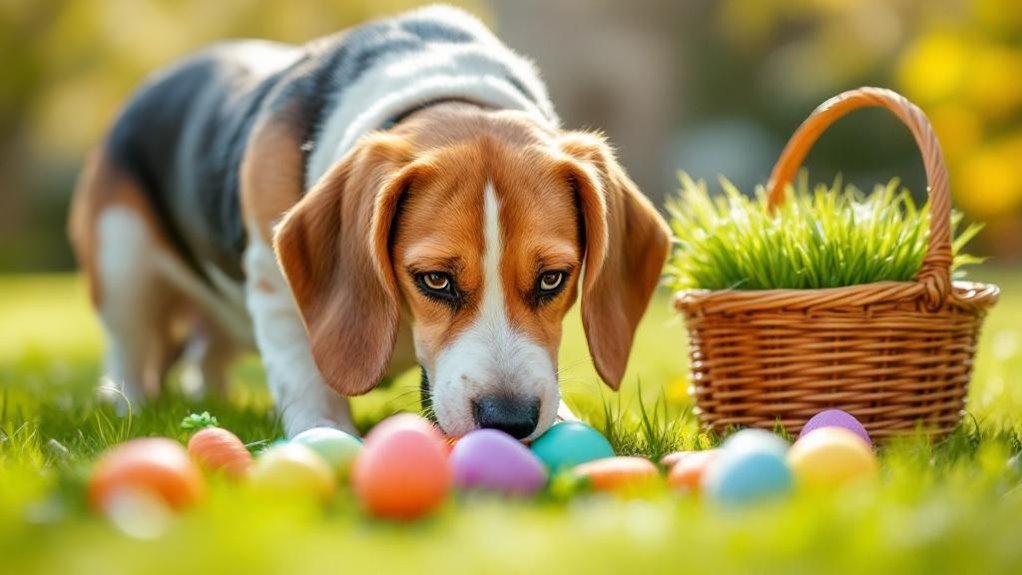
Your dog’s nose can do more work than its eyes during a simple Easter game, which is why scent puzzles often tire dogs out fast. You can use that to turn holiday treats into short brain games that cut boredom and build focus. Start with easy sniff-and-find setups, then raise the challenge as your dog learns. A few safety rules matter first, and they can change how well these games work.
- Key Takeaways
- Why Easter Brain Games Help Dogs
- Keep Easter Games Safe for Dogs
- Keep Chocolate Away From Your Dog
- Start With an Easter Egg Hunt
- Set Up an Easter Snuffle Mat
- Try the Easter Muffin Tin Game
- Play the Which Paw Game
- Make DIY Easter Puzzle Boxes
- Make a Treat-Filled Easter Basket Game
- Make Frozen Easter Treat Puzzles
- Bake Carrot and Banana Dog Biscuits
- Choose Games for Your Dog’s Skill Level
- Pick Safe Natural Treats for Easter Games
- Frequently Asked Questions
- Conclusion
Key Takeaways
- Easter brain games reduce boredom and stress by giving dogs short, structured problem-solving tasks with clear rewards.
- Start with easy games like visible treat eggs or Which Paw, then increase difficulty gradually as confidence grows.
- Try simple setups like egg hunts, snuffle mats, muffin tins, or puzzle boxes using kibble or small treats.
- Keep sessions 5–15 minutes, count treats in the daily diet, and balance mental games with regular exercise.
- Supervise closely and use only dog-safe materials and treats, keeping chocolate, xylitol, and swallowable items out of reach.
Why Easter Brain Games Help Dogs
Structure helps dogs feel settled, and Easter brain games give that structure through short problem-solving tasks. You give your dog a clear job, and that mental work can ease boredom and lower stress.
Short Easter brain games give dogs a clear job, helping them feel calmer, focused, and less stressed.
When your dog thinks, sniffs, and searches, you may see less chewing and less barking around your puppy home.
Food games work well because training treats keep your dog focused and willing to try. A Snuffle Mat or a simple muffin-tin hunt turns sniffing into a reward-based challenge. You can start easy, then hide treats deeper or inside small boxes as your dog improves.
That steady change builds confidence and thinking skills without asking for too much. New Easter scents, textures, and toy setups also keep the games fresh, which helps your dog stay interested longer each day.
Brain training games can also strengthen self-control and problem-solving skills in smart dog breeds.
Keep Easter Games Safe for Dogs
Brain games work best when you keep them safe and simple. You should supervise each activity and remove small toys, plastic eggs, cardboard, or paper before your dog can swallow them. Keep water nearby and use only xylitol-free peanut butter plus other non-toxic ingredients in homemade treats.
- Match the puzzle to your dog’s skill. Start easy, then increase challenge slowly.
- Watch treat amounts. Use kibble, carrot pieces, or small biscuits, and make sure calories stay reasonable.
- Balance brain work with physical exercise, so your dog stays engaged without overeating.
That keeps play useful, not frustrating. If your dog seems confused, simplify the game. If your dog finishes fast, add one small step. Safe Easter games should build focus, support healthy habits, and keep fun under control always. Indoor nose work and other enrichment games can also help busy dogs stay mentally satisfied and less bored.
Keep Chocolate Away From Your Dog
Even if your dog is well trained, keep chocolate out of reach at Easter. Chocolate has theobromine and caffeine, and dogs process both very slowly. That makes even small amounts risky. Dark and baking chocolate are the most dangerous.
Store chocolate eggs and desserts in sealed cupboards or on high shelves. Don’t leave baskets or wrapped sweets where your dog can grab them.
Watch for vomiting, diarrhoea, fast breathing, a racing heart, tremors, or seizures. Signs can show within six to twelve hours. In severe cases, chocolate poisoning can cause coma or death.
If you think your dog ate chocolate, call your vet or a poison helpline right away. Share your dog’s weight and the type and amount eaten.
Choose dog-safe treats instead, and supervise closely at all times. Puppies may also be more likely to grab forbidden food when prey drive is triggered by excitement or quick movements.
Start With an Easter Egg Hunt
Set up an Easter egg hunt with large dog-safe plastic eggs and a few small treats or bits of kibble inside. Start easy. Put the eggs where your dog can see them, then hide them under cushions, behind furniture, or in the grass as your dog gets better.
Keep the hunt safe and simple:
- Use 6 to 10 eggs for a medium dog, and keep treats under 10% of daily calories.
- Watch your dog the whole time, and use non-toxic eggs that are sturdy and too large to swallow.
- Make some eggs smell stronger by rubbing treats on them, or add a cue like sit or touch before opening.
For extra variety, add sniff games to keep your dog busy and mentally engaged.
If your dog solves the game fast, try nested eggs to add challenge and build confidence over time safely.
Set Up an Easter Snuffle Mat
Make an Easter snuffle mat to give your dog a calm scent game that taps into natural foraging. Use a rubber sink mat or rug gripper as the base. Tie 2–3 cm fleece strips through the holes. For a 40×40 cm mat, use about 200–300 strips. Trim the ends so the surface stays neat. Choose pastel colors and shape the mat like an egg or bunny.
Hide 10–30 pieces of kibble or small treats in the fabric, based on your dog’s size and skill. Keep each session around 5–15 minutes. Mix kibble with higher-value treats to hold interest. As your dog improves, push rewards deeper or use smaller pieces. Watch closely so your dog doesn’t chew the mat. Count treats in the daily diet and offer fresh water afterward always. Snuffle mats can support a daily brain game routine and help prevent boredom-driven barking, chewing, and restlessness.
Try the Easter Muffin Tin Game
You can set up the muffin tin game with a 6- or 12-cup tin, a few small treats, and tennis balls over the cups.
Start easy by hiding treats in 3 or 4 cups, then make it harder as your dog learns to check more spots.
Change the treats and the pattern each round, and always watch closely so play stays safe.
Keep sessions short and use clear cues to help your dog learn through toy names and play.
Set Up The Tin
Start with a standard 6- or 12-cup muffin tin and place a small treat or piece of kibble in a few wells. For beginners, fill just 3 or 4 wells. Cover each filled spot with a tennis ball or another light ball so your dog has to move it.
Keep the setup simple and safe:
- Use bite-sized treats or broken pieces.
- Keep treats to about 10 to 15% of your dog’s daily food.
- Stay nearby and remove any damaged balls right away.
Choose balls your dog can nudge without trouble, but not swallow. Fresh water should be ready after play.
To keep the game feeling new, switch treat types between sessions and rotate this activity with an enrichment routine or a snuffle mat during Easter week.
Increase The Challenge
Once your dog understands the basic muffin tin game, raise the challenge by filling more cups and changing the rewards. Start beginners with treats in three or four cups. Cover them with tennis balls. Then work up to eight to twelve filled cups.
Change the rewards to keep your dog interested. Use kibble, small biscuits, or meaty treats. Mix sizes and value so the game stays worth solving.
You can also cover some cups with scented fabric or light lids. That makes your dog use nose and paws, not just lift balls. Building scent work focus into the game can also help German Shepherds stay engaged and use their natural tracking skills.
Keep rounds short. Try five to ten minutes or about ten to fifteen treats. That prevents overeating and mental fatigue.
Always supervise. Tennis balls can be unsafe for small dogs. Use safe, properly sized toys instead when needed.
Play the Which Paw Game
Try the “Which Paw?” game to build your dog’s nose and paw skills with a simple treat search. Show a small dog-safe treat, hide it in one closed fist, then hold both hands at your dog’s nose level.
Build your dog’s nose and paw skills with the simple Which Paw? treat-search game.
- Start with an easy 50:50 choice so your dog can win fast.
- Reward at once when your dog touches or paws the correct fist.
- Keep each session to 5–10 trials with xylitol-free treats or kibble.
This game builds scent focus and paw coordination. Most dogs learn it within a few tries.
For more challenge, use cups, wait a bit longer before the choice, or add more hands or cups.
Consistent routines and short daily training sessions can help smart dogs stay focused and reduce misbehavior.
Always supervise. Don’t let your dog mouth your hands. Stop if your dog seems stressed. Praise helps learning and builds confidence.
Make DIY Easter Puzzle Boxes
After simple hand games, you can make the search a little bigger with a DIY Easter puzzle box.
Use a small cardboard box, about 20 x 15 x 10 cm. Fill it with crumpled non-toxic paper and hide 6 to 8 small wrapped dog-safe treats inside. Let your dog sniff, paw, and forage through the box.
If your dog solves it fast, nest 2 or 3 boxes inside each other. Make each box about 5 cm smaller. Put the treat in the smallest box so your dog works through layers.
Keep it safe. Don’t use chocolate, staples, string, or loose bits that can be swallowed. Stay close and stop the game if your dog eats cardboard or paper. You can add pastel paper eggs or a frozen yoghurt and xylitol-free peanut butter egg. Limit play to 15 minutes.
Make a Treat-Filled Easter Basket Game
Set up a shallow Easter basket with 4 to 6 small parcels made from paper or fabric, and place a dog-safe treat inside each one. Keep the first round simple. Let your dog see and sniff the parcels before you start.
Fill a shallow Easter basket with 4 to 6 treat parcels, and let your dog sniff them before play begins.
Use this order:
- Start with loose wrapping and visible treats.
- Add nested wrapping after your dog succeeds.
- Mix in 1 or 2 empty parcels as decoys.
Stay close and watch the whole game. Remove torn wrapping right away so your dog doesn’t swallow it. Use small non-toxic treats like carrot and banana biscuits or xylitol-free peanut butter bites. Change treat types and parcel spots in the basket to keep interest high. Keep sessions short and count treats in your dog’s daily food. Praise calm focus and offer fresh water after play.
Make Frozen Easter Treat Puzzles
Freezing soft treats in Easter shapes gives your dog a cool puzzle to lick and paw through.
Mix plain yoghurt with xylitol-free peanut butter, mashed banana, or grated carrot. Spoon it into silicone egg or bunny moulds. Hide one small treat in the center for a simple reward.
Match the mould size to your dog. Use small shapes for toy breeds and larger trays for bigger dogs. Keep each puzzle to one serving to lower choking risk and extra calories.
For more challenge, freeze thin layers. Try banana first, then kibble or a soft treat, then yoghurt on top. Your dog has to work through each layer.
Store extras in the freezer. Thaw slightly if they seem too hard. Always supervise, offer fresh water, and use easy-clean, non-toxic silicone moulds.
Bake Carrot and Banana Dog Biscuits
Bake a simple batch of carrot and banana dog biscuits for your Easter games. You mix 1 mashed ripe banana, 1/2 cup grated carrot, 1 to 1 1/4 cups oat flour, and 1 to 2 tablespoons xylitol-free peanut butter. Add extra oat flour until the dough rolls easily, then cut fun shapes.
- Use oat flour for a gluten-free base that’s gentle to digest.
- Banana and carrot add natural sweetness and vitamins like beta-carotene and potassium.
- Bake at 180°C or 350°F for 15 to 20 minutes until golden and firm.
Let the biscuits cool fully before you offer them. Check ingredients for sensitivities, and serve only under supervision as part of a balanced diet. Store them in the fridge for one week, or freeze portions for three months.
Choose Games for Your Dog’s Skill Level
Once your treats are ready, pick games that fit your dog’s age, energy, and problem-solving skill.
Choose games that match your dog’s age, energy, and puzzle-solving skill for the best results.
Start easy. Put treats in open plastic eggs or on the floor for short one to five minute hunts. If your dog solves those fast, hide eggs in furniture nooks or under rugs. For scent-driven dogs, fill a snuffle mat with 20 to 50 bits of kibble or treats. Bury them one to three centimeters deep, then spread them across more mats later.
Match the effort to your dog’s body too. Seniors often do well with muffin tin games with six to 12 holes and tennis balls on top. Younger dogs may prefer active searches.
Add layered puzzles only after success. Start with two layers and build to four. Use better rewards for harder tasks.
Pick Safe Natural Treats for Easter Games
Choosing the right treats keeps Easter games safe and useful. You should pick single-protein treats like 100% dehydrated rabbit ear or meaty strips with over 40% meat. These options lower allergy risk and give your dog solid protein for training.
- Avoid chocolate, sweets, and anything with xylitol. Chocolate is toxic, and xylitol can cause dangerous low blood sugar.
- For DIY frozen rewards, use xylitol-free peanut butter or plain yoghurt. Keep portions small, like one mini mould per session.
- Choose treats that fit the game. Small, easy-to-break pieces reduce choking risk and let you reward often.
You should also watch your dog during treat games, keep fresh water nearby, and count treat calories in your dog’s daily food total each day.
Frequently Asked Questions
What Games Stimulate Dogs Brains?
You can stimulate your dog’s brain with snuffle mats, muffin tin puzzles, treat-filled egg hunts, “Which Paw?” scent games, and frozen puzzle treats. You’ll boost problem-solving, focus, scent tracking, and natural foraging instincts daily.
What Is the 7 7 7 Rule With Dogs?
Like a mixtape, you use the 7-7-7 rule by giving your dog three seven-minute sessions: training, physical play, and a brain game. You can repeat it once or twice daily to prevent boredom and overstimulation.
What Is the Easter Game for Dogs?
You can play an Easter egg hunt with your dog by hiding dog-safe eggs or treat-filled toys around your home or yard. You’ll boost sniffing, problem-solving, and confidence. Keep it supervised, simple, and chocolate-free always.
How Do Dogs Say “I Love You”?
You see it when your dog melts into your side, gazes softly, wags loosely, licks your hand, and drops a toy at your feet. They’re saying “I love you” through trust, play, closeness, and affection.
Conclusion
Easter brain games give your dog a job, and that job can feel like a small light turning on. You help your dog sniff, think, and settle in healthy ways. Keep each game short and safe. Use dog-safe treats, skip chocolate, and watch closely. Start easy, then raise the challenge as your dog learns. A simple hunt or puzzle can turn a busy holiday into calm, steady fun. That’s good for your dog and for you.