
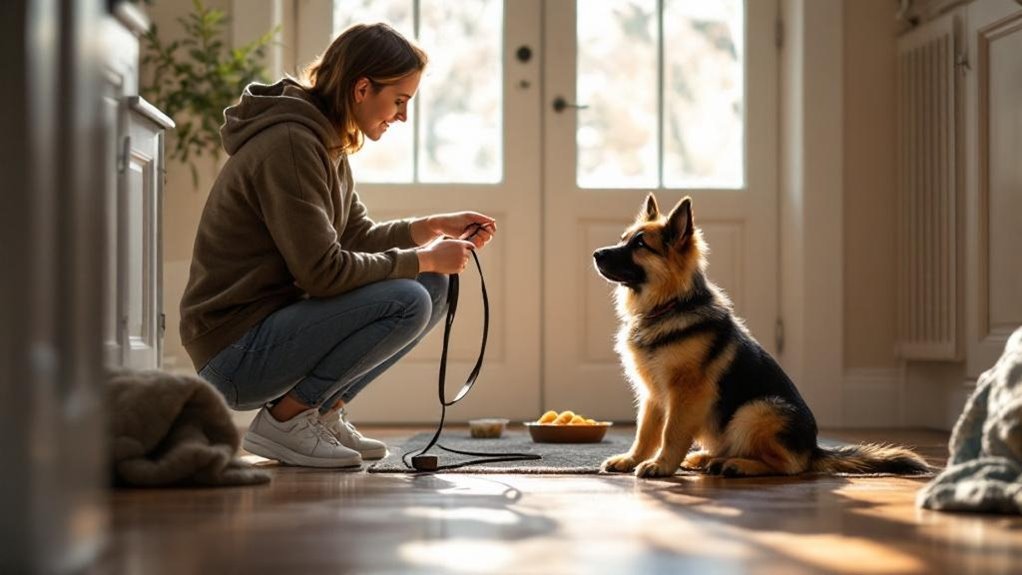
A German Shepherd puppy is like a loaded backpack: what you pack in the first days shapes every step after. If you bring your puppy home too early, skip the right setup, or choose the wrong type for your life, you create problems that are hard to fix later. Start with timing, gear, routine, and food, and you’ll avoid the mistakes that catch most new owners off guard.
- Key Takeaways
- Avoid These Mistakes Before Pickup
- Don’t Bring Your Puppy Home Too Early
- Pick the Right German Shepherd Type
- Puppy-Proof Your Home First
- Buy the Right Gear Before Day One
- Put Your Puppy on a Daily Schedule
- Start Training on Day One
- Keep Training Sessions Short
- Stop Puppy Biting Early
- Prevent Resource Guarding From the Start
- Socialize Your German Shepherd Safely
- Make Crate Training Easy
- Prevent Separation Anxiety Early
- Leash Train Before Pulling Starts
- Make Car Rides Less Stressful
- Brush the Coat Regularly
- Exercise Your German Shepherd Every Day
- Feed the Right Amount
- Frequently Asked Questions
- Conclusion
Key Takeaways
- Don’t bring a German Shepherd puppy home before eight weeks; waiting supports immunity, bite control, and healthier adjustment.
- Choose the right line for your lifestyle; working-line German Shepherds need far more exercise, structure, and mental work than companion lines.
- Puppy-proof your home before pickup by securing cords, chemicals, shoes, trash, and anything small enough to swallow.
- Start routines and training on day one with scheduled meals, frequent potty breaks, crate practice, and 5–10 minute reward-based sessions.
- Prevent behavior problems early by redirecting biting to chew toys, teaching leave it and drop, and avoiding punishment.
Avoid These Mistakes Before Pickup
Before you bring your German Shepherd home, set up the basics and avoid the mistakes that cause problems fast.
Puppy-proof each room before pickup. Secure cords, cleaners, medicine, shoes, and trash so your German Shepherd puppy can’t chew or swallow something dangerous.
Buy the gear you need now: a sturdy leash, collar or harness, crate, exercise pen, food, treats, chew toys, and cleaning supplies. That lets you start house training and safe routines on day one.
Pick a puppy that fits your home and schedule. If you can’t provide hard daily exercise and focused training, skip high-drive working lines.
Book a vet visit right away. At pickup, confirm vaccinations are current and get health records from the breeder or rescue. Ask clear questions and make sure nothing important is missing.
Early socialization and basic obedience should start as soon as your puppy comes home to build confidence and prevent future behavior problems.
Don’t Bring Your Puppy Home Too Early
Getting your home ready matters, but timing matters too. Don’t bring your German Shepherd puppy home before eight weeks old. Earlier separation raises the risk of anxiety, weak social skills, poor bite control, and health problems. Your puppy still needs its mother and littermates.
| Timing | What it means |
|---|---|
| Under 8 weeks | Higher behavior and health risks |
| 8–12 weeks | Safer shift and better early development |
Good breeders and rescues won’t release puppies before eight weeks old. If someone pushes you to take a younger pup, treat that as a red flag. Walk away.
Waiting helps your puppy get early vaccines, stronger immunity, and normal lessons from litter life. That short wait can prevent long-term problems and gives you a steadier start together. A calm first-week routine also helps your puppy adjust more smoothly once it arrives.
Pick the Right German Shepherd Type
Even if all German Shepherds look similar at first, the type you choose can change your whole experience. Many new German Shepherd Owners miss this and pick based on looks alone.
You need to know the difference between show or companion lines and working lines. Working-line dogs have far more energy and prey drive. They usually need long daily exercise, training, and structured jobs or sports. Without that, they can become hard to manage.
If you have a regular home and limited time, choose a companion or show-line dog. That match is often better for first-time owners.
Ask breeders or rescues about lineage, parent temperaments, and activity needs. If you’re unsure, talk with an experienced trainer or rescue staff and ask for a temperament-tested dog that fits your schedule and home.
Early socialization and structured training also help German Shepherds grow into calm, confident companions instead of overly protective or reactive dogs.
Puppy-Proof Your Home First
Before you bring your German Shepherd puppy home, remove hazards like cords, cleaners, medications, and anything small enough to swallow.
Put shoes, laundry, trash, and other chewable items in closed bins or up high so your puppy can’t reach them.
If you secure these temptations first, you’ll prevent injuries, choking, and bad chewing habits from the start.
Teething and bite inhibition can also make chewing and mouthing more intense, so having safe toys ready helps redirect your puppy right away.
Remove Household Hazards
Start by clearing the floor and low surfaces, because your German Shepherd puppy will test everything with its mouth. Pick up socks, coins, and small toys. If an item is smaller than a tennis ball, remove it. That simple rule helps prevent choking and keeps exploration safer.
Next, lock away medications, cleaners, and chemicals. Even one pill can poison a puppy. Cover electrical cords and protect outlets so teething pups can’t bite them. Use baby gates or an exercise pen to block stairs, trash, laundry, and fragile rooms. Store shoes, kids’ toys, and food in closed bins. Secure the pantry and trash too. Dogs need clear boundaries and a safe space while they learn.
When you remove hazards early, you lower the risk of injury, poisoning, and emergency vet visits later. For extra mental stimulation, try sniff games and other cheap enrichment ideas to help reduce boredom safely.
Secure Chewable Items
Once you’ve removed the obvious hazards, look for anything your puppy can grab and chew. Pick up shoes, socks, laundry, remote controls, and small items before your German Shepherd comes home. Puppies explore with their mouths, and swallowing these things can cause choking or a blockage.
Next, lock away medications, cleaners, and chemicals on high shelves or in cabinets. Hide cords with protectors or run them behind furniture so your puppy can’t bite them. Use baby gates, a crate, or an exercise pen to block unsafe rooms and make a safe chewing area with approved toys. Keep food and trash in closed containers. Start teaching “leave it” early. Practice trading forbidden items for toys or training treats so your puppy learns to let go without guarding. When your puppy is overwhelmed, give them calm distance and reward quiet behavior to help them settle safely.
Buy the Right Gear Before Day One
For a smooth first week, get your puppy’s basic gear in place before day one. If you buy the right gear before day one, your German Shepherd settles in faster and you avoid rushed store trips.
- Set up a crate and exercise pen. The crate should let your puppy stand, turn, and lie down. Adult sizes often reach 36–42 inches.
- Get a flat collar and a front-clip harness with a seat-belt attachment. Skip choke chains for puppies.
- Stock large-breed puppy kibble, durable chew toys, and high-value treats. Measured food portions support steady growth and help protect joints.
- Keep puppy pads, cleaning supplies, enzymatic cleaner, and grooming tools ready. A German Shepherd’s thick double coat needs the right brush from the start at home.
Start leash training early so your puppy learns calm walking habits before bad pulling patterns develop.
Put Your Puppy on a Daily Schedule
Put your German Shepherd puppy on a simple daily routine from the start. Feed meals at the same times, give regular potty breaks, and set short periods for play, training, and naps so your puppy knows what to expect.
Keep a steady bedtime and rest schedule too, because that helps your puppy settle faster and behave better. Early crate training can also make it easier for your puppy to relax and understand when it’s time to rest.
Consistent Daily Routine
Start with the same routine every day, because your German Shepherd puppy learns faster when life feels predictable.
A steady schedule lowers stress and makes training your German Shepherd easier. Keep each day simple and repeatable. Short training sessions work best. Daily activity matters too. A visible log helps you notice patterns and stay consistent.
- Plan 3 to 5 short training sessions, about 5 to 10 minutes each, to practice sit, come, and stay.
- Give your puppy one focused walk or play session each day, plus mental work, for 20 to 40 minutes.
- Set the same crate times, quiet times, and bedtime so your puppy learns when to settle.
- Track walks, training, sleep, and meds in a daily log so everyone follows the same plan at home.
Five-minute sessions help prevent mental fatigue and make it easier for your puppy to stay focused and learn quickly.
Potty, Meals, And Rest
Because your German Shepherd puppy does best with clear patterns, set fixed times for potty breaks, meals, naps, and bedtime from the first day.
Feed measured meals on a strict schedule, not all day. Young puppies usually eat three to four times daily, then shift to two meals by about six months. Ask your vet about portion size for age and weight.
Take your puppy to the same potty spot after waking, after meals, after play, and before bed. Very young pups often need breaks every one to two hours. This helps train your dog faster.
Plan rest too. Puppies need several short naps each day. A tired puppy loses focus and has more accidents. End with a calm bedtime routine and one last potty trip before the crate or bed.
Start Training on Day One
When your German Shepherd comes home, training needs to begin that same day so your puppy learns the routine before bad habits take hold. Keep in mind, this breed learns fast, so your rules must be clear from the start.
- Teach basic cues like sit, come, and leave it with treats and praise.
- Crate-train right away so your puppy sees it as a safe den and learns alone time.
- Socialize safely with new people, sounds, surfaces, and calm dogs before fear grows.
- Keep rules consistent so everyone uses the same words, rewards, and boundaries.
If you wait, your puppy will invent its own rules. That’s harder to fix later. Start formal training early, ideally at 8 to 12 weeks, and you’ll build trust, focus, and better habits.
Keep Training Sessions Short
Early training works best in short blocks, not long drills. Young German Shepherds under six months do best with Training sessions that last only 5 to 10 minutes. That matches their attention span and helps you avoid fatigue.
Older puppies and adult dogs can handle 10 to 15 minutes. Even then, you should do 2 to 4 short sessions each day instead of one long one. Keep the work simple and focused.
Aim for 3 to 6 good repetitions, then stop on a win. Use high-value treats and mix up rewards so your dog stays enthusiastic without endless drilling. Watch your dog closely. If you see panting, yawning, or sniffing away, end the session. Take a break and try again later. Short sessions build better habits and stronger learning.
Stop Puppy Biting Early
Cut puppy biting off right away so it doesn’t turn into a hard habit. Start bite inhibition the day you bring your German Shepherd home. If your puppy bites hard, say “ouch” and stop play for a few seconds.
- Keep chew toys nearby and redirect every mouthing attempt to one.
- Train for 5 to 10 minutes a few times daily. Teach “leave it” and “drop.”
- Use a brief 30 to 60 second time-out after biting. Avoid physical punishment.
- Watch play with kids and guests. Step in at the first nip.
Teething and puppy curiosity make biting common, so make sure you stay consistent. Give daily walks, short training, and puzzle toys to burn extra energy.
Calm, clear responses teach soft mouths faster and build better habits.
Prevent Resource Guarding From the Start
Start early by trading up often so your German Shepherd learns that giving up food or toys brings something better.
You should teach drop, take, and leave it in short sessions from the first weeks home so these habits form before guarding starts.
Watch for stiffening, hard staring, or growling, then stay calm and redirect instead of punishing.
Trade Up Often
When your German Shepherd puppy has a toy or bone, offer a better reward like a small piece of cooked chicken or cheese and then take the item only after they let go. This builds trust.
Your puppy learns your approach brings a high value reward, not loss.
Keep sessions short and frequent so the lesson sticks before guarding starts.
- Practice for 5 to 10 minutes, a few times each day.
- Hand-feed some meals so your puppy links your hands with good things.
- Trade for different items in different places, starting with toys.
- If you see stiffening, growling, or a hard stare, stop and call a certified trainer.
Stay calm and consistent.
Small trades done from day one help your puppy stay relaxed around people.
Teach Drop And Leave
Those early trade-ups set the stage, and now you can teach “drop” and “leave” so your German Shepherd puppy learns that giving up an item and ignoring one both lead to good things.
Start at 8 to 12 weeks. Use hand-feeding and calm toy exchanges. Teach your dog with short daily sessions. Say “drop” once, then reward fast with a better treat. Repeat five to ten times.
| Cue | What you do |
|---|---|
| Drop | Offer better treat |
| Leave | Mark and reward |
Add “leave” or “place” too. That helps your puppy ignore items before grabbing them. Keep your approach positive so your puppy links your presence with good outcomes. If you see a stiff body, growling, or lunging, stop and call a positive-reinforcement trainer. Don’t force removal.
Read Early Warning Signs
Even if your German Shepherd puppy seems relaxed, watch closely for early signs of guarding around food, toys, or a favorite spot.
- You may see a hard stare, stiff body, growl, snarl, or lunge when you get close.
- Subtle signs matter too: freezing, laying over an item, or a fast head turn can come first.
- At meals, note rapid eating, bowl guarding, or moving food away to eat alone.
- During play, watch for refusing to drop toys or guarding chews. Teach trade and drop with high-value treats early.
Keep notes on what happened, who was nearby, and your puppy’s age. Patterns help you act early. Share them during vet visits or with a trainer so the habit doesn’t become set.
Socialize Your German Shepherd Safely
Because German Shepherds notice a lot and react fast, you should start safe socialization early and keep it controlled.
Between 8 and 12 weeks, invite vaccinated people into your home. Add car rides and gentle handling to build confidence before public trips.
After your vet clears shots, plan short outings with different people, calm vaccinated dogs, bikes, strollers, and traffic sounds. Keep sessions brief, about 5 to 15 minutes. Let your puppy explore new surfaces, noises, and places at a steady pace.
Use treats and praise when your puppy stays calm around new people or animals. Don’t force greetings. That can create fear or aggression later.
Practice recall, sit, and place during outings. Those cues help you guide interactions, reward good choices, and prevent overexcitement, guarding, and clingy behavior.
Make Crate Training Easy
Start crate training early so your German Shepherd sees the crate as a safe den, not a trap.
Add soft bedding and treats, keep the first sessions short, and never use the crate for punishment.
You’ll build better crate habits when you use the right size crate and follow a steady routine for naps, nights, and short absences.
Create A Safe Den
When you bring your German Shepherd puppy home, set up the crate that day so it feels like a safe den from the start.
For the first two weeks, focus on comfort and location. Pick a crate your puppy can stand in, turn around in, and lie down in with ease. Place it in a quiet spot near daily family activity, not off in a back room.
- Add a washable bed so the floor feels soft and warm.
- Place a few safe chew toys inside for calm downtime.
- Drape a light cover over the top to cut drafts.
- Keep the area cool, quiet, and easy for you to check.
This setup helps your puppy settle, rest, and watch home life without feeling alone too often.
Build Positive Crate Habits
One of the best ways to make crate training easy is to keep the crate positive from day one. You should start crate training the day you bring your German Shepherd puppy home (ideally 8–12 weeks old). Add soft bedding, safe chew toys, and feed meals inside.
| Do | Avoid |
|---|---|
| Use a crate that fits well | Choosing one that’s too large |
| Practice 10–30 minute sessions nearby | Leaving too long too soon |
Never use the crate as punishment. Reward calm behavior with treats or a quiet release cue. That builds trust fast.
Crate your puppy overnight and for short naps. Still, give frequent potty breaks every 1–2 hours when young, plus daily exercise. Slowly increase crate time and step out of the room so your puppy learns calm independence.
Prevent Separation Anxiety Early
Because German Shepherds bond fast, you need to teach calm alone time from the day your puppy comes home, ideally at 8 to 12 weeks old. Start socialization and brief solo practice early so your puppy learns independence before clingy habits form.
- Make the crate feel safe and predictable. Add treats, quiet naps, and short stays.
- Practice leaving for minutes, not hours. Stretch the time slowly each week.
- Keep exits and returns boring. Skip long goodbyes and excited greetings.
- Follow a steady routine for meals, play, potty breaks, and rest.
This structure lowers stress and helps prevent barking, pacing, and chewing when you’re gone.
If you notice whining, drooling, destruction, or nonstop barking, get help early. A trainer or veterinarian can guide behavior work and discuss short-term medication.
Leash Train Before Pulling Starts
Starting leash work by eight weeks gives you the best chance to stop pulling before it becomes a habit. Keep sessions short, about 5 to 10 minutes, and repeat them a few times each day.
Use a front-clip harness or head halter for easy control. Then help to teach loose-leash walking with treats every 3 to 5 steps when your puppy stays beside you.
| Action | Result |
|---|---|
| Stop when pulling starts | Progress stops |
| Reward loose steps | Walking beside you pays |
Pick one cue, like “heel” or “let’s go.” Build up to 15 to 20 loose steps before a bigger reward or sniff break. If your puppy pulls, stand still until the leash softens, often within 3 to 10 seconds. Add time and distractions slowly each week.
Make Car Rides Less Stressful
Ease your puppy into car rides early with short, quiet trips at 8 to 12 weeks, once your vet says it’s okay. If you begin car training early, you can lower whining and motion anxiety before they become habits.
Start car training early with short, quiet rides to prevent whining and motion anxiety before they take hold.
- Start with a few rides around the block. Praise calm behavior and give small treats so your pup links the car with good things.
- Secure your German Shepherd in a crate, seat belt harness, or crash-tested carrier. This stops roaming and adds protection during sudden stops.
- Keep the car cool, ventilated, and steady. Add non-slip bedding and stay relaxed, because your tension can raise your pup’s stress.
- Watch for drooling, lip-licking, or lethargy. Those signs may point to motion sickness, so ask your vet about help if needed.
Brush the Coat Regularly
Regular brushing keeps your German Shepherd’s thick double coat under control and helps you catch small problems early. You should brush the coat regularly at least two or three times weekly, and every day during heavy shedding. Use a slicker brush or undercoat rake first, then a bristle brush to finish. Don’t scrape the guard hairs.
This is one of the common mistakes owners make. The American Kennel Club notes good grooming matters. While brushing, check for fleas, hot spots, redness, or hair loss. Bathing too often strips oils, so wait 8 to 12 weeks unless theyre going to get dirty. Brush before and after baths.
Add nails, ears, and paws weekly. That routine helps to teach calm handling, teaching your dog to please their owners, like a Privacy Policy.
Exercise Your German Shepherd Every Day
Daily exercise keeps your German Shepherd steady and easier to live with. Give your dog one structured session each day. Aim for 30 to 60 minutes, plus 10 to 20 minutes of mental work. That cuts restlessness and chewing.
- Walk or jog with purpose, not just a slow wander.
- Add fetch, agility, or running if your dog has higher drive.
- Practice basic commands, scent games, or puzzle toys each day.
- Use a secure yard, a long line, and a crate or harness for car rides.
Puppies need brief, low-impact play. Don’t force long runs before growth plates close around 12 to 18 months.
Adult dogs can do more, but build up slowly. Safe, varied work helps your dog settle better at home each day.
Feed the Right Amount
Feed the right amount from the start because portion sizes matter more than many new owners think.
You can prevent overfeeding early by measuring each meal and using a large-breed puppy formula that fits your dog’s age and size.
Track your German Shepherd’s weight changes as it grows, and ask your vet to adjust portions when needed.
Portion Sizes Matter
Because portion size affects growth and joint health, you need to feed the right amount instead of guessing.
- Feed adult German Shepherds about 2.5% to 3% of ideal body weight each day. Split that into two meals. Adjust for activity and body condition.
- Feed puppies four meals daily until 3 months. Drop to three meals until 6 months. Move to two meals by about 12 months.
- Use a large-breed puppy kibble chart or your vet’s calorie guide. Active adults often need about 1,200 to 1,800 calories daily. Measure food with a kitchen scale or cup.
- Check body condition each week. You should feel ribs and see a slight waist. Change portions by 10% to 20% if your dog looks underweight or heavy. Set timed meals and record amounts carefully.
Prevent Overfeeding Early
Getting the portion size right is only part of the job. You also need to stop overfeeding before it becomes a habit. Feed your German Shepherd by age and weight, using the food label or your vet’s advice. Most puppies do best with 3 to 4 meals a day.
Don’t free-feed. Measure every meal with a scoop and kitchen scale so you know exactly how much you’re giving. For adults, needs often fall around 20 to 30 calories per pound each day, based on activity.
Choose a large-breed puppy food with controlled calcium and phosphorus. That helps support steady growth and may lower the risk of bone and joint problems.
If your dog starts filling out too fast, reduce portions slowly, not by guesswork. Ask your vet when needs change.
Track Weight Changes
Tracking weight changes helps you know if your German Shepherd is eating the right amount.
- Weigh your puppy every week and your adult dog every month. Write each number down. Puppies may gain several pounds weekly. Adults usually stay near 65–90 pounds for males and 50–70 for females.
- Start with the food bag guide for age and weight. Then change portions by real weight trends, not by guessing with a scoop.
- Check body condition too. You should feel ribs under a light fat cover and see a waist. No waist plus weight gain means cut calories or add exercise.
- Use a kitchen scale for kibble and log daily calories. If weight shifts 5–10% in weeks, call your vet right away.
Frequently Asked Questions
Is a German Shepherd a Good Dog for a First Time Owner?
A German Shepherd can suit you as a first-time owner if you’ll commit to daily training, exercise, socialization, grooming, and structure. If you can’t provide that consistently, you’re better off choosing an easier breed.
What Are Red Flags in Puppies?
Watch closely: you’ll spot red flags when a puppy leaves before eight weeks, lacks vaccination records, seems extremely fearful, has fleas or discharge, isn’t gaining weight, or comes from a high-drive working line you can’t handle.
What Not to Do With a German Shepherd?
Don’t bring a German Shepherd home before eight weeks, skip daily exercise, delay training and socialization, leave them alone too long without routine, or ignore crate training, sturdy gear, chew toys, and puppy-proofing your home.
Where Should a German Shepherd Puppy Sleep at Night?
You should have your German Shepherd puppy sleep in a properly sized crate in your bedroom or just outside your door. You’ll comfort them, support housetraining, reduce anxiety, and handle brief nighttime potty breaks calmly.
Conclusion
Start steady and you’ll avoid problems that are hard to fix later. Wait for the right age, choose the right puppy, and set up your home before pickup. Keep the first days calm. Use short training, regular potty breaks, and safe alone time. Feed with care and track growth. Brush often and give daily exercise that fits your puppy’s age. Why rush any step when a slow start helps your German Shepherd settle and learn well?