
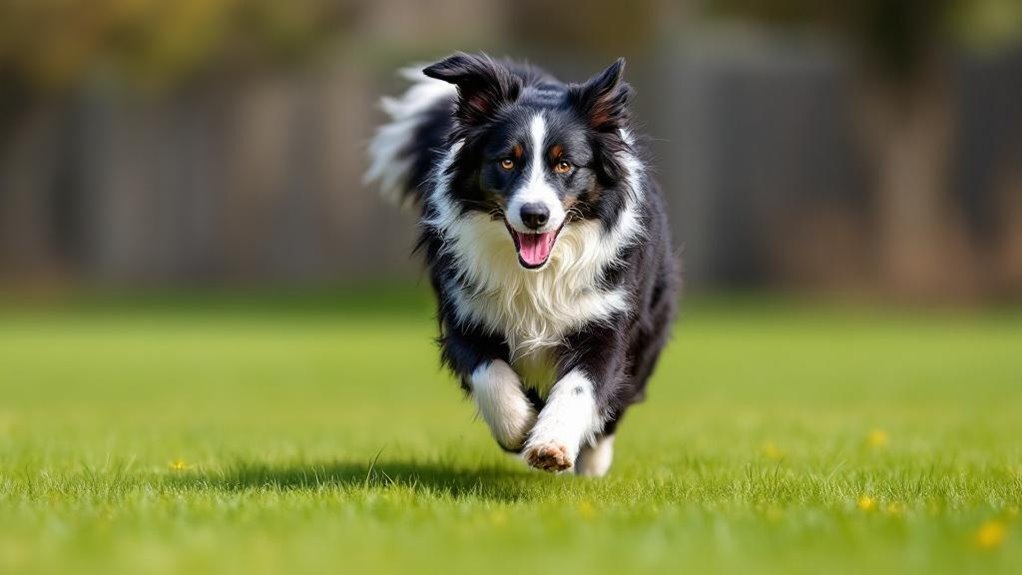
A shadow can turn from a passing cloud into a leash on your Border Collie’s mind. If your dog starts fixating on light, don’t brush it off as a quirky habit. You need to check for pain, vision trouble, or seizures first, then change how you respond at home so you don’t feed the pattern. Some cases settle with simple steps. Others point to something deeper.
- Key Takeaways
- Is Border Collie Shadow Chasing Serious?
- Rule Out Pain, Seizures, and Vision Problems
- Why Border Collies Chase Shadows
- How to Tell if Chasing Is Compulsive
- What to Do First if Chasing Starts
- Stop Laser, Light, and Reflection Games
- Remove Home Triggers for Shadow Chasing
- Fix Bedtime Triggers That Set Off Chasing
- Interrupt Shadow Chasing Without Adding Attention
- Teach a Strong Leave It for Shadows
- Build Recall Before Chasing Starts
- Reward Calm Responses to Shadows
- Give Your Border Collie a Structured Outlet
- Add Mental Work and Herding Outlets
- Use Clicker Training to Build Focus
- Prevent Rehearsal on Walks and Outdoors
- Keep Family Responses Consistent
- Avoid Mistakes That Reinforce Chasing
- Get Help From a Border Collie Behaviourist
- When Medication Can Help
- Frequently Asked Questions
- Conclusion
Key Takeaways
- Keep a trigger log and video episodes; if shadow chasing suddenly worsens or lasts hours, book a vet exam and behaviourist promptly.
- Ask your vet to check pain, eyes, nerves, seizures, and vision changes, because medical problems can look like compulsive shadow chasing.
- Stop all laser, flashlight, and reflection games, and avoid laughing, calling, or chasing, which can accidentally reinforce the behaviour.
- Interrupt calmly with a neutral sound, cue a known calm behaviour like sit or down, then reward only after the dog disengages.
- Reduce triggers by closing curtains, covering reflective surfaces, blocking problem areas, and using a consistent 20–30 minute calm bedtime routine.
Is Border Collie Shadow Chasing Serious?
While some shadow chasing starts as normal high-drive play, it can become serious when it grows into a compulsive habit.
You should watch how often your dog does it and how hard it’s to interrupt.
A border collie shadow game that lasts a few minutes is different from episodes that go on for hours or get worse each day.
It becomes more serious when it disrupts sleep, training, meals, or calm time at home.
Recent behaviour matters too.
If it starts suddenly, shows up hard at bedtime, or takes over much of the day, don’t wait.
Early help usually works better than waiting.
This can reflect herding drive, boredom, anxiety, or learned reinforcement.
In some dogs, it shifts into obsessive compulsive behaviour.
That’s when you need skilled behaviour support fast.
A stop cue and impulse training can help interrupt the pattern before it becomes more entrenched.
Rule Out Pain, Seizures, and Vision Problems
If your Border Collie starts chasing shadows all of a sudden or does it much more than before, you should have your vet check for pain, injury, or other physical causes.
You should also ask about eye and nerve problems, because vision changes or seizure-like episodes can look like a behavior issue.
Track when it happens, note any other signs, and record a video so your vet can judge what treatment your dog needs.
A steady daily exercise routine can also help rule out boredom-related behaviors in energetic dogs.
Check Medical Triggers
Caution matters here because a sudden jump in shadow chasing can point to a medical problem, not just a behavior issue.
If your border collie puppy started shadow chasing fast, book a vet visit. Pain can drive repetitive behavior. Think joints, spine, feet, and soft tissue after an injury or walk change. Episodes that look blank, twitchy, or leave your dog confused can signal seizures. Teething discomfort can also make puppies more restless and mouthy, so age and dental changes matter too.
| Trigger | Picture |
|---|---|
| Joint pain | stiff rise |
| Foot pain | licking paw |
| Spine soreness | flinch on touch |
| Seizure signs | stare, twitch |
| Vision change | snap at light |
Ask your vet to check the whole body and include an eye exam. If they find pain or another medical cause, treat that first. Training alone often won’t help while the trigger remains.
Assess Eyes And Neurology
Because shadow chasing can start from more than behavior, ask your vet for a full physical, eye, and neurological exam.
Sudden chasing can come from pain, focal seizures, or other nerve problems. Your vet should check cranial nerves, gait, and coordination. Ask about pain screening too. A dog may chase to distract from dental, joint, or belly pain.
You should also rule out eye causes with an ophthalmic exam and vision testing. Ask for menace response, pupil light reflexes, and fundoscopy. Vision changes or distortions can make shadows more interesting.
If episodes are brief, repeat often, happen at night, or include staring, lip-smacking, chewing, collapse, or confusion after, ask about video-EEG or a neurology referral. If needed, discuss bloodwork, thyroid testing, and MRI with your vet.
A sudden change in behavior can also point to illness mimics rather than a training issue, so a medical workup is important before assuming the problem is purely behavioral.
Why Border Collies Chase Shadows
Although it can look odd, Border Collies often chase shadows for clear reasons tied to breed, stress, and learning. Your dog notices motion fast because border collies were bred to stalk, control, and react to tiny movements. A flicker on the wall can trigger that same herding response.
Stress can add to it. If your dog feels overexcited, anxious, or frustrated, chasing light or shadows may help release that tension. It can become a self-soothing habit.
You can also teach it by accident. If you laugh, point, or play when your puppy spots reflections or laser dots, your dog may learn that chasing pays off.
Sometimes a sudden change has a medical cause, like pain or a neurological issue. New, fast-growing, or night-time episodes need a vet check before it turns compulsive.
Because Border Collies are especially sensitive to movement, shadow-chasing can reflect the same herding instinct that drives stalking and chasing in the breed.
How to Tell if Chasing Is Compulsive
Often, shadow chasing starts to look compulsive when it stops being brief or playful and turns into a repeated pattern that takes over your dog’s day.
Watch for these signs:
- It happens often and lasts a long time, sometimes for hours, especially at the same time each day.
- Your dog seems trance-like, restless, or stuck, and keeps going even when frustrated or sore.
- It spreads to many shadows or reflections and resists normal distraction once your dog started chasing shadows.
- It keeps happening after you ignore triggers, which can point to a compulsive disorder.
Also check timing. If the behavior escalates over days or weeks and interferes with sleep, meals, or settling, take it seriously. Sudden onset with pain, seizures, or illness may suggest a medical cause instead. Smart dogs also need mental stimulation because boredom can feed repetitive behaviors and make them harder to stop.
What to Do First if Chasing Starts
When shadow chasing starts, act fast and stay neutral. Don’t laugh, call your dog excitedly, or rush in with treats or toys. That attention can reward the behavior and make it stronger.
Instead, interrupt the episode with a neutral sound, like keys or a bell. You can also toss a toy away from the shadow without making it a game. Then ask for a known cue, like sit or down.
Next, move your dog calmly out of the trigger area. Step between the dog and the shadow or guide them under a table. If arousal stays high, shorten freedom right away with a leash, crate, or quiet room.
Once your dog can think again, offer a clear alternative and reward it well with high-value treats or a favorite toy. Adding mental stimulation and daily exercise can also reduce boredom-driven chasing and barking.
Stop Laser, Light, and Reflection Games
Never use laser pointers, flashlights, or tossed reflections to play with your dog.
Games with laser pens or bright light teach your Border Collie to fixate on motion it can’t catch. That can turn into shadow chasing fast.
If your dog notices a light spot, stay calm and stop feeding it with attention.
- Don’t laugh, clap, or join the chase.
- End the moment quietly and redirect at once.
- Offer a real toy like a tennis ball or tug.
- Reward play with objects your dog can grab.
This matters because catchable targets build healthy play.
Reflections don’t. They keep your dog searching and scanning for more.
If your dog still spends long periods chasing light, get help from a qualified behaviourist soon. Indoor enrichment ideas like nose work, puzzle toys, and hide and seek can help redirect that energy in healthier ways.
Remove Home Triggers for Shadow Chasing
At home, your first job is to cut off the things that trigger the chase. To remove home triggers, scan each room for flashes, glare, and moving reflections that feed shadow chasing in your Border Collie.
| Trigger | What you do | Why it helps |
|---|---|---|
| Sunset glare | Close curtains | Stops shifting light |
| Mirrors, TV screens | Cover or reposition | Cuts reflections |
| Shiny glass items | Remove them | Reduces flicker |
Keep your dog out of problem spots like hallways or kitchens when light changes happen. Use gates if needed. If a shadow appears, stay calm and quietly move your dog away. Don’t add treats, toys, or attention. That helps stop rehearsal. Your goal is simple: remove home triggers before chasing starts and make the space visually boring. Teaching calm zones can also help your Border Collie learn to settle away from these triggers.
Fix Bedtime Triggers That Set Off Chasing
At bedtime, you should remove light triggers like TV reflections, streetlight glare, bright displays, and shiny surfaces so your Border Collie doesn’t lock onto moving shadows.
You can also use a calm, predictable routine with short scent games or simple training before lights-out to lower arousal and help your dog settle.
If chasing starts, interrupt it early without fuss, then cue and reward a calm behavior so you don’t feed the habit.
Remove Evening Light Triggers
Because evening shadows often start the chasing, you should strip the room of light triggers before bed. Remove anything that throws a moving shadow or reflection across the floor or walls.
- Turn off or cover glowing items like clocks, TVs on standby, phone screens, and lamps.
- Block street lights, porch lights, and headlights with blackout curtains or blinds.
- Stop using laser pointers, phone torches, or shiny toys at night, and tell everyone not to point out reflections.
- Move furniture away from windows and reduce shiny surfaces that stretch long shadows.
Keep your puppy in a dim, uncluttered sleep area. If some light still gets in, use a covered crate or dark den to limit evening exposure. This cuts off chasing cues before they build into a habit.
Calm Predictable Bedtime Routine
Often, the best way to stop bedtime shadow chasing is to make the whole evening feel calm and predictable.
Build a calm predictable pre-bedroutine that lasts 20 to 30 minutes. Keep activity low and steady.
| Step | Picture |
|---|---|
| Short leash walk | Quiet sidewalk, loose lead |
| Gentle nosework | Sniffing a towel treat trail |
| Short cues | One sit, one down, soft voice |
| Settle cue | Dog on bed, body loose |
| Lights managed | Curtains closed, screens dark |
Cover windows, close curtains, switch off TVs and laptops, and block streetlight glare. Use matt surfaces when you can, and move lamps so light doesn’t sweep across floors or walls. If chasing starts suddenly or lasts for hours each night, call your vet and a behaviorist soon.
Interrupt And Redirect Early
A calm bedtime routine helps, but you also need to step in the moment shadow chasing starts.
- At the first sign your dog wants to chase shadows, interrupt calmly. Use a neutral sound like a doorbell chime or keys in a container. Don’t pet, scold, or fuss.
- Right after that, cue sit or down and reward fast with high-value treats. Clicker training can help mark the right choice clearly.
- Cut off bedroom triggers before bed. Close blinds, switch off lamps, block light under doors, and remove reflective surfaces.
- Never reinforce the habit. Don’t laugh, chase, or toss a toy. Attention can keep it going.
If episodes last for hours or keep getting worse over several nights, contact a Border Collie-savvy behaviourist quickly for help.
Interrupt Shadow Chasing Without Adding Attention
In the moment, interrupt shadow chasing with a neutral sound that doesn’t come from you, like a doorbell, a shake of a metal bowl, or dropped keys.
That helps you interrupt the behaviour without adding your voice, eye contact, or play. Don’t call out, laugh, scold, or toss a toy. Any attention from you can feed the habit.
As soon as your dog stops, ask for one clear action like sit, down, or spin. Reward that right away. Then give praise. This makes the reward land on the replacement behaviour, not the chase.
Set things up so it’s easier to succeed. Use a short leash, a stay zone, or move your dog away from bright reflections.
Also train a reliable emergency cue so you can stop chasing from a distance safely.
Teach a Strong Leave It for Shadows
Once you can interrupt the chase, start teaching a strong leave it so your dog learns what to do when a shadow shows up.
Use simple steps and pay fast.
- In a quiet room, place a low-value item on the floor. Say leave it, then mark and reward the instant your dog looks away.
- Raise difficulty slowly. Use better items, new spots, then reflections or swinging toys at a distance.
- Add a calm job. Ask for a sit or down-stay, and build time little by little before rewarding.
- Use a long line outdoors so you can block practice with real shadows and reward every success.
Then add a second cue like sit or watch me after leave it.
Heavy rewards keep your dog engaged, calm, and mentally stimulated.
Build Recall Before Chasing Starts
You need a recall that works before your dog locks onto a shadow.
Start in quiet places, use high-value rewards, and practice short recalls often so coming back to you pays better than chasing.
Then cue the recall before fixation, use a long line to keep control, and make things easier again if your dog starts missing the cue.
Reliable Recall Foundations
Start recall work early, before your Border Collie locks onto shadows. Build recall with high-value rewards, like freeze-dried liver or rolled raw, at very short distances. Reward every fast return so success stays near 100 percent.
- Use one clear cue, like “Come,” and say it the same happy way each time.
- Practice first in quiet places, then add distance, people, and brief movement.
- Clip on a 20–50 m long line so your dog can’t rehearse chasing.
- Add mild sound distractions, then cue recall and pay right away when your dog turns back.
Keep the cue clean. Don’t call your dog to scold. You want that word to predict something better than shadows. Finish by teaching “come and sit” or “come and take” so your dog returns and does a rewardable job.
Cue Before Fixation
Next, use that recall before your Border Collie locks onto a shadow. Teach a short recall cue like “Come now” and reward fast responses with freeze-dried liver. Practice first in quiet rooms until your dog turns to you in one to two seconds.
Then stretch the skill. Start at 5 to 10 feet. Build to 20 to 50 feet and work near places where shadows show up, like doorways or the bedroom at dusk. Add a soft whistle or treat tin to interrupt fixation, then ask for sit or down and pay well.
Set up easy practice with a helper and a dim moving light. Call once before movement starts. Keep your dog on a short leash. If stalking begins, step back and make it easier.
Reward Calm Responses to Shadows
Often, the best way to reduce shadow chasing is to reward calm the moment a shadow appears. You can reward calm responses by cueing sit or down right away, then paying with high-value treats. A behaviourist may suggest freeze-dried liver or rolled raw because fast, strong reinforcement helps.
Reward calm as soon as shadows appear: cue sit or down, then reinforce fast with high-value treats.
- Wait for a few calm seconds and for your dog to look away before you treat.
- Don’t laugh, call out, or scold during chasing, because your attention can feed the habit.
- Practice in quiet places first, with short sessions, then slowly increase shadow distance and intensity.
- If chasing starts, interrupt without social attention, then ask for the calm cue and reward it.
Keep this routine the same at home, outside, and with every family member, every day.
Give Your Border Collie a Structured Outlet
A few short, focused work sessions each day can give your Border Collie a better outlet than shadow chasing, because this breed needs hard mental work as much as physical exercise.
Plan several 10 to 15 minute sessions. Use treats or a clicker. Teach simple skills, tricks, and calm cues. This gives mental stimulation and turns frantic energy into clear work.
Add jobs that fit the breed. Try short agility runs, controlled frisbee or tennis ball drills, or brief scent tracking games. Rotate activities so your dog gets variety and doesn’t lock onto one pattern. Aim for two or three outlets each day.
Make tasks a little harder over time. Reward down-stay and leave-it around mild distractions. If chasing still continues, you may need the help of a behaviorist, and medication may also help.
Add Mental Work and Herding Outlets
Building clear jobs into your dog’s day can reduce shadow chasing because Border Collies fixate on movement and need that drive aimed at something useful.
Giving your Border Collie clear daily jobs helps redirect movement-fixation away from shadows and into useful, satisfying work.
Try short work blocks several times a day instead of only longer walks. Mental work often helps more with shadows.
- Use scent games, puzzle feeders, and brief trick sessions to tire your dog’s brain.
- Add herding-like activities such as moving toys to a spot, place work, or guided recalls.
- Use frisbee, fetch, or simple agility drills to channel chase energy in a safe way.
- Rotate tasks and slowly make them harder so boredom doesn’t bring the habit back.
Keep sessions around 10 to 20 minutes. Use rewards your dog loves, like liver or a favorite ball. Stop while your dog still wants more.
Use Clicker Training to Build Focus
Start clicker training in a quiet room so your Border Collie can notice you before it notices movement. Click the moment it looks at you, then reward within one to two seconds. Use very tasty food so your dog’s focus shifts from shadows to you.
Next, build duration slowly. Start with half a second to one second before the reward, then add one or two seconds at a time. Aim for calm sit-and-watch attention for five to thirty seconds.
Teach a clear “watch me” cue with clicker training. Say the cue, wait for eye contact, click at once, and reward fast. Do twenty to thirty short trials per session, two to four times each day. If chasing starts, interrupt first, ask for down-stay or touch, then click and reward.
Prevent Rehearsal on Walks and Outdoors
On walks, use a short leash or long line so you can stop shadow chasing before it starts.
Reduce triggers by choosing quieter routes, calmer times, and more control in busy areas.
When you spot a likely trigger, cue a simple behavior like sit or target and reward your dog for choosing you instead.
Use Leashes Strategically
Keep your Border Collie on a short, non-retractable leash about 6 to 10 feet long when you’re near people or in places where shadows show up.
A short (6–10 ft) non-retractable leash lets you stop rehearsal fast and redirect your dog before chasing starts.
Avoid a flexi/retractable leash. It adds distance, tangles easily, and gives your dog room to practice the habit.
Use the leash most during higher-risk times:
- Bedtime routines
- Low-light walks
- Near shiny floors or windows
- Around moving people
While your dog is leashed, cue and reward simple alternatives like sit, down, leave it, and recall.
If you need more space for training, use a 20–50 ft long line in short, controlled sessions.
That way, you still prevent rehearsal while building better responses.
Control Outdoor Triggers
For outdoor walks, control the setting before your Border Collie has a chance to lock onto shadows or reflections. Plan routes and timing so triggers stay low. Walk in brighter daylight when shadows look softer. Choose shaded paths, tree cover, and streets away from reflective windows or low sun. Keep a short leash near people, cars, and patchy light so you can step in early.
Also, avoid off-leash freedom where shadows move fast or reflections flash. Parks at sunset, sidewalks by parked cars, and areas under trees can all invite chasing. If strangers, cyclists, or moving shadows appear, keep your dog close to your side and create distance. Cross the street if needed. Prevention matters here. Each outdoor chase can strengthen the habit and make control harder later.
Reinforce Alternative Behaviors
Start by stopping the chase before it starts. Keep your Border Collie on a short lead or long line so you can interrupt interest fast and cue another job before fixation begins.
- Teach watch me or sit until it’s rock solid outdoors.
- Add distance and mild distractions, then pay with high-value treats.
- Spot triggers early, like low sun, walkers, or cyclists, and ask for sit, down, or heel before your dog locks on.
- Use 5 to 10 minute training breaks for recall, scent work, or tricks during walks.
These short jobs give your dog something useful to do. They also cut down on rehearsal.
In high-risk places, keep freedom limited. Move into shade, go indoors, or use a harness and short lead until choices stay steady.
Keep Family Responses Consistent
When each person responds the same way every time, your dog learns faster and the shadow chasing loses power. Set one family plan and stick to it. If owners notice early signs, everyone should use the same interruption right away, like a bell or tossing a toy away.
When everyone responds the same way, your dog learns faster and shadow chasing starts to fade.
Choose one cue such as “sit” or “leave it.” Have every person reward that cue with the same high-value treat. Your dog then learns one clear replacement behavior from everyone.
Keep daily routines steady too. Feed, walk, train, and settle down at regular times. That lowers stress and helps prevent triggers.
Track progress in one notebook or shared app. Write down triggers and what worked. If the pattern grows or stalls, your notes help you decide when to contact a behaviourist.
Avoid Mistakes That Reinforce Chasing
A clear family plan works best when you also stop the small mistakes that feed the habit. Your reactions matter, because any extra attention can lock in the chase.
- Don’t laugh, clap, call your dog’s name, or toss toys during an episode. That shifts your dog’s focus onto the game.
- Don’t use laser pointers, reflective toys, or make moving lights and shadows on purpose. Even brief puppy play can build this habit.
- Don’t run after your dog or grab them. Chasing adds excitement and can reward the behavior.
- Don’t be inconsistent. If you allow chasing sometimes, learning stalls.
Also, skip low-value treats or soft talking during the episode. Use a non-interactive interruption, then reward a trained alternative behavior every time after it.
Get Help From a Border Collie Behaviourist
Because shadow chasing can grow into a hard-to-break habit, get help from a qualified behaviourist who knows Border Collies or other herding breeds.
These dogs have strong chase instincts. Your dog needs a plan built for that. Early action matters because long-term habits often take months to change.
A certified expert can check for pain or seizure-like issues and give the help of a behaviourist, not guesswork. Use referrals, university clinics, or AVSAB-style resources.
| You may notice | You may feel |
|---|---|
| More pacing and staring | Worried and tired |
| Faster spinning at light | Helpless |
| Trouble settling indoors | Frustrated |
| Setbacks during training | Discouraged |
Expect a structured program. It should include management, calm interruption, step-by-step desensitisation, new replacement behaviours, and regular reviews. That keeps progress clear and your dog safer.
When Medication Can Help
Some Border Collies need more than training and management to break a shadow-chasing cycle. If your dog’s behavior is severe or well established, medication may need help lowering the compulsive drive so learning can happen again.
- A veterinary behaviourist should check for pain, seizures, or other causes first.
- SSRIs like fluoxetine or tricyclics may reduce compulsive behavior.
- Drugs like trazodone or benzodiazepines may lower arousal in some dogs.
- Medication works best with behavior work and home management, not alone.
You should expect slow progress. Your vet may track changes for weeks or months and adjust the dose. Long-term use only makes sense if your dog’s life improves, chasing drops, and daily function gets better.
That careful plan protects welfare and improves safety overall.
Frequently Asked Questions
How Do I Stop My Border Collie From Chasing Shadows?
Stop it by removing reinforcement, calmly interrupting episodes, and redirecting your border collie into structured exercise, training, and games. Teach recall and leave-it, reward compliance, and if it’s sudden or extreme, consult a behaviorist.
How to Fix Dog Chasing Shadows?
You should first rule out pain or neurological issues with your vet, then prevent shadow-trigger practice, reward a reliable alternative cue, increase structured exercise and scent work, and consult a behaviorist; medication can help severe cases.
What Is the Leading Cause of Death in Border Collies?
Cancer is the leading cause of death in Border Collies—because brilliant, energetic dogs apparently don’t get an exemption. You’ll most often hear about hemangiosarcoma, lymphoma, and osteosarcoma, so you should watch closely and schedule regular vet checks.
How to Help Dogs That Are Scared of Shadows?
Help your dog by calmly removing them from shadows, reducing excitement, and ignoring reactions. You can desensitize with faint shadows and treats, reward calm cues, and consult your vet or behaviorist if fear seems severe.
Conclusion
Shadow chasing can get out of hand fast, but you can stop it from taking root. Start with your vet to rule out pain, seizures, or vision trouble. Then stay consistent, stop rewarding the behavior, and guide your dog to calm, simple tasks. Manage light triggers and give your Border Collie daily work for body and mind. If the problem keeps growing, don’t wait. Bring in a Border Collie behaviourist and ask your vet whether medication may help.