
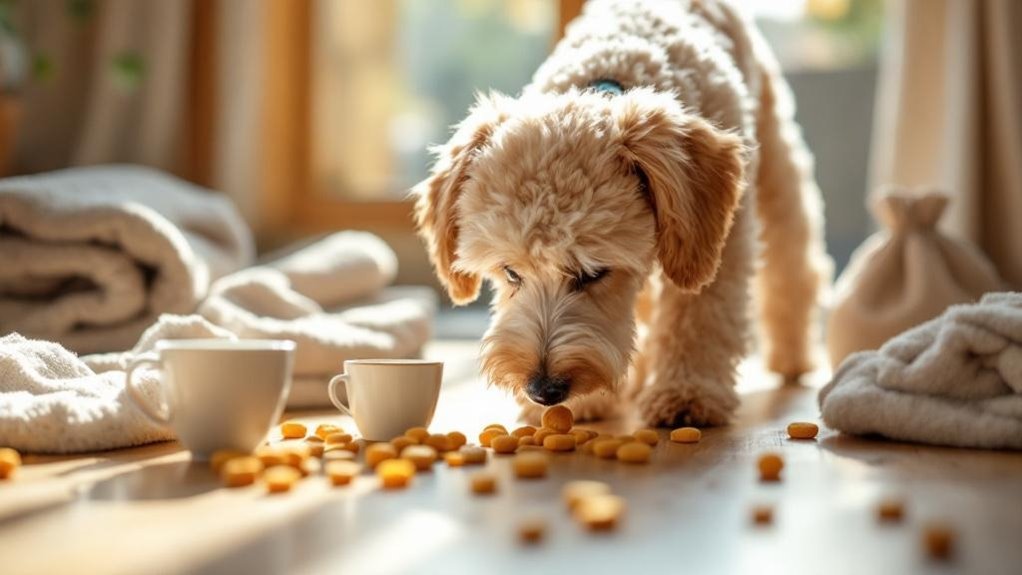
You can tire your poodle’s mind, build focus, and ease boredom with simple nose work at home. You don’t need much, just boxes, cups, treats, and a few quiet minutes. Start with easy hides your dog can win, then make each search a little harder. Keep sessions short and clear, and you’ll help your dog stay calm and engaged. The first game is easier than you think.
- Key Takeaways
- Why Poodles Love Nose Work
- What You Need to Get Started
- Set Up Nose Work at Home
- Play an Easy Treat Hunt
- Hide Treats Around the House
- Try a Muffin Tin Puzzle
- Teach the Three-Cup Scent Game
- Set Up a Simple Box Search
- Use Toys for a Scent Challenge
- Make an Easy Scent Trail
- Play Nose Work Hide-and-Seek
- Keep Nose Work Fun and Frustration-Free
- Frequently Asked Questions
- Conclusion
Key Takeaways
- Nose work gives poodles vital mental exercise, reduces boredom, and channels energy into calm, rewarding problem-solving at home.
- Start with visible food hides and one clear cue like “Find it,” so your poodle quickly understands the game.
- Keep sessions short—three to four searches in under five minutes—to maintain enthusiasm, focus, and confidence.
- Rotate simple household games like muffin tins, cups, boxes, scent trails, and low shelves to build skills progressively.
- Use tiny high-value treats, reward at the source, supervise closely, and make hides easier if your poodle gets confused.
Why Poodles Love Nose Work
Often, Poodles love nose work because scent is one of the main ways they understand the world. Your dog’s dog nose is far more sensitive than yours, so scent games feel natural and rewarding from the start.
That matters because Poodles need mental stimulation as much as exercise. When you give them short nose work sessions, you help reduce boredom and the unwanted habits that can follow. They learn fast, especially when you pair a clear cue with tiny high-value rewards.
The work stays low impact, so puppies, adults, and seniors can all enjoy it. More important, you turn your Poodle’s curiosity into calm focus. You guide the search, mark the find with praise, and build teamwork. That’s why nose work fits Poodles so well at home every day. snuffle mats and other scent-based enrichment can make these sessions even more engaging.
What You Need to Get Started
You only need a few basic supplies to start, like high-value treats, a clear cue such as “Find it,” and simple props like boxes or a muffin tin with tennis balls.
Keep your setup safe by using food hides first and by keeping any birch scent sealed in a ventilated tin or jar so your poodle never touches the oil.
Start with short, easy searches so your dog learns the game fast and links scent work with reward. Brain games can also help build focus and keep your poodle engaged.
Basic Supplies Checklist
Gather a small kit before you start so each scent game stays simple and clear. Use soft high-value treats that your poodle can eat fast. Keep sessions short, about three to four searches that last one to two minutes each.
Set out an empty muffin tin, tennis balls, several boxes, and three opaque cups. Add a lickmat or Pupsicle tray for a calm finish. Keep jackpot rewards nearby, plus tiny treats for quick marking at the source.
For scent work later, store a cotton swab in a ventilated tin or jar with a mild birch scent. Bring a clicker or use “Find it!” every time. Keep baby wipes, a non-slip mat, and a vet questions list handy if your dog has breathing issues or takes medication. Short brain training games can also help boost focus, self-control, and calmness while reducing boredom-related behavior issues.
Safe Scent Setup
Now set up the scent game so your poodle can search safely and clearly. Begin with strong food scent, not essential oil. Use tiny treats like cooked chicken, cheese, or high-value strips so your dog nose learns the job fast. Keep sessions short and simple.
| Item | Use | Safety |
|---|---|---|
| Cotton swab | Holds scent | Keep clean and dry |
| Ventilated tin | Contains odor | Prevent licking |
| Glass jar | Backup container | Use lid loosely |
Place the scented swab inside a ventilated tin or jar. If you later use essential oil, dilute one drop on the swab only. Never put oil on your dog. Keep toxic odors away. Ask your vet if breathing issues exist. Pick one clear start cue and use it the same way each session. Nose work is a simple indoor enrichment game that can help reduce boredom and give your dog a focused job.
Reward And Start Cue
A clear start cue and a strong reward set the whole game up. Pick one start cue, like Find it or Search, and use it every round. Your poodle learns that those words mean sniff now.
Pair the cue with a reward your dog really wants. Use high-value treats and keep them tiny. Smelly dog treats, chicken, cheese, or treats used in nose work classes work well. Show the treat, give the cue, and reward any nose engagement right away.
At first, keep rewards visible or place them on top of containers. That helps your dog win fast. Do 3 to 4 short searches, about 5 minutes each. Later, reward at the source from your hand, then hide treats. If your dog seems confused, make it easier.
Use short play sessions to keep your poodle engaged and eager for the next round.
Set Up Nose Work at Home
Start with a clear cue like “Find it!” and keep each session short, with 3 to 4 searches that last under 5 minutes so your poodle stays focused.
Use strong-smelling treats and place them where your dog can see them first. Then make the setup harder with hides under cushions, behind chair legs, or in partly closed cardboard boxes. Reward at the source each time.
You can also build simple puzzle toys. Try a muffin tin with treats in some wells and tennis balls on top. Or set out four to six cardboard boxes and add empty ones later.
If your dog needs low-impact work, make scent trails short or use scent stations with ventilated tins, cotton, or a LickMat. Change rooms and hide spots often so your poodle keeps learning. Scent work can also sharpen your dog’s focus and problem-solving skills.
Play an Easy Treat Hunt
Once your poodle understands the game, make it even simpler with an easy treat hunt. Show them a small, smelly reward first. Then place it in an obvious spot, say “Find it,” and let them use their nose to get it. This builds the link between searching and earning treats.
Keep each session short. Aim for three or four searches and stop within five minutes. Use tiny treats so you can repeat the game without overfeeding. When your dog succeeds, praise and reward right where they find the food.
Then raise the challenge a little. You can hide treats behind a chair leg, under a rug edge, or inside an open box. Change the spot each round. For variety, try a muffin tin with tennis balls too sometimes. For extra enrichment, you can also use puzzle toys to keep the game engaging.
Hide Treats Around the House
Start with 6 to 10 tiny treats in easy spots your poodle can see, then say, “Find it!” so your dog links sniffing with a reward.
Once your poodle gets the idea, hide treats behind chair legs, under rugs, or in open boxes. Change the spots each round and make the hides a little harder over time.
You can also mix in sniff games to keep the challenge fresh and help reduce boredom.
Easy First Hides
Often, the best first hides are the easiest ones. Use high-value treats with a strong smell, then let your poodle find them in plain sight first. That helps your dog nose start working without frustration.
| Hide spot | Why it works | Next step |
|---|---|---|
| Floor edge | Easy win | Move near rug |
| Chair leg | Clear scent | Tuck slightly behind |
| Under towel | Builds confidence | Cover a bit more |
Start with low locations like a rug edge, behind chair legs, or under a tossed towel. Keep pieces tiny. Do short searches, three or four rounds, and stop before your dog gets tired. Then hide the scent a little more, like under a cushion or inside a partly open shoe. Always praise and reward at the find. If your poodle struggles, make it easier right away. Short sessions of 5–10 minutes help keep your dog focused and prevent frustration.
Use A Search Cue
Now give each hunt a clear start signal. Pick one search cue, like “Find it” or “Search,” and say it right before you release your poodle. Soon, your dog will link those words to nosework and start hunting with focus.
At first, let your poodle watch you hide treats in easy spots, like by a chair leg or on a low shelf. Use tiny, smelly rewards so you can run short sessions without using too many. Try three or four searches, then stop while your dog still wants more.
Change rooms and locations often. That builds scent generalization and helps your poodle understand the game anywhere in the house. If your dog looks lost, make the hide easier so the cue stays clear and the game stays successful each time.
Increase Hide Difficulty
As your poodle gets the idea, make each hide a little harder. Start with visible treats on the floor or a low table. Then raise hide difficulty by tucking rewards behind furniture legs, under rugs, or in slightly open drawers. Use tiny high-value rewards so you can repeat fast in short search sessions.
| Stage | Hide spot | Goal |
|---|---|---|
| Easy | Floor, low table | Build confidence |
| Medium | Rugs, chair legs | Improve focus |
| Hard | Drawers, shelves | Strengthen scent discrimination |
Add elevation variation with couch cushions or low shelves at 1 to 2 feet. Mix in decoy containers and shuffle the treat each round. That keeps your dog using scent, not memory. If your poodle stalls, make the hide easier again, then rebuild slowly over several sessions.
Try a Muffin Tin Puzzle
Set up a muffin tin puzzle with a 12-cup tin, 12 tennis balls, and a few smelly treats hidden in some of the cups. This simple nose work game teaches your poodle to sniff, think, and move the balls to earn rewards.
Start easy. Put treats in three to six cups, then cover each one with tennis balls. Let your dog watch the first round so the goal is clear. Use tiny high-value bites for fast repeats and steady interest. Change treat spots each round.
Keep short sessions, about three or four searches and no more than five minutes each. Praise each find. For difficulty progression, hide fewer visible treats, add more empty cups, or switch to smaller balls or cloth covers. Stop before your poodle gets frustrated or tired.
Teach the Three-Cup Scent Game
If your poodle enjoys simple nose work, teach the three-cup scent game with one easy win first. Show a treat under one cup and say “Find it.” Let your dog use their nose to find the reward. Then feed at the cup.
| Step | What you do | What your poodle learns |
|---|---|---|
| 1 | Start with three cups | Game has a clear target |
| 2 | Place treat under one | Scent predicts reward |
| 3 | Slide cups, then shuffle more | Track odor, not place |
If your dog guesses wrong, lift the right cup fast and reward there. Keep rounds short. Use paper or plastic cups that aren’t airtight. Supervise closely. Later, add distance, use two cups first, or switch to less smelly love nuggets for better scent work.
Set Up a Simple Box Search
Gather 4 to 6 empty cardboard boxes and hide a smelly treat in one box while your poodle waits out of the room. Use mixed box sizes and place them on the floor with space between them. Start easy so your dog nose learns the game fast.
Bring your poodle in, give your Find it cue, and let them search. At first, leave flaps open or let the treat peek out. Reward right away when they find it. Keep praise calm and clear.
Run short sessions, about three or four searches in five minutes. As your poodle succeeds, hide treats deeper, close flaps, shuffle the cardboard boxes, or move them to another room. Increase difficulty slowly. Watch closely so your poodle doesn’t chew the boxes. If they struggle, make the hide simpler again.
Use Toys for a Scent Challenge
For a new scent game, use a favorite toy and add a light smell your poodle wants to follow.
Let your dog sniff the scented toy first. Then hide it in easy spots and say, “Find it.” This turns hide and seek into one of your best nose work games. Reward the find right away with high-value treats or a quick play burst.
| Step | What you do | Why it helps |
|---|---|---|
| Start | Show toy, let sniff | Builds scent link |
| Hide | Use easy then harder spots | Grows search skill |
| Reward | Pay at the find | Keeps effort strong |
Keep short sessions to three to five searches. Try boxes, a towel, or under furniture. You can wrap the toy lightly to soften odor later.
Make an Easy Scent Trail
Start by making a simple trail your poodle can follow and win. You can use a dog-safe scent source or a smelly treat, keep the first path short and clear, and end with a reward as you say, “Find it!”
Then you can raise the challenge with longer trails, more turns, and weaker scent so your dog learns to track with care.
Trail Setup Basics
When you make your first scent trail, keep it short and clear so your poodle can learn the game without guessing. Use a strong dog-safe treat, or a cotton swab with very diluted birch or anise oil that never touches your dog. Make the trail only 5 to 10 meters long so your dog nose can stay on one clear line.
Try the drag method. Pull a string with a smelly cloth or treat along the floor. Curve it a little and pass around chairs or under a low table. Add tiny treats every 1 to 2 meters, then layer the rewards with a jackpot at the end. Keep sessions to 3 to 5 minutes. Watch for hazards and put safety first. Stop while your poodle still wants more.
Increase Tracking Challenge
Build the next trail with a strong bait like small pieces of turkey or hot dog tied to a sturdy string, then drag it across the floor for about 5 to 15 feet. Keep the first scent trail straight or use one soft curve. End with visible treats or a toy.
- Say Find it before each search.
- Use short frequent sessions, about 3 to 5 minutes.
- Start dragging the string in safe areas only.
- Increase challenge slowly, never all at once.
When your poodle succeeds, lengthen the trail to 20 to 50 feet. Add turns. Pull the bait under rugs or around furniture. Keep rewards small but steady.
Outside, use quiet grass and supervise closely. Break the reward into tiny pieces at the end.
Play Nose Work Hide-and-Seek
Ease into nose work hide-and-seek by letting your poodle win right away. Show a high-value treat, place it in plain sight, then give a clear cue like “Find it!” Your poodle will use its dog nose to grab the reward and learn the game.
Start with easy hides on the floor or peeking out behind furniture. Later, tuck treats under a blanket, behind chair legs, or inside open boxes. Keep scent work short. Do three or four search games in about five minutes. Use tiny, smelly treats so you can repeat often.
Change rooms, boxes, or use a toy with scent on it. That helps your poodle follow odor, not sight. When your poodle finds the hide, reward at the source with praise or a quick play break.
Keep Nose Work Fun and Frustration-Free
Usually, the best nose work sessions stay short and simple so your poodle doesn’t get tired or lose interest.
- Keep sessions short. Aim for three or four searches lasting 3 to 5 minutes each.
- Start easy. Use visible treats or a toy and say “Find it!” Raise difficulty only after your dog succeeds often.
- Use high-value treats. Strong smells like tiny Super Strips or Love Nuggets make nose work worth repeating.
- Avoid frustration and end on success. If your poodle looks confused, make the hide easier right away. Reward at the source, then finish with praise or play.
That pattern builds confidence.
Your dog learns that searching works, rewards come fast, and each session stays clear, fun, and motivating for next time.
Frequently Asked Questions
What Is the Easy Nose Work Game for Dogs?
You can start with a simple treat hunt: place tiny, smelly treats in easy visible spots, say “Find it!”, and let your dog sniff them out. Keep sessions short, supervised, and gradually make hiding places harder.
What Is 10 Minutes of Sniffing for Dogs Equivalent To?
Amazingly, you can treat 10 minutes of sniffing like 30–60 minutes of exercise for your dog. You’ll tire their brain fast because scent work packs a million tiny puzzles into one short, enriching session.
What Games Do Poodles Like to Play?
Poodles like puzzle games, scent hunts, fetch, hide-and-seek, and trick training. You can keep them happy with muffin tin puzzles, shell games, box searches, short scent trails, and interactive toys because they love thinking and moving.
What Is 15 Minutes of Mental Stimulation for Dogs?
Fifteen minutes of mental stimulation means you give your dog three or four short, focused problem-solving or scent games. If that sounds too brief, don’t worry—you’ll still tire your dog mentally without overdoing physical activity.
Conclusion
Bring nose work into your home and you’ll give your poodle a clear job that fits their sharp mind. Start simple. Let them sniff boxes, cups, and corners, then watch their focus settle like dust in a sunlit room. Keep each search short. Reward fast. End on a win. Over time, you’ll build skill, calm, and trust. A few quiet minutes of scent play can turn a restless day into one that feels steady and full.