
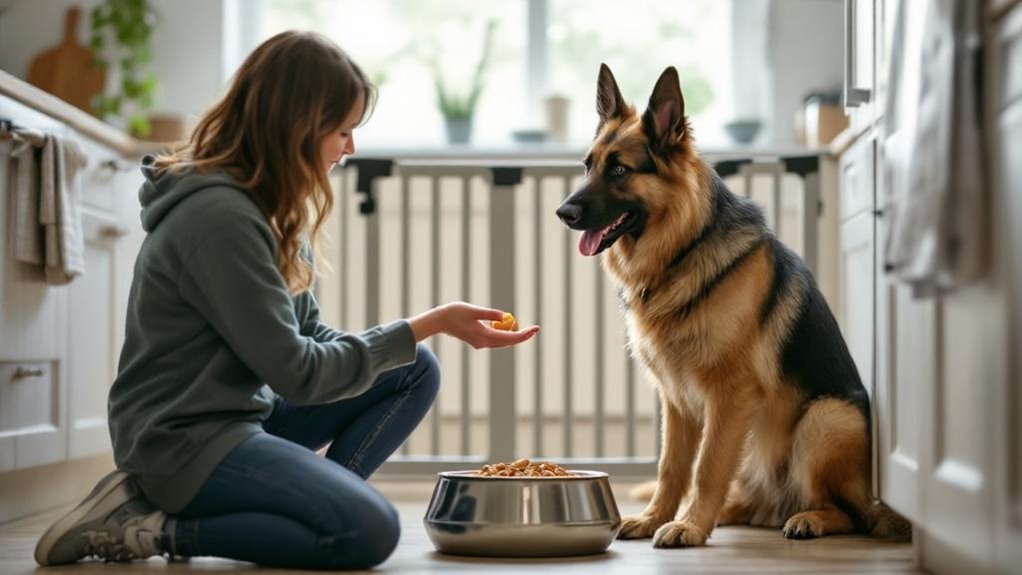
If your German Shepherd guards food, start with safety and simple structure. You should rule out pain first, especially if the behavior changed fast. Then feed in a quiet space away from kids and other pets, and watch for stiff posture, hard staring, or growling before things escalate. Small changes can lower risk and build trust, but the way you respond in those first moments matters most.
- Key Takeaways
- Recognize Food Aggression in German Shepherds
- Rule Out Pain and Sudden Behavior Changes
- Understand Why German Shepherds Guard Food
- Create a Safe Feeding Plan for Your German Shepherd
- Feed Your German Shepherd in a Quiet Space
- Keep Kids and Guests Away at Mealtime
- Avoid Common Mistakes Around the Food Bowl
- Use a Consistent Feeding Routine
- Slow Fast Eating Safely
- Drop Treats to Build Bowl Trust
- Teach Your German Shepherd to Wait Calmly
- Teach Trade and Leave It for Safety
- Prevent Guarding of Chews, Toys, and Stolen Items
- Spot Early Warning Signs of Escalation
- Manage Food Aggression Between Dogs
- Know When to Get Professional Help
- Manage Your Home Safely During Training
- Frequently Asked Questions
- Conclusion
Key Takeaways
- Feed your German Shepherd in a quiet, separate room or crate, and keep children, guests, and other pets away during meals.
- Use a fixed feeding routine with the same times, place, portions, and cues to reduce anxiety and build predictability.
- Watch for early warning signs like stiffening, hard staring, whale eye, growling, freezing, or lunging near the bowl.
- Never punish growling or reach into the bowl; instead, toss high-value treats from a safe distance to build trust.
- Schedule a veterinary exam for sudden guarding or rapid changes, especially with pain signs like drooling, chewing reluctance, or low activity.
Recognize Food Aggression in German Shepherds
Often, you’ll spot food aggression in a German Shepherd through small changes at mealtime before it turns into snapping or biting.
Watch your dog’s body closely. German Shepherds may stiffen, freeze, block the bowl, gulp food, growl low, or give a hard stare. You might also see whale eye when you walk near the dish. These are common signs of resource guarding and early food guarding.
Pay extra attention in multi-dog homes. Trouble often grows around shared bowls or free-feeding. Use separate feeding areas to lower tension and help you see each dog’s behavior clearly.
Food guarding can show up at any age, though many owners notice it between one and five years old. If you see a sudden onset or a sharp increase, take note and act quickly.
Because pain or illness can also trigger defensive behavior, a veterinary checkup is important if the aggression appears suddenly or changes fast.
Rule Out Pain and Sudden Behavior Changes
If your German Shepherd starts guarding food all at once, schedule a vet exam before you treat it as a training problem. A sudden onset can point to medical causes, not disobedience.
Pain-related problems often make eating stressful and can trigger guarding. Tell your vet about drooling, reluctance to chew, whining while eating, limping, or lower activity.
- Ask about dental disease, arthritis, GI upset, and pancreatitis.
- Share any vomiting, weight loss, or lethargy right away.
- Expect diagnostics such as bloodwork, abdominal imaging, and a dental exam.
- Follow treatment first, since pain care often reduces guarding.
If your dog shows severe guarding plus other changes, get urgent care. When vets find and treat the cause, behavior often improves without punishment or risky home training attempts. Border Collies can also develop shadow chasing that may need medical evaluation and behavior support.
Understand Why German Shepherds Guard Food
Once your vet has ruled out pain, it helps to look at why your German Shepherd guards food in the first place.
German Shepherds can show resource guarding because genetics, stress, and learning all play a role.
Some dogs come from scarcity, shelters, or heavy litter competition. That history can shape food aggression fast.
Medical causes matter too. Dental pain, stomach upset, and arthritis can make meals feel threatening.
Early socialization also counts. Without calm practice around the bowl, dogs may protect it.
Prey drive can also make some German Shepherds more intense around valued food or treats.
| Trigger | Why it matters | Example |
|---|---|---|
| Genetics | Higher guarding tendency | Watch early tension |
| Past scarcity | Builds urgency around meals | Rescue background |
| Stress | Raises defensiveness | New baby or move |
Inconsistent feeding protocols or communal meals can add pressure and reinforce guarding in some homes over time.
Create a Safe Feeding Plan for Your German Shepherd
Because mealtime needs to feel calm and predictable, start by giving your German Shepherd a safe place to eat alone. Use a separate feeding room or crate for 10 to 15 minutes so people and pets don’t add pressure.
- Set a steady feeding schedule, like 7 AM and 6 PM, every day.
- Use puzzle bowls or slow-feeders so meals last 10 to 15 minutes.
- Practice approach-and-drop desensitization by tossing treats into the bowl from a distance.
- If food aggression or resource guarding appears, stop and call a certified behaviorist.
This plan helps your German Shepherd expect meals and stay less anxious. It also lowers triggers for food aggression.
Keep children away during meals. Don’t punish growling, stiffening, or snapping. Warnings matter. Safety comes first while you get expert help.
When your dog seems tense, keep a safe distance and only work below the point where guarding starts.
Feed Your German Shepherd in a Quiet Space
Feed your German Shepherd in a calm, low-traffic room so he can eat without stress or distractions.
Keep other pets away during meals, and if you have more than one dog, feed them in separate spaces to prevent competition.
Stick to the same mealtimes each day so your dog knows what to expect and feels more secure. Consistent daily routines can also help new owners avoid common training and feeding mistakes.
Choose A Calm Room
A quiet room helps your German Shepherd eat without stress. Pick a calm room like a laundry room or spare bedroom. This helps reduce anxiety and lowers the chance of guarding during meals.
- Use a room with a solid door or baby gate for reliable separate feeding.
- Keep meals in the same room and same spot for a consistent routine.
- Remove distractions like toys, noise, and foot traffic before you set down the bowl.
- Create a safe environment with a non-slip mat, fresh water, and a slow-feeder if needed.
Keep the space simple and comfortable. Your dog should be able to focus on eating, not on movement around the house.
A predictable setup makes meals feel safe, and that can prevent tension before it starts each day. Adding sniff games before mealtime can also help your German Shepherd settle and reduce boredom.
Separate From Pets
When other pets can see the bowl, competition can start fast. Feed your German Shepherd in a separate room or closed kitchen so other animals can’t watch, rush over, or try to steal food. That simple change lowers tension and helps your dog eat without guarding.
If you have more than one pet, use baby gates and keep them in different rooms, at least 6 to 10 feet apart. You can also use a crate or exercise pen as a calm feeding area if your dog settles well inside. Close it during the meal.
After your dog finishes, remove other animals, kids, and extra foot traffic from the feeding area for 10 to 15 minutes. A consistent feeding schedule and the same quiet spot help your dog feel secure each day.
Gradual freedom should only come after your dog stays relaxed and calm around food.
Keep Mealtimes Predictable
Once you’ve set up a separate feeding area, keep the routine steady every day. Feed your German Shepherd on the same feeding schedule, like 7:00 AM and 6:30 PM, so meals feel safe and expected. A steady routine helps reduce guarding and lowers stress.
- Use a quiet dining area with low traffic
- Put the bowl in the same spot each meal
- Have the same person serve food when possible
- Feed multiple dogs with separate feeding spaces
Close a door or use a baby gate so your dog can eat without pressure. Put the food down and walk away. Return after your dog finishes. This consistent feeding protocol teaches calm eating. It also prevents interruptions that can trigger possessive behavior. Keep the bowl, place, and timing the same each day. Predictable meals build trust over time. German Shepherds also respond well to consistent routines that reduce uncertainty and support calm behavior.
Keep Kids and Guests Away at Mealtime
You should make mealtime a kid-free zone for your German Shepherd. Feed your dog in a separate room, behind a closed door, or behind a baby gate so guests and children can’t get close to the bowl.
Set clear rules and feeding times so everyone knows to stay away during meals. The 3-16 week window is also a critical time for early socialization, helping puppies build confidence around people and routines.
Kid-Free Feeding Zone
Always set up one quiet room as your German Shepherd’s kid-free feeding zone, like a laundry room or home office, and keep the door closed during meals so no child or guest can walk up by mistake.
Use these steps to make the space predictable and safe:
- Post a clear sign on the door.
- Teach everyone your mealtime boundaries.
- Keep a steady feeding schedule each day.
- Add a baby gate if needed.
This helps your German Shepherd relax and eat without surprise. Watch for subtle warning signs like stiffening or growling, and make sure everyone backs away at once.
Allow supervised proximity only when an adult follows the feeding plan. If kids are home during meals, send them to another activity first. If your routine changes, feed inside the zone with the door shut.
Guest Mealtime Boundaries
That same calm routine needs to extend to visitors and kids during meals. Your German Shepherd needs space at mealtimes, especially if you’re preventing food aggression.
Set clear guest boundaries before anyone enters the feeding area. Keep children and guests at least one room away or behind a closed door while your dog eats. Use separation (baby gates/crate) to block access and reduce surprise approaches. Put up a visible sign that says the dog is eating and no one should enter.
If guests are over, feed your dog in a quiet room or crate before group activity starts. That lowers stress and cuts the urge to guard food.
For children safety, teach kids never to touch or approach your German Shepherd during meals. You should supervise all nearby activity every time.
Avoid Common Mistakes Around the Food Bowl
Often, the biggest mistakes happen when a German Shepherd is already tense around food. If you punish growling, you can worsen food aggression and hide warning signs. That raises bite risk.
- Don’t scold growls. They warn you that resource guarding is building.
- Don’t reach into the bowl. Add a high-value treat from a safe distance to create a positive association with your approach.
- Don’t keep taking the bowl away. Use desensitization instead. Toss treats as you pass, then slowly decrease distance over time.
- Don’t let children hover near the food area. Always supervise meals or separate them during eating.
Also, avoid feeding multiple dogs together if tension appears. Use separate spaces, like rooms or gates, so your German Shepherd can eat without competition or pressure nearby.
Use a Consistent Feeding Routine
You can lower food stress by feeding your German Shepherd the same amount at the same times every day.
Use the same simple cues before each meal, like “wait” and “OK,” so your dog knows what to expect.
When you keep meals predictable, you help your dog stay calm and trust that food will come regularly.
Fixed Mealtime Schedule
Start with a fixed mealtime schedule every day. Feed your German Shepherd at the same times, such as 7:00 AM and 6:00 PM. This mealtime routine builds predictability and helps reduce mealtime anxiety.
- Use portion control at every meal.
- Give the same measured amount each time.
- Allow 15 to 20 minutes for eating.
- Remove uneaten food after that window.
Don’t free-feed or change meal times often. Clear limits help your dog stay calm and avoid rushed eating.
Keep the schedule steady during visitors, travel, or other household changes. If someone else feeds your dog, have them follow the same plan. Consistency matters. Your dog learns that food arrives on time and in the right amount. That lowers stress and supports safer behavior around the bowl each day at home.
Predictable Feeding Cues
| Cue | Feeling |
|---|---|
| Same times | Safer |
| Same word | Ready |
| Calm wait | Confident |
| Same place | Settled |
This mealtime routine teaches your German Shepherd that food always comes in a calm, clear way. Predictability helps your dog relax instead of protect the bowl during every meal, each day.
Slow Fast Eating Safely
When a German Shepherd eats too fast, slowing the meal down can lower stress and make guarding less likely. You can stretch a meal from 1–2 minutes to 10–15 minutes with a slow-feeder bowl or puzzle toy. That helps reduce gulping and may lower food aggression.
Slowing your German Shepherd’s meal can reduce gulping, ease stress, and make food guarding less likely.
- Split a 2-cup meal into 5–8 small portions.
- Scatter food on a mat or use feeder compartments.
- Start with hand-feeding 5–10% of the meal.
- Supervise sessions and block other pets with gates.
If your German Shepherd finishes in under 30 seconds, switch to puzzle feeders, elevated plates, or food-dispensing toys. Watch for better chewing and less body tension over 1–2 weeks. Keep high-value meals calm. Continue short hand-feeding, then move food into the slow feeder safely.
Drop Treats to Build Bowl Trust
Start at a distance where your German Shepherd stays calm, often about 6 to 10 feet from the bowl.
As your dog eats, drop a high-value treat into the bowl every few seconds so your approach means more good food, not less.
When your dog stays relaxed, move a little closer over time, and if you see stiffness or hear a growl, step back right away.
Start From Distance
At first, stand far enough away that your German Shepherd stays loose and calm, often about 6 to 10 feet from the bowl. Watch body language closely. You want soft muscles, easy eating, and no food aggression or resource guarding signals. Use high-value treats that beat kibble.
- Toss a treat into the bowl every 3 to 5 seconds during short meals.
- Keep sessions brief, about 5 to 10 minutes, 1 to 3 times daily.
- Move 1 to 2 feet closer only after several calm responses.
- If you see a freeze, hard stare, or lip lift, back up.
This is gradual desensitization. Mark calm moments with a click or quiet “yes.” Then continue. Track progress and stay at the last easy distance until your dog succeeds often and finishes meals comfortably there.
Pair Approach With Treats
Once your German Shepherd stays relaxed at that easy distance, teach that your approach means better food, not a threat.
Stand across the room and toss tiny high-value treats, like chicken or cheese, into the bowl while your dog eats.
Drop each treat beside the bowl, not toward your dog’s mouth.
This helps prevent food aggression and resource guarding because your movement predicts extra food.
Use gradual desensitization.
Over several days, move one or two feet closer only if your dog’s body language stays soft and loose.
Watch for soft eyes and a relaxed jaw.
If you see stiffening, growling, or a hard stare, back up at once.
Don’t punish warnings.
Practice this in your meal routine before regular meals.
Do a few drops per approach.
Track distance and reactions each session carefully.
Teach Your German Shepherd to Wait Calmly
Build calm before the bowl ever hits the floor. In mealtime training, ask your German Shepherd to sit, then give a clear wait cue for 5 to 10 seconds before you place the bowl. Add time slowly until your dog can stay relaxed for 60 seconds or more.
- Use a release cue like “OK” only when your dog stays seated and loose.
- Do 5 to 10 short reps at each meal so the skill sticks.
- If your dog stands up or tenses, lift the bowl, shorten the wait, and try again.
- For early food aggression signs, use distance and counter-conditioning by tossing a better treat into the bowl as you approach.
Stay calm and consistent. Don’t scold or grab food. That can make guarding worse over time.
Teach Trade and Leave It for Safety
When you teach trade and leave it, you give your German Shepherd a safe way to let go of food or objects without stress. Start trade with low-value items. Offer cooked chicken or cheese, then return the item if needed. Build up to high-value treats so giving things up pays well.
Teach leave it in two steps. Cover a treat, say leave it, and reward from your hand when your dog looks away. Then uncover or move the treat closer.
| Cue | Start | Advance |
|---|---|---|
| trade | low-value item | high-value treats |
| leave it | covered treat | near food bowl |
Practice near the food bowl in short sessions. Move closer only with relaxed body language. Stop at stiffness or growling. Consult a Certified Applied Animal Behaviorist if behavior worsens fast.
Prevent Guarding of Chews, Toys, and Stolen Items
If your German Shepherd starts to guard chews, toys, or stolen items, stay calm and use a trade-up. Offer high-value treats like chicken or cheese so giving things up pays well.
- Use separate feeding for chews and favorite toys in a quiet crate or gated room for 10–20 minutes.
- Teach leave it and a solid drop cue with short practice sessions, starting with low-value items.
- Move up slowly to chews and stolen objects, and reward every correct response with high-value treats.
- Practice desensitization by walking past while your dog chews and tossing treats, then decrease distance over time.
Don’t grab items or punish. Manage the space, supervise closely, and keep kids away. Get help from a certified behaviorist if guarding involves people or gets worse fast.
Spot Early Warning Signs of Escalation
Several early signs can tell you that food aggression is getting worse. Watch your German Shepherd’s body language around meals. A stiff body, fixed side-eye, whale eye, or a closed-mouth growl are key warning signs before escalation.
Also notice frantic eating. If your dog gulps kibble, hovers over the bowl, or shows guarding behavior when someone comes near, risk rises. Pay attention to distance too. If your dog freezes or lunges when a person or pet comes within one or two body lengths, treat it as a serious warning.
Sudden food aggression can also point to pain or illness. Dental problems or stomach upset may trigger abrupt guarding behavior. Track patterns over time. More growls, less space, or snapping means escalation and possible professional intervention.
Manage Food Aggression Between Dogs
To manage food aggression between dogs, feed your German Shepherd away from other pets in a separate room or crate. This lowers competition and helps prevent resource guarding in German Shepherds.
- Use separate feeding schedules at the same set times each day.
- Try slow-feed puzzle feeders to slow gulping and lower tension.
- Start parallel feeding with a new dog at a safe distance.
- Keep mealtime supervision in place and separate dogs at early warning signs.
Watch for stiff posture, hard staring, growling, or fast eating. If you see them, calmly reset the space and feed apart again.
Toss treats to both dogs during parallel feeding so each dog links the other’s presence with good things. Keep distance wide at first. Then close the gap slowly over days or weeks.
Know When to Get Professional Help
Even with steady home management, some cases need expert help. Get a veterinary exam if food aggression starts suddenly, gets worse fast, or comes with pain signs like drooling, limping, or poor appetite. Medical problems can drive resource guarding.
| Sign | Who to call |
|---|---|
| Sudden change or pain signs | Veterinary exam |
| Bite that breaks skin | Behaviorist |
| Growling after 2–4 weeks | Professional trainer |
| Snapping near kids or elders | Use protected contact |
If your dog has bitten, especially a child or family member, contact a behaviorist right away. If routine approaches still trigger growling or lunging after 2–4 weeks, work with a professional trainer skilled in resource guarding. Severe or widespread guarding may need both behavior care and medication to support safer progress.
Manage Your Home Safely During Training
Always set up meals so your German Shepherd eats alone in a separate room, crate, or behind a baby gate, and don’t use communal bowls. This separation during meals lowers conflict and helps food aggression training stay safe.
- Feed at the same times each day.
- Keep children and visitors away from the feeding area.
- Use a slow-feeder or puzzle toys to slow eating.
- Remove high-value items and supervise all contact.
Use crates or closed doors while training is active. Keep routines steady so your dog feels less stressed.
If your German Shepherd stiffens, growls, or lifts lips, stop right away. Don’t test limits. If you see lunging, snapping, or any bite history, contact a certified behaviorist. Safety first. That protects your dog and everyone in your home.
Frequently Asked Questions
How to Stop Food Aggression in German Shepherd?
Start early: you’ll hand-feed meals, add treats to the bowl, and teach “leave it” and “sit-wait.” Feed your German Shepherd calmly in a quiet space. If growling or lunging appears, stop and consult a behaviorist.
What Is the 90/10 Rule for Dogs?
Like a lighthouse guiding rough seas, you use the 90/10 rule by spending 90% on management and safety, and 10% on training. You prevent problems with routines, barriers, separate feeding, then build calm behavior.
What Is the No. 1 Aggressive Dog Breed in the World?
There isn’t a true no. 1 aggressive dog breed in the world. You’ll see behavior vary more by individual dog, training, socialization, health, and handling than by breed. Don’t trust simplistic rankings or sensational headlines.
What Is the 3 Second Rule for Dogs?
The 3-second rule means you pause three seconds before approaching or removing your dog’s food, then reward calm behavior. You’ll slowly lengthen the pause over time, helping your dog stay relaxed and reducing guarding responses.
Conclusion
You can prevent food aggression when you act early and stay consistent. Rule out pain first. Then feed your German Shepherd in a quiet room, separate other pets, and reward calm behavior from a safe distance. Picture a young Shepherd named Rex. He used to stiffen when anyone walked by his bowl. After two weeks of quiet meals and treat tosses, he stayed relaxed and kept eating. If warnings grow, get help from a certified behaviorist.