
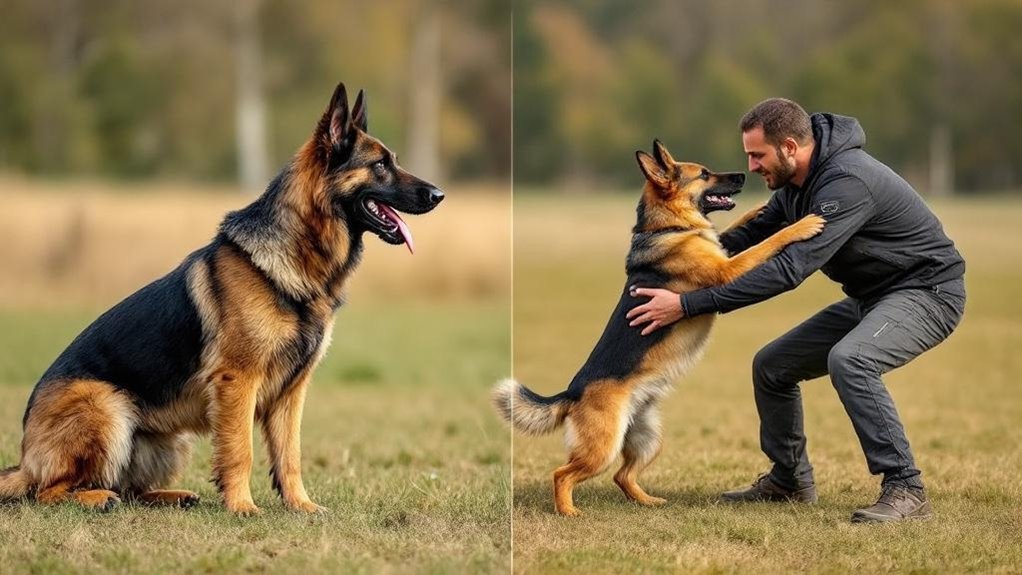
If you compare working line and show line German Shepherd training, you’ll notice the goal changes first. A working line dog needs structure, stamina, clear tasks, and steady control of drive. A show line often leans more toward looks, basic manners, and easier daily demands. That difference shapes your schedule, your training style, and even your breeder choice. The real question isn’t which line is better. It’s which one fits the life you can actually provide.
- Key Takeaways
- What Makes Working Line Training Different?
- Working Line vs Show Line Training Goals
- Drive and Nerve in Working Line GSDs
- Daily Energy Needs of a Working Line GSD
- How Show Line Training Usually Differs
- Core Obedience for Working Line GSDs
- Socialization Needs for Working Line GSDs
- Impulse Control for High-Drive Dogs
- Focus Training Under Distraction
- Exercise Needs Beyond Walks
- How to Mentally Challenge a Working Line GSD
- Getting Started With Scent Work
- Is Protection Training Necessary?
- How to Build Endurance Safely
- Working Line Puppy Training by Age
- Best Training Tools for Working Line GSDs
- Common Working Line Training Mistakes
- When a Show Line Is the Better Fit
- Is a Working Line German Shepherd Right for You?
- Choosing a Working Line Breeder
- How to Match Training Needs to Your Lifestyle
- Frequently Asked Questions
- Conclusion
Key Takeaways
- Working-line German Shepherd training prioritizes task performance, stamina, tracking, off-leash control, and sometimes protection, unlike show-line training focused on ring manners and appearance.
- Working lines usually need 90–120 minutes of hard exercise plus 30–60 minutes of mental work daily, far more than most show lines.
- High prey, play, and food drive require structured rewards, consistent leadership, and progressive challenges to prevent chasing, hyperactivity, or obsessive behavior.
- Socialization for working lines is calm, controlled exposure to people, animals, noise, and new places to build useful, stable responses under pressure.
- Protection training suits only some working-line dogs and should begin after solid obedience, maturity, qualified supervision, and consideration of local laws.
What Makes Working Line Training Different?
While show lines often train for looks and general obedience, working line German Shepherds train for hard daily jobs. You must plan for far more effort each day. A working line German shepherd needs one to two hours or more of hard exercise, like tracking, scentwork, bitework, or long runs.
Training also has to match the dog’s drive. You can’t repeat easy drills and expect focus. You need progressive challenges, clear structure, and steady leadership. Use rewards, but tie food or toys to the work so you build drive with control.
Start socialization early. Expose your dog to people, animals, noise, and new places in a calm, managed way.
You also need recovery days, fitness checks, cross-training, and joint support, because this dog is built to work hard daily. Consistent mental stimulation is just as important as physical exercise for preventing boredom and misbehavior.
Working Line vs Show Line Training Goals
Because the end goal is different, the training goal is different too. In Working Line VS Show programs, you train for very different results. With a working-line German Shepherd, you build task skills, strong obedience, and daily stamina. You may aim for long tracking sessions, clean off-leash control, and reliable protection work under distraction.
With a show line, you focus more on ring manners, gait, stance, and steady basic obedience. Fitness still matters, but the work is more controlled and less intense.
Socialization changes too. A working line needs structured exposure that supports useful responses in varied settings. A show line needs calm, friendly behavior around strangers and family.
Your time matters as well. Working goals often need hours each day. Show goals usually fit a moderate, steady schedule. Good daily exercise and a consistent routine help new owners avoid common training mistakes.
Drive and Nerve in Working Line GSDs
Training goals only make sense if you understand the dog that does the work. In a working-line GSD, drive and nerve shape every session. You’ll often see strong prey, play, and food drive. That motivation keeps a working dog engaged through hard tasks and long training.
Nerve matters just as much. You want a dog that stays clear-headed around noise, pressure, crowds, or threat. Good Czech, DDR, and West German working lines were bred for that steadiness.
High drive can look great, but you must direct it. Without structure, it can turn into chasing, frantic behavior, or obsessive play. Use tests like Schutzhund or IPO checks to judge courage, work willingness, and recovery after surprise. Then give consistent leadership, controlled excitement, and harder tasks over time. A solid safety plan also helps keep training structured and reduces risk when intensity runs high.
Daily Energy Needs of a Working Line GSD
Often, a working-line German Shepherd needs far more daily activity than a typical pet dog. You should plan 90 to 120 minutes of hard exercise each day, plus 30 to 60 minutes of mental work. That keeps your dog steady, focused, and easier to live with.
- Picture your dog sprinting after a ball, turning fast, and driving forward with purpose.
- See short obedience drills, scent games, and tracking that make your dog think and settle.
- Imagine a puppy getting 3 to 4 short sessions, not one long workout, to protect joints.
- Notice how scheduled working tasks each week meet deep instincts and reduce anxious, destructive habits.
Without daily outlets, your dog may become hyper, worried, or guard resources. A clear routine matters every single day. Budget-friendly DIY enrichment ideas like sniff games and food puzzles can also help keep boredom under control.
How Show Line Training Usually Differs
With a show-line German Shepherd, you’ll usually use a lower-drive approach and keep sessions short and reward-based.
You’ll spend more time on loose-leash walking, basic manners, and calm behavior around family, children, and strangers.
You should also focus on steady conditioning and safe movement, since these dogs often need less intense work and more joint care.
Use 5-minute sessions to keep attention sharp and prevent mental fatigue while building reliable habits.
Lower Drive Approach
Show-line German Shepherds usually need a lower-drive approach, so you focus more on basic obedience, leash manners, and steady socialization than on intense drive work.
With show line German shepherds, you keep sessions short, often five to fifteen minutes, so attention stays sharp without tipping into overstimulation. You use treats and praise to build willing responses. You don’t need constant toy drive or hard repetition.
- Picture a loose leash walk past strollers and parked bikes.
- Picture calm handling from friends, judges, and strangers.
- Picture a steady stack, still feet, and quiet focus.
- Picture an easy gait around a ring with relaxed movement.
That means your goals often center on rally, agility, or conformation skills. You shape calm cooperation first. You save pressure-based work for other types. Early training and structured socialization help keep a show-line German Shepherd confident, steady, and easy to work with.
Family-Focused Obedience
Usually, family-focused obedience works best for a show-line German Shepherd because you can keep training simple, calm, and regular.
Use 15 to 30 minute sessions twice daily. Teach sit, down, recall, and loose-leash walking. Reward with treats, praise, or toys.
| Focus | What you do |
|---|---|
| Time | Train twice daily |
| Skills | Practice basic commands |
| Method | Use positive rewards |
| Socializing | Include family life |
| Routine | Keep rules consistent |
Start socialization early. Let your dog meet children, visitors, and normal city sounds. Keep exposure going through the first year. That helps prevent fear and separation issues.
Set clear house rules. Have all family members use the same cues. Add scheduled walks and play. Try a class or agility fun-day sometimes. That keeps your dog responsive and helps stop destructive behavior.
A short daily session can also help your German Shepherd learn new behaviors like putting toys away efficiently.
Core Obedience for Working Line GSDs
Because working-line German Shepherds learn fast and have strong drive, you should start core obedience at 8 to 10 weeks old. Keep sessions short, just 5 to 10 minutes, three to five times a day. Teach sit, down, recall, and leash manners early so your working-line puppy learns clear rules.
Start obedience at 8 to 10 weeks with short, focused sessions so your working-line German Shepherd learns clear rules fast.
- Picture a quick sit at your feet before breakfast.
- See a fast recall across the yard with a tug reward.
- Imagine a calm wait at the doorway before a walk.
- Picture a steady down on a mat while you pause.
Use small treats, play, or tug, then fade rewards as responses improve. Add leave it, settle, and short duration work each week. By 12 to 16 weeks, proof commands in distractions and expect 80 to 90 percent reliability. To build sharper focus, add brain games like scent work, memory tasks, and puzzle games as your puppy progresses.
Socialization Needs for Working Line GSDs
Building confidence starts with early socialization. Start between 3 and 14 weeks, and keep going through adolescence. Your working-line German shepherd needs many safe, positive experiences to prevent fear and over-protectiveness later.
Show your pup people, calm dogs, animals, floors, sounds, traffic, and new places. Aim for 50 or more positive experiences by 16 weeks. Keep each session short, about 5 to 10 minutes, and repeat often. Use rewards and supervision so your dog learns safe boundaries with strangers and other dogs. This also supports good bite inhibition.
Don’t stop after puppyhood. Even a well-socialized working-line German shepherd needs regular refreshers in adulthood. Add weekly new experiences, enrichment, and steady obedience or work tasks. That helps reduce anxiety, territorial behavior, and destructive habits over time.
For leash-sensitive dogs, distance control and calm rewards can help keep training below threshold and build confidence safely.
Impulse Control for High-Drive Dogs
Socialization helps your working-line German shepherd stay steady around the world, but impulse control teaches your dog how to pause and choose the right response.
Start by 8 to 12 weeks. Keep sessions short, 5 to 15 minutes, 3 to 6 times each day. That structure helps your working line dog use drive well and avoids boredom-driven reactivity.
- Picture your dog waiting 10 to 60 seconds before a bowl or toy.
- Picture a calm “leave it” when movement sparks chase.
- Picture a sit-stay as you step farther away each rep.
- Picture soft, high-value treats arriving often, then on a variable schedule.
Use clear criteria and raise challenge in small steps. Practice with public, car, and dog distractions, with an experienced trainer when needed for safety.
Focus Training Under Distraction
Start focus training in a quiet spot so your working-line German shepherd can lock on to you before the world pulls at him. Keep sessions short, just 2 to 5 minutes. Add 1 to 2 minutes only when he stays with you.
Then bring in small distractions. Use toys, a person 10 to 15 feet away, or light traffic noise. Move up only after he gives you a focused look for 5 to 10 seconds in 8 or 9 of 10 tries. Use soft, high-value treats, much better than kibble. Reward every win at first. Later, reward at random every 3 to 5 good trials.
Practice from sit, down, and while you move 5 to 20 feet away. Train daily in short sets. Track mental and physical progress in a simple log.
Exercise Needs Beyond Walks
Often, a working-line German Shepherd needs far more than a daily walk to stay steady and manageable. Your working line dog usually needs 60 to 120 minutes of hard exercise beyond leash time.
A working-line German Shepherd often needs 60 to 120 minutes of real exertion beyond a simple daily walk.
- Picture fast sprints, hard fetch, or bike-joring that lets your dog drive forward and burn real energy.
- Add two or three weekly off-leash sessions with tracking, scent work, or protection drills for purposeful effort.
- Use short burst play several times a day, five to ten minutes of sprint and fetch, to match stop-start work.
- Include longer conditioning once or twice weekly, like hikes, swimming, or a light backpack, and build slowly.
You can also rotate agility, advanced obedience, or nosework for 30 to 60 minutes. Watch joints closely and reduce strain if movement gets stiff.
How to Mentally Challenge a Working Line GSD
You need to work your German Shepherd’s mind as hard as you work its body, and that starts with advanced obedience drills that make your dog think and respond with control.
You can add scent work games to use natural tracking skills and keep your dog focused for longer periods.
Then mix in problem-solving tasks so your dog stays challenged, avoids boredom, and learns to handle new demands.
Advanced Obedience Drills
Because working-line German Shepherds learn fast and look for patterns, advanced obedience should make them think, wait, and solve small problems. Use variable-reward obedience drills so your dog stays engaged. Reward every 3 to 7 good reps with a great treat or a quick tug game.
- Picture a steady sit-stay, first at 5 seconds and 5 feet, then longer and farther. Log each gain.
- See your dog hold position while soft noises start, then toys roll, then strangers and cars pass. Advance only at 90% success.
- Imagine a leave-it drill, from table scraps to rawhide to whole hotdog pieces. Raise difficulty after 8 of 10 correct.
- Picture three matching dumbbells, one set apart, and your dog selecting the right one, then returning it to hand.
Scent Work Games
Searching taps into what a working-line German Shepherd does best, and scent games give that drive a clear job. Your working line German shepherd can handle several 10 to 20 minute search sessions each day without losing interest.
Start simple. Hide one toy or treat in an easy spot and let your dog hunt. Then make searches harder with short delays, more hides, and higher placements. You can add formal nosework too, like birch odor, containers, vehicles, and rooms, but introduce each step slowly.
Use rewards your dog truly wants. Many working dogs need better pay than show lines, so mix treats, toys, and play. Don’t reward every find the same way.
Keep notes on finds, search time, and mistakes. When finds come faster than 60 to 90 seconds, raise the challenge.
Problem-Solving Tasks
While physical exercise matters, a working-line German Shepherd also needs 30 to 60 minutes of focused problem-solving work each day. You should use that time to challenge your working-line German shepherd with clear tasks that prevent boredom and destructive habits.
- Set up container searches or short tracking drills. Let your dog hunt with its nose, then build toward longer searches.
- Offer puzzle feeders or food toys with steps. Change difficulty often, but keep sessions to 10 to 15 minutes.
- Train impulse control. Picture your dog holding a wait, ignoring a tossed toy, then earning a delayed reward.
- Use structured sports like IGP obedience, bitework, scent protection, or advanced agility. These tasks sharpen decisions under distraction and turn drive into useful, measurable skill over time.
Getting Started With Scent Work
Start scent work with short, clear sessions so your working-line German Shepherd can lock in on the game without burning out. Keep early sessions to 5–10 minutes. Use a favorite toy or high-value treats. Say “Find it” each time. Place easy hides at nose level, like hallway corners or behind a chair. Reward the instant your dog notices the scent.
| Stage | What you do | What you see |
|---|---|---|
| 1 | Easy visible hide | Quick turn, enthusiastic nose |
| 2 | Add marker | Sit, bark, or touch |
| 3 | Harder hides | Slower, focused search |
| 4 | Outdoor variables | Steady work with control |
Build difficulty in order. Add distractors later. Move outside after about 80% indoor success. Cap beginners at 2–3 sessions daily. Use obedience resets and sniff breaks.
Is Protection Training Necessary?
Although protection training can suit some working-line German Shepherds, it isn’t a must for every dog. You may choose it because your dog has strong drive and clear guarding instincts. Still, protection training should wait until obedience is reliable and maturity is closer, often around 12 to 18 months.
Protection training fits some working-line German Shepherds, but only after solid obedience and more mature judgment.
- Picture your dog holding a calm sit while a helper moves nearby.
- Picture sharp eyes at the fence turning into controlled focus.
- Picture a busy sidewalk where poor instincts could become liability.
- Picture the same energy poured into tracking or scent work instead.
If you skip protection training, you still need structure. Without guidance, instincts can spill into overprotective or fear-based behavior. Use a qualified trainer, check local rules, and choose only if you have a clear purpose.
How to Build Endurance Safely
Good control matters here too, because endurance work should build your dog up, not wear growing joints down. Start with short daily walks, then add time slowly until your working-line German Shepherd can handle longer runs. Keep increases gradual so muscles, hips, and elbows adapt safely.
Use interval sessions three or four times a week. Try two to three minutes of brisk trotting, then one minute of walking, repeated for twenty to thirty minutes. Add swimming or controlled treadmill work two or three times weekly for low-impact stamina.
Later, use hills, resistance walks, or light pulling only with veterinary clearance, and raise the load by no more than ten percent each week. Watch breathing, appetite, gait, and soreness. Give one full rest day weekly and schedule joint checks.
Working Line Puppy Training by Age
Working line puppy training works best when you break it up by age, because your dog’s body and mind change fast in the first year.
German Shepherds are bred for drive, so you need short, clear sessions and steady social time.
- 8–12 weeks: Use 5–10 minute lessons. Teach name, crate, potty routine, sit, and leave-it. Let your puppy see new places, sounds, and people.
- 3–4 months: Train 10–15 minutes. Add loose-leash walking, recall with small distractions, bite control, and sit, down, stay basics.
- 5–6 months: Give 60–90 minutes of daily exercise. Build recalls and stays with more time and distance. Start simple scent work.
- 7–12 months: Add beginner working tasks, off-leash reliability, and harder mental games. Watch joint health and work with an experienced trainer.
Best Training Tools for Working Line GSDs
Because working line GSDs learn best when drive has a clear outlet, you need tools that give you control, clear timing, and safe ways to reward effort.
Use a high-drive tug toy, about 6 to 12 inches long, with reinforced stitching. It gives your dog a clear reward during bite work and obedience.
Pick a sturdy 6 to 8 foot leash with a martingale or front-clip harness for heel work and tracking. Skip retractable leashes. They reduce control.
Add a clicker or marker word and rotate high-value treats like boiled chicken or freeze-dried liver. This helps your working line dog learn harder tasks and stay focused longer.
For scent work and recall, use a 20 to 30 meter long line with tracking flags.
For protection sports, use sleeves or bite suits with certified trainers.
Common Working Line Training Mistakes
If you don’t keep a steady daily routine, your working-line German Shepherd will start making its own rules.
Short walks aren’t enough, because this dog needs hard exercise and mental jobs each day to stay settled.
When you add clear structure and regular brain work, you prevent many common behavior problems before they start.
Inconsistent Daily Structure
When your daily plan changes too much, your working-line German Shepherd can’t predict what comes next, and that often leads to more anxiety, hyperactivity, and slower progress.
Your dog does best when the day follows a steady pattern. Fixed exercise times, clear rules, regular meals, and planned cooldowns help your working-line partner stay balanced and ready to work.
- One day you give 15 minutes of activity, the next day two hours.
- Training starts at sunrise, then shifts to late evening without warning.
- Breakfast comes early, then late, and rewards change with no pattern.
- House rules stay loose one day, then strict the next.
That kind of change creates stress, weakens obedience, and raises injury risk.
Keep your schedule steady so your dog can settle, recover, and learn faster.
Insufficient Mental Stimulation
A steady schedule helps, but your working-line German Shepherd also needs hard mental work each day.
A working line dog often needs 2 to 4 hours of structured thinking work on top of exercise. If you skip tracking, scent games, protection drills, or advanced obedience, boredom can build fast. Then your dog may counter-surf, chew nonstop, or guard items.
Keep tasks progressive. If the work stays too easy, frustration grows within weeks. Don’t rely on the same basic obedience every day. Repetition without new challenges and varied rewards can lower drive or make a sensitive dog shut down.
Start early. From 12 to 18 weeks, pair socialization with clear problem-solving tasks. Nosework, search games, and bite work use natural drives. That steady challenge helps your dog stay calm, resilient, and focused on you.
When a Show Line Is the Better Fit
For many owners, a show-line German Shepherd is the better fit because it usually has lower energy and settles into family life more easily. If you want a dog for companionship, basic obedience, and moderate daily exercise, a show line German shepherd often matches your routine well.
A show-line German Shepherd often suits families best with calmer energy, steady companionship, and an easier everyday routine.
- You take a calm 30 to 60 minute walk after dinner.
- Your dog rests near the kids instead of pacing the house.
- You practice sit, stay, and leash manners in the yard.
- You schedule vet checks and support joints with smart food choices.
This type usually has a friendlier, easier temperament, so you won’t need advanced handling skills. Because of its build and higher dysplasia risk, you should favor controlled activity over heavy impact work or hard endurance training.
Is a Working Line German Shepherd Right for You?
You need to match your lifestyle to a working line German Shepherd’s high energy and daily need for hard exercise and structured work.
You also need the skill and time to give firm training, clear rules, and steady mental work for years.
If you want an easier family dog, a show-line German Shepherd may fit you better.
Lifestyle And Activity
Often, a working-line German Shepherd fits best with people who live an active, structured life and can give it 2 to 3 hours of hard exercise each day plus steady mental work.
You should picture a dog that needs a real outlet, not a short walk.
- A morning run, then obedience drills in the yard
- A scent trail through grass, woods, or fields
- A sport session with jumps, tracking, or controlled bite work
- An evening puzzle game before it settles indoors
Working-line dogs do best when you give them jobs like tracking or sport work. Without that, boredom and anxiety can build fast.
Apartment life or a quiet routine usually won’t fit.
Check the bloodline too. Czech and DDR dogs often need more work than many West German working lines.
Experience And Commitment
If you’re thinking about a working-line German Shepherd, be honest about your skill, time, and long-term commitment.
These dogs require daily exercise and hard mental work, often 1.5 to 3 or more hours. Walks alone won’t meet that need. You must give clear leadership, steady rules, and advanced training. Their drives are strong, and they learn fast.
You also need to commit for 10 to 14 years. Socialization starts early, from 3 to 16 weeks, and it must continue as your dog grows. Plan for sports, scent work, service tasks, or professional classes.
Before you bring one home, check your schedule, space, budget, and access to good trainers. Choose a breeder or rescue that tests temperament and matches dogs with owners who can handle the work well.
Choosing a Working Line Breeder
A good breeder sets the tone for the dog you bring home. Choose a working-line breeder who proves quality with records, testing, and openness.
- Ask to see pedigree papers showing Czech, West German, or DDR lines, plus OFA/ED or European hip and elbow clearances.
- Request temperament notes on each pup. Look for drive, trainability, and early exposure to sound, people, and handling.
- Check the parents’ work history. Ask for IGP titles, service placements, SAR certifications, and recent videos in action.
- Read the contract closely. You want a health guarantee, return clause, and lifetime support or training referrals.
Visit the kennel if you can. Watch how the dogs move, rest, and greet people.
Skip breeders who hide conditions or show fearful dogs.
How to Match Training Needs to Your Lifestyle
Start by looking at how much time you can give each day, because a working-line German Shepherd needs more exercise and training than most dogs.
If you’re active, you can match that high energy level, but if you’re new to the breed or have a busy family life, you’ll likely do better with a calmer line and a simpler routine.
You should also choose the level of training commitment you can keep, whether that’s basic obedience and social time each week or professional work for protection, tracking, or service tasks.
Assess Daily Time
Looking at your daily schedule first will save you trouble later.
A Working-line German Shepherd needs steady daily effort. Most adults need 2–3 hours of exercise and 30–60 minutes of training or mental work.
If you want sport or protection work, set aside 4–6 sessions each week, 45–90 minutes each, plus short drills every day.
Picture your week and count real minutes:
- Morning walk, leash in hand, 45 minutes before work.
- Midday play or a sitter visit when the house is quiet.
- Evening training, focused and structured, 30–60 minutes.
- Weekend field session, longer and planned, for sport goals.
Track two full weeks. Log walks, play, training, and enrichment.
If you can’t reach 90 active minutes daily, get support or reconsider this breed fit.
Match Energy Levels
Often, the best match comes from pairing the dog’s drive with the life you can repeat every day. A working-line German Shepherd usually needs 1.5 to 3 or more hours of exercise each day to stay settled and avoid destructive habits.
Plan for at least two daily sessions. Give 30 to 60 minutes of hard movement, like running or fetch, plus 20 to 40 minutes of obedience or drive work. If you’re active, add task-based outlets like tracking, agility, search work, or protection sports three to five times each week.
If your routine is lighter, a lower-drive dog may fit better. You can also use a dog walker, classes, or pro help. Keep sessions varied. Mix hard days with easier brain games.
Balanced rest and proper food support strong performance and long-term health.
Choose Training Commitment
Commitment matters more than good intentions when you choose a working-line German Shepherd.
You need 1.5 to 3 or more hours each day for exercise and training. That means more than a walk. Your dog needs structure, effort, and a real job.
- Dawn obedience drills in a quiet field
- Midday scent work through grass and leaves
- Evening runs, hikes, or sport practice
- Night problem-solving games at home
Plan for 30 to 60 minutes of mental work daily. Think agility, tracking, or advanced obedience.
If you want the breed’s full potential, you’ll likely need skilled coaching or sport training like IGP.
If your schedule can’t support that pace, choose a lower-drive line, or adopt a working-line only with trainer help and a long-term plan.
Frequently Asked Questions
Are Working Line German Shepherds Hard to Train?
They aren’t hard to train if you’ve got experience and consistency. You’ll find them highly intelligent and keen, but their drive demands firm structure, daily work, and mental challenges; otherwise, they’ll get bored, anxious, or destructive.
What Are the Different German Shepherd Working Lines?
Three main working lines exist: Czech, West German, and DDR/East German. Like choosing hiking boots, you’ll feel each line differently—Czech drives hard, West German stays balanced, and DDR brings power, size, and endurance for demanding work.
How Can I Differentiate My German Shepherd Working or Showline?
You can differentiate your German Shepherd by checking topline, hind angulation, drive, coat color, pedigree, and durability. If your dog’s straighter-backed, high-drive, sable, and Czech/DDR bred, it’s likely working-line; sloped, calmer dogs are usually showline.
Are Working Line German Shepherds More Protective?
Yes—they’re usually more protective. You’ll see stronger vigilance, quicker alertness, and firmer defensive instincts because breeders selected them for demanding work. With solid training, you can channel that protectiveness; without it, you may trigger overreactions.
Conclusion
A working line German Shepherd is like a live wire in your hands. If you give it clear work, steady rules, and daily outlets, it can become a strong and reliable partner. If you need a calmer path, a show line may fit your home better. Choose the dog that matches your time, skill, and goals. When the fit is right, training stops feeling like a storm and starts working like a compass each day.