
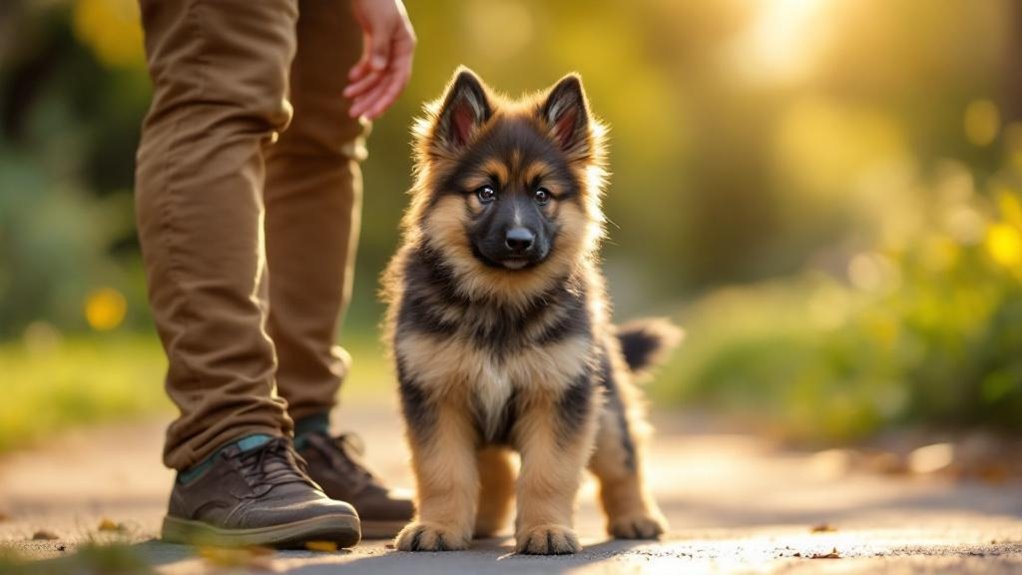
Your German Shepherd puppy has a short socialization window, and what you do now can shape how your dog handles the world for years. You need to start early, keep each experience calm and positive, and watch your puppy’s stress signs closely. The goal isn’t to do more, it’s to do the right things at the right pace. A few smart steps in these first weeks can prevent big problems later.
- Key Takeaways
- What Is the GSD Socialization Window?
- Why Early Socialization Matters
- What to Expose Your Puppy to First
- Use Treats to Build Positive Associations
- Socialize Your GSD Puppy to People
- Introduce Sounds Without Fear
- Practice Walking on New Surfaces
- Take Safe Trips to New Places
- Start Grooming Handling Early
- How to Safely Socialize With Other Dogs
- How to Socialize Before Full Vaccination
- Watch for Stress During Socialization
- Avoid Common GSD Socialization Mistakes
- Follow a Weekly Socialization Plan
- Keep Socialization Going After 16 Weeks
- Frequently Asked Questions
- Conclusion
Key Takeaways
- German Shepherd puppies should be socialized mainly between 3–16 weeks, with the most important exposure window around 8–12 weeks.
- Start with brief, positive experiences at home, then add carried outings, new places, people, sounds, and surfaces before 16 weeks.
- Keep sessions short and repeat them 2–4 times weekly, pairing every new sight, sound, or texture with treats or meals.
- Before full vaccination, use safe exposure methods like carrying your puppy, inviting calm visitors, and asking your vet about puppy classes.
- Continue socialization after 16 weeks with regular practice around people, dogs, noises, grooming, car rides, and basic cues.
What Is the GSD Socialization Window?
While your German Shepherd is still very young, there’s a short window when socialization matters most.
The earliest weeks of your German Shepherd’s life are the most important for healthy socialization.
For a German Shepherd puppy, the main socialization window runs from 3–14 weeks. It starts as the senses develop around three weeks. It’s most sensitive from about 8 to 12 weeks, when your pup accepts new things more easily.
This period doesn’t last long. By 12 to 16 weeks, it starts closing, and fear responses become harder to change.
That’s why breeders should start early, and you should continue right away when your puppy comes home. Focus on positive exposures during daily life.
Because vaccines overlap with this stage, use safe options. Carry your puppy in public, invite calm visitors over, and ask your vet about puppy classes after one vaccine dose. Early socialization timing can help prevent common new-owner mistakes by making this window a priority from day one.
Why Early Socialization Matters
Because this stage is short, early socialization has a big effect on how your German Shepherd sees the world. During the critical socialization period from 3–16 weeks, your puppy’s brain is ready to learn what feels safe and normal.
If puppy socialization is delayed, small surprises can turn into lasting fear. That’s why brief, varied, positive experiences matter so much. When you pair new sights, sounds, surfaces, handling, and car rides with treats or meals, you build positive associations. Those lessons help your puppy stay calmer during fear periods and recover faster from stress.
Start when your puppy comes home and keep it controlled and safe. Use your vet’s vaccine plan. Good early socialization supports confidence, sociability, and steadier training later. It also makes daily care easier for you both. Early socialization window experiences help shape how your puppy responds to people, animals, sounds, and new environments.
What to Expose Your Puppy to First
Start at home and keep the first exposures simple, brief, and positive. Begin puppy socialization by 8 weeks if you can. Let your puppy walk on different surfaces like tile, hardwood, carpet, gravel, grass, and metal grates. Add everyday sounds at low volume, such as the vacuum, blender, doorbell, trash truck, and lawn mower.
Next, introduce calm people in small numbers. Aim for many types of people over time, including men, women, children, and people wearing hats, glasses, uniforms, or using mobility aids. Keep each meeting short and easy.
Then set up careful visits with gentle, healthy vaccinated dogs that have good manners. Avoid rough play and unknown dogs. Before full shots, use car rides, carried outings, allowed pet-store visits, and private puppy classes to add new sights and smells. Keep new experiences below your puppy’s threshold level so they stay relaxed and confident.
Use Treats to Build Positive Associations
Often, treats are the fastest way to help your German Shepherd puppy feel safe with new things.
Treats are often the quickest way to help your German Shepherd puppy feel safe with something new.
During the socialization window, especially around 10–12 weeks, pair new places, surfaces, and sounds with high-value rewards like freeze-dried liver or plain cooked chicken. Keep a treat pouch on you so you can reward fast and often.
Use tiny pea-sized pieces and keep treats under about 10% of your puppy’s daily food.
For noises or anything that worries your puppy, use counter-conditioning. Start farther away. Feed treats every 3–5 seconds while your puppy stays calm. If your puppy looks unsure, increase distance and reward even a brief glance toward the thing. Give treats before, during, and after exposure. Don’t force it.
A nose-work game can also help build focus and confidence while your puppy learns to search for treats or toys.
Aim for 2–4 short outings each week too.
Socialize Your GSD Puppy to People
Start early and help your GSD puppy meet many different people, with each meeting kept short, calm, and positive.
Use treats and gentle handling so your puppy learns that strangers are safe and predictable.
Watch your puppy’s body language, keep early greetings simple, and build up slowly as your puppy gains confidence.
Consistent early socialization helps prevent later reactivity and builds a calmer, more confident German Shepherd.
Meet Many People
Set out to help your German Shepherd puppy meet many kinds of people while the socialization window is still open, with a goal of about 100 different people by 12 to 16 weeks. During this socialization period, let your puppy meet new people of many ages, sizes, and backgrounds.
Include children, teens, adults, and older people. Add hats, sunglasses, beards, uniforms, wheelchairs, and strollers. Start with one or two people in a calm place. Keep each meeting short. If your puppy seems unsure, stop and give space.
As your puppy gets confident, add new places, louder voices, and gentle handling. German Shepherds learn fast during this critical window, so steady practice matters. Track each meeting with a checklist or photos. If fear or aggression keeps showing up, contact a qualified trainer right away. Positive reinforcement helps your puppy associate new experiences with good outcomes.
Positive Stranger Associations
Early on, teach your German Shepherd puppy that strangers predict good things. During the key socialization window, keep meetings brief and upbeat. Start at home or on carried outings before vaccines are finished. Use distance, calm body language, and high-value treats. Let your puppy choose to look, sniff, or approach.
Build positive associations with many kinds of strangers. Include kids, men, women, seniors, people of different ethnicities, and people wearing hats, glasses, or uniforms. Reward calm interest right away. Keep early meetings to one or two people and only for seconds or a couple minutes.
If your puppy looks worried, increase distance and pair the stranger with treats. Ask your breeder or trainer for trusted people to help. Track socialization with a simple checklist or photos weekly.
For safe progress, use a long-line during early outings so your puppy can explore while staying under control.
Gentle Handling Practice
Strangers shouldn’t be the only people your German Shepherd puppy learns to trust.
Start gentle handling the day your puppy comes home. Touch paws, ears, mouth, tail, and lift each leg for one to two minutes several times a day. Keep sessions short, about 30 to 60 seconds, and use freeze-dried liver or tiny chicken bits to build positive associations.
Practice mock vet checks by pressing paws, opening the mouth, and rubbing ears and belly. For nail trims, touch the clipper to one nail, reward, then clip one nail and stop. Build slowly.
Let calm men, women, children, and people with hats, glasses, or mobility aids handle your puppy one or two at a time. During the 8–16 weeks window, watch for stress signs and ease up.
Keep these early experiences calm and controlled, since slow socialization helps prevent fear-based reactions later on.
Introduce Sounds Without Fear
While your German Shepherd puppy is still young, teach sounds in a way that feels safe and clear. Start counter-conditioning with soft recordings of a vacuum, blender, or doorbell from across the room. Give high-value treats as the sound plays. Raise volume slowly over days, especially before the critical first year brings stronger habits.
For sirens, thunder, or fireworks, begin at barely audible levels during meals or play. Increase only when your puppy stays loose and calm. Use small 5 to 10 percent steps.
Introduce noisy tools like a hairdryer or mower from a safe distance. Reward calm behavior and end sessions early.
During fear periods, lower the sound and pair it with treats or toys. Repeat easy sound practice each week to help prevent noise reactivity later.
Keep each practice session to five minutes to prevent mental fatigue and help new sound exposures stick better.
Practice Walking on New Surfaces
You can build surface confidence by letting your German Shepherd puppy experience grass, gravel, tile, and other textures during the 8 to 16 week window.
Keep it safe by carrying your puppy over dirty ground if they aren’t fully vaccinated, and start with short, easy exposures.
Use treats to reward each step so your puppy learns that new surfaces are normal and safe.
Surface Confidence Building
Start surface work early, between 8 and 16 weeks, so your German Shepherd puppy learns that new footing is safe and normal. During this critical period, introduce your puppy to different surfaces and new sights in short, upbeat sessions.
Use gravel, asphalt, grass, tile, hardwood, and metal grates. Bring high-value treats in a pouch. Make a treat track and reward each steady step. Keep each session brief and easy.
If your puppy hesitates, start farther away. Feed treats and slowly move closer as comfort grows. Practice two to four times each week in different places, like park paths, porch steps, and curbs.
Also do simple care on varied surfaces. Try ear checks on tile or nail trims on a mat. Your puppy learns calm footing during daily handling too.
Safe Texture Exposure
Once your puppy accepts different footing, add safe texture exposure so walking on new surfaces feels normal too.
Start at 3 to 4 weeks with the breeder, then keep practicing from 8 to 16 weeks during the critical socialization window.
Introduce gravel, tile, hardwood, asphalt, grass, and metal grates in short sessions. Keep each one to 30 to 60 seconds. Repeat each surface 5 to 10 times on different days.
Pair each step with food to build positive associations. Use treats or a treat trail as your puppy walks.
If your puppy seems unsure, carry or support it first. Set it down when calm. Reward any forward movement.
Change the setting too. Try indoors and outdoors, wet and dry, shaded and sunny.
Watch for crouching, freezing, or a tucked tail. Back up and lower intensity if needed.
Reward-Based Exploration
Build confidence with reward-based exploration by letting your German Shepherd puppy try one new surface at a time during the 8 to 16 week socialization window.
Start with tile, hardwood, grass, asphalt, gravel, or metal grates. Keep sessions short, about 2 to 5 minutes, and repeat them a few times each day. Give tiny high-value treats for every step so your puppy builds positive associations with new surfaces.
If a surface is slippery or noisy, begin at a distance. Reward each look, lean, or small step forward. Then move closer as your puppy relaxes. If needed, place a towel or non-slip mat as a bridge and fade it out later.
Also vary footing in real walks. Move from grass to sidewalk to driveway. Aim for 2 to 4 new experiences each week.
Take Safe Trips to New Places
For safe trips, take your German Shepherd puppy to new places 2 to 4 times each week during the 8 to 16 week socialization window, and keep each outing short at about 5 to 20 minutes so they don’t get overwhelmed.
To socialize your puppy during 8–16 weeks, vary quiet streets, calm parks, parking lots, and pet-friendly stores. Before full vaccines, carry your puppy or use a secure carrier so they can safely notice sights and smells without touching the ground.
| Place | What you do |
|---|---|
| Quiet street | Watch bikes and people |
| Pet store | Sit near carts briefly |
| Parking lot | Hear engines, see motion |
Bring high-value treats. Pair sirens, trucks, or other sudden sounds with food at a safe distance. End on a good note and track each outing so you cover many settings.
Start Grooming Handling Early
Start grooming handling as soon as you bring your German Shepherd puppy home. Touch your puppy’s paws, ears, mouth, and tail every day, and keep it calm and brief so they learn handling is normal.
Show a soft brush, toothbrush, and nail tools with treats, and practice putting on and taking off the collar, leash, and muzzle in short, easy reps.
Positive Tool Associations
Often, the best time to create positive tool associations is the day your German Shepherd puppy comes home. Introduce grooming tools in short, calm moments. Let your puppy sniff a toothbrush, slicker brush, nail clippers, or towel, then give high-value treats right away. That timing helps create positive associations fast.
| Tool | Pairing |
|---|---|
| Brush | Sniff, treat |
| Clippers | See, treat |
Keep each session brief and predictable. Aim for 30 to 90 seconds and stop while your puppy stays relaxed. Reward within one second with praise and food.
If a sound seems scary, use counter-conditioning. Play clipper or dryer noise at very low volume during meals. Reward calm behavior, then slowly increase the sound over several days. End every session on a good note.
Gentle Daily Handling
Handling practice should begin the day your German Shepherd puppy comes home.
Use gentle handling every day for two to five minutes. Touch paws, ears, mouth, tail, and lift each leg. Keep sessions calm and brief so your puppy learns to accept care.
Start introducing grooming tools with treats. Let your puppy sniff a brush, then brush for 30 to 60 seconds while feeding rewards. Press each paw pad and tap the nails a few times daily. This helps later nail trims stay calm.
Practice simple vet visits handling too. Open the mouth, lift the lips, and hold the head gently for a moment. Add a wet towel and low dryer sound from far away. Pair all of this with praise, treats, and even crate training breaks.
How to Safely Socialize With Other Dogs
Because early dog meetings shape your puppy’s habits, keep them controlled and simple.
Start early socialization with the mother and littermates, then add one calm vaccinated adult dog that models good play and fair limits.
- Use controlled private playdates with one trusted, non-reactive dog at a time.
- Meet in a neutral, fenced area and keep sessions short, calm, and positive.
- Use treats to reward relaxed greetings, pauses, and polite play.
- Watch for healthy canine signals like play bows, loose bodies, and lip-licks.
Step in fast if you see stiffness, pinned ears, hard stares, or repeated mounting.
End the session before your puppy gets overwhelmed.
If fear shows up, pause dog meetings and rebuild slowly with a qualified trainer or behaviorist guiding the plan carefully.
How to Socialize Before Full Vaccination
Before your German Shepherd puppy is fully vaccinated, you can still build safe public exposure by carrying them or using a carrier on short outings and car rides.
You can also set up small playdates with vaccinated puppies or calm, fully vaccinated adult dogs in a clean, controlled space.
These early experiences help your puppy learn the world feels normal and safe without adding avoidable health risks.
Safe Public Exposure
Even while your German Shepherd puppy is still finishing vaccines, you can start safe public exposure at 7 to 8 weeks by carrying your pup or using a stroller so they can take in new sights, sounds, and smells without touching risky ground.
- Carry the puppy through sidewalks, store entrances, and calm patios.
- Take short frequent outings to 2 to 4 new places each week.
- Use treats and praise so new sounds and people feel safe.
- Avoid off-leash parks and ask your vet about local disease risk.
You can join puppy class after one DHPP shot, deworming, and seven days of protection if the class checks vaccines.
Skip busy dog areas until final boosters. Save private controlled playdates for known, healthy, vaccinated adult dogs at home.
Controlled Puppy Playdates
Start with small, controlled puppy playdates at home or in a private yard so your German Shepherd puppy can learn social skills without taking on the risk of busy public dog spaces.
Invite only one or two vaccinated, well-socialized adult dogs and one or two calm puppies. This limits stress and lowers exposure. Always require all playdate dogs to be current on vaccines and parasite prevention. Ask owners about illness and aggression before contact.
Keep play sessions short, about 10 to 20 minutes. Watch closely. Give breaks, water, and toys. Use treats and calm praise to reward good choices and soften startle moments.
End on a good note and track what your puppy handled well.
If you visit public areas, carry or place your puppy on a clean blanket.
Carrying And Car Rides
While your German Shepherd puppy is still finishing vaccines, you can safely build social skills by carrying them to new places like parks, pet stores, and friends’ homes so they take in sights, sounds, and smells without touching public ground.
Aim to carry them to new locations 2–4 times each week. Keep trips short at first.
- Start with 5–10 minute car rides.
- Pair every car ride with treats or a favorite toy.
- Use a secure carrier or seatbelt harness, keep windows closed, and play soft music.
- Bring a blanket from home and avoid unknown dogs.
When you bring your puppy home, practice calm handling, leash skills, and simple cues while you hold them.
Stop for brief breaks if they look uneasy or sick. This builds travel confidence safely.
Watch for Stress During Socialization
Watching your puppy’s body language helps you keep socialization safe and useful. You need to watch for stress during socialization so each new experience stays positive. Common signs of stress include a tucked tail, flattened ears, yawning, lip-licking, crouching, trembling, or hiding. If you see them, take a break.
Keep sessions short, just a few minutes, and limit new places to two to four each week. When you introduce sounds or surfaces, start far enough away that your puppy stays relaxed and keeps taking treats.
If your puppy freezes, snaps, or tries hard to escape, leave right away. Then use counter-conditioning from a greater distance with high-value treats. Keep notes on triggers, distance, rewards, and outcomes so you can adjust future sessions and track progress well.
Avoid Common GSD Socialization Mistakes
Once you know how to spot stress, you also need to avoid the common socialization mistakes that set a German Shepherd puppy back.
- Don’t flood your pup. During the critical window, keep new things simple. Choose one or two people, or one new sight or sound at a time.
- Don’t skip dog lessons. Safe time with calm, vaccinated adult dogs and healthy littermates helps your puppy’s socialization and teaches bite control and play signals.
- Don’t force greetings or use chaotic dog parks. Bad scares can stick and lead to fear or reactivity later.
- Don’t forget noise desensitization. Pair vacuums, mowers, and sirens with treats from a distance.
Also, don’t wait until shots are done. Use safe rides, carrying, puppy parties, and private playdates for varied exposure.
Follow a Weekly Socialization Plan
Build a simple weekly plan and stick to it. During the key weeks of age, aim for two to four new experiences each week. Use Intentional socialization to cover people, sounds, surfaces, and places. This helps your puppy’s brain build safe patterns early.
Make a simple weekly plan: two to four new experiences that build safe, confident patterns early.
At 8 to 9 weeks, focus on home sounds and short carried outings. At 10 to 12 weeks, add calm adults, gentle kids, and brief ground exploration. At 13 to 16 weeks, practice in busier places from a safe distance.
Keep each session short, about three to ten minutes. Use treats and play around traffic, sirens, or the vacuum. If your puppy worries, move farther away and try again.
Plan weekly dog meetings too. Choose steady adult dogs and brief Puppy Playdates. Keep a log.
Keep Socialization Going After 16 Weeks
Your weekly plan doesn’t stop at 16 weeks. Keep socialization active several times each week so your German Shepherd stays confident in new people, places, sounds, and surfaces.
- Set up short visits with unfamiliar vaccinated dogs and calm adult mentor dogs.
- Practice handling often. Touch paws, ears, mouth, and teeth. Add easy nail trim and grooming work.
- Train recall, leave-it, and sit-stay around more distractions so skills hold up in busy places.
- Watch for new fear or reactivity. If you see it, start counter-conditioning, gradual desensitization, or get help from a qualified trainer.
This matters because your dog keeps changing after 16 weeks. Good habits need refreshers.
Keep sessions short and controlled. That helps early learning carry into adulthood, through the slower maturing years.
Frequently Asked Questions
How Much Sleep Does a German Shepherd Puppy Need During Socialization?
You’ll need to give your German Shepherd puppy about 18 to 20 hours of sleep daily during socialization. Keep naps frequent, protect quiet time, and balance new experiences with rest so you don’t overwhelm them.
When Should I Start Crate Training My German Shepherd Puppy?
Start crate training your German Shepherd puppy the day you bring them home, usually around eight weeks old. You’ll build comfort faster with short, positive sessions, treats, and consistency, so they feel safe, relaxed, and secure.
What Toys Are Best for German Shepherd Puppy Teething?
Need relief for your teething puppy? Choose durable rubber chew toys, frozen Kongs, rope toys, and puppy-safe nylon bones. You’ll soothe sore gums, satisfy chewing urges, and protect your furniture. Rotate toys often to keep interest.
How Often Should I Feed a German Shepherd Puppy Each Day?
Feed your German Shepherd puppy three to four times daily until six months old, then reduce to two meals. You’ll support steady growth, easier digestion, and stable energy by serving measured portions on a consistent schedule.
When Should My German Shepherd Puppy Begin Basic Obedience Training?
Start basic obedience training at 8 weeks old—short sessions, big results. You’ll build focus before bad habits grow. Keep lessons simple, positive, and daily, and you’ll strengthen trust, confidence, and responsiveness as your puppy matures.
Conclusion
Your German Shepherd puppy’s socialization period won’t last long, so use it well. Keep each new experience calm, safe, and rewarding. Let your puppy move at a steady pace, and watch body language closely. Don’t push too fast, because that can backfire. Instead, stack the deck with treats, gentle handling, and short outings. Then keep going after 16 weeks. When you stay consistent, you help your puppy grow into a confident, steady dog for life.