
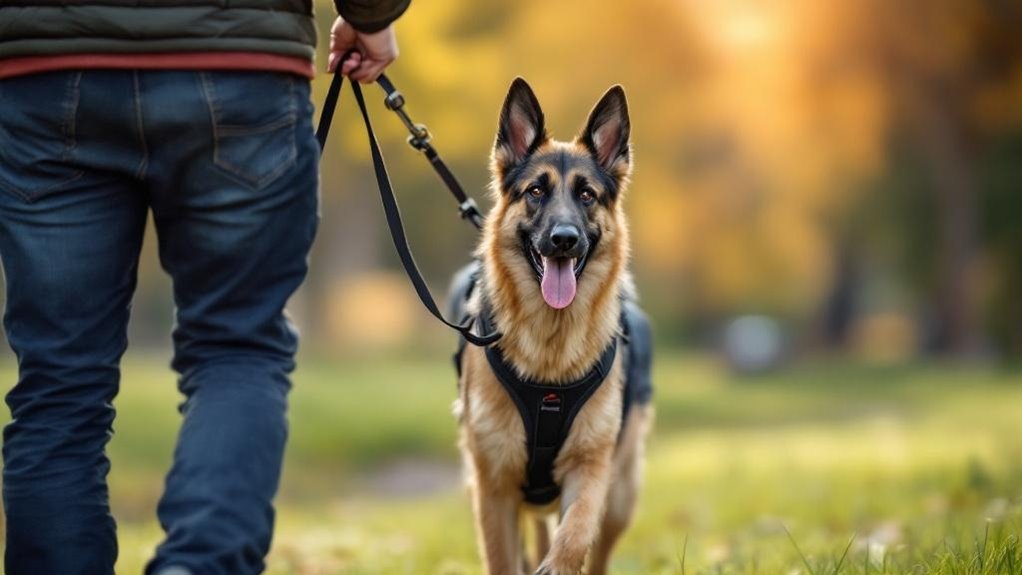
About 70% of dog owners say pulling is one of the hardest parts of walking, and with a strong German Shepherd, it gets harder fast. You can fix it, but you need a clear plan and calm, steady practice. The right gear helps. Your timing matters more. Once you see why your dog pulls and how to start at the right distance, the next steps get much easier.
- Key Takeaways
- Understand Why Your German Shepherd Pulls
- Choose the Right Leash Training Gear
- Set a Calm Pre-Walk Routine
- Start Leash Training Indoors
- Pick a Quiet Place to Practice
- Teach Your German Shepherd to Sit
- Teach “This Way” Before Walks
- Reward Good Leash Manners Early
- Keep Training Sessions Short
- Stop Every Time Your Dog Pulls
- Wait for a Loose Leash
- Use the Passive Method on Walks
- Practice the Zig-Zag Method
- Reward Calm Behavior Around Distractions
- Find Your Dog’s Trigger Distance
- Manage Leash Reactivity Without Punishment
- Use Sniffing and Greetings as Rewards
- Stay Consistent on Every Walk
- Avoid Common Leash Training Mistakes
- Add Distance and Distractions Gradually
- Know When to Get Professional Help
- Frequently Asked Questions
- Conclusion
Key Takeaways
- Identify your German Shepherd’s pulling triggers and threshold distance, then begin training at two to three times that distance.
- Use a snug front-clip harness with a 4–6 foot flat leash, and avoid retractable leads for safer control.
- Start each walk calmly with a brief sit, name-response practice, and leash attachment only when the leash stays loose.
- Reward loose-leash walking every few steps, and stop moving or step back for a sit whenever tension appears.
- Teach “This way!” with wide zig-zag turns in quiet spaces first, then gradually add distractions over time.
Understand Why Your German Shepherd Pulls
Start by looking at what drives the pulling. Your German Shepherd isn’t trying to defy you. This breed has strong scenting and herding instincts, so your dog wants to move toward smells, motion, and change.
Pulling often starts with emotion. Your dog may feel excited, frustrated, worried, or overstimulated when the leash blocks access or escape. That reaction can happen fast around other dogs, people, squirrels, cars, or new places.
Watch closely and note what sets your dog off most.
Then use that information in training. You can build better habits by rewarding loose walking, a sit, or your dog’s attention before the leash goes tight. Progress won’t be perfectly steady. That’s normal. Stay consistent and work at a distance where your dog can still think and respond.
German Shepherds also have high intelligence, which means they can quickly learn patterns and notice when training is inconsistent.
Choose the Right Leash Training Gear
Start with a front-clip or no-pull harness instead of a neck collar, because it spreads pressure across your German Shepherd’s body and helps protect the neck.
Pair it with a strong 4 to 6 foot flat leash, and skip retractable leads because they make pulling worse and give you less control.
Keep the harness snug, check that the hardware is strong, and carry small soft treats in a pouch so you can reward focus right away. Use reward timing to reinforce your dog the moment they choose to stay near your side.
Harness Over Collar
Choose a front-clip or no-pull chest harness instead of a neck-only collar when you leash train a German Shepherd. It spreads force across the chest and lowers pressure on the trachea and neck. That matters with a strong dog that can lunge or lean.
Pick a harness that sits high on the chest and doesn’t rub the armpits. Use adjustable straps for a snug fit. Measure your dog’s girth and neck before you buy one.
Clip a 4–6 foot flat leash to the front ring for better steering and clearer loose-leash walking. Skip choke, prong, and shock collars. They can raise stress and make reactivity worse.
Pair the harness with clear body guidance and Always Reward calm choices with treats or praise. Your dog learns pulling doesn’t move you forward. For leash-reactive dogs, distance and threshold work can also help them stay calm and learn safely.
Training Essentials
Once you’ve got the right harness on your German Shepherd, pair it with simple gear that gives you steady control and fast rewards.
Use a 4–6 foot flat leash that feels solid in your hand. Pick one about 15–20 mm wide. It gives you close control when your dog pulls and helps you guide calmly. Skip retractable leashes. They encourage lunging and make timing harder.
Keep pea-sized soft treats in a treat pouch where you can reach them fast. Reward eye contact, slack in the leash, and returns to heel right away. You can also use a clicker or say “Yes!” to mark the right moment before treating.
Check clips, rings, and stitching often. Replace frayed leashes and loose gear. Strong dogs can slip bad equipment and get hurt.
Practice recall training early so your dog learns to come back to you reliably when distractions appear.
Set a Calm Pre-Walk Routine
Start the walk with calm handling, because your German Shepherd will read your energy before you even clip on the leash.
Use a soft voice, move slowly, and have your dog sit still for 30 to 60 seconds before you attach the harness or collar.
That simple routine shows your dog that the walk starts only when they’re calm.
Keep the first few sessions to five minutes so your dog stays focused without mental fatigue.
Calm Handling First
Keeping the first minute quiet helps your German Shepherd settle before the walk even begins. Ask for a sit and wait 30 to 60 seconds before you clip on the collar or harness. Keep your hands slow and steady. Your dog reads your pace.
Stay consistent every time. Follow the same order: sit, calm petting, attach the leash, then a short focus game. Spend one to three minutes helping your dog pay attention with name response or a simple watch-me cue before you leave the yard.
Don’t head out until the leash hangs in a loose J-shape and your dog checks in briefly. If your dog lunges or strains, stop right away. Ask for a sit. Then start again only when the leash goes slack and your dog settles. During the critical 3-16 week window, positive, calm exposure can help a puppy build confidence before leash practice starts.
Relaxed Voice Cues
Often, your voice sets the mood before the walk even begins. Use a low, steady tone that sounds calm and slightly breathy. Your German Shepherd will give more attention when your words feel quiet and predictable.
Keep a short 2–3 minute routine. Move slowly as you attach the leash and speak softly. Avoid loud, fast, or high-pitched cues. Those sounds raise arousal and can trigger pulling.
A brief hand signal can help reinforce your stop cue before the walk gets underway.
| Cue | Picture |
|---|---|
| Soft “Let’s go” | A calm door opening |
| Slow hands | A leaf drifting down |
| Quiet praise | Warm morning light |
| Steady breath | Still water |
| Same words daily | A path your dog knows |
Match your voice with slow body language. No quick motions, no jerks. Use the same cue each time. Your dog learns the walk starts in control and stays loose.
Sit Before Leashing
Before you clip on the leash, ask your German Shepherd to sit and stay calm for 10 to 30 seconds while you speak in a low, relaxed tone. This sets a steady mood before the walk starts.
You should require a clear,reliable sit command. Practice it 10 to 20 times in quiet places and reward fast with high-value treats. Your dog learns that sitting calmly pays well.
Only attach the leash when your dog is seated and breathing evenly. If your dog pops up or fidgets, stay quiet and wait. Then clip the leash on.
Use this routine every time you head out. It teaches that walks begin from a calm state, not from excitement. Later, build the sit to 30 to 60 seconds and ask for brief eye contact too.
A consistent pre-walk routine helps prevent common new-owner mistakes by making calm behavior the default before exercise starts.
Start Leash Training Indoors
In a quiet indoor space, start leash training where your German Shepherd can focus on you and not on outside sights or sounds. Use your living room or another cleared area. Clip on a chest harness and a sturdy 4 to 6 foot leash.
Then stand still and stay quiet. Let the leash reach full length. This helps teach your dog that leash tension stops progress. The moment your dog looks at you or the leash loosens, mark it with a treat right away. Use high value treats and repeat this 10 to 20 times.
Next, walk a few steps and change direction. Say, “This way!” and reward your dog for following without pulling. Keep sessions short, about 5 to 10 minutes. End on success and build time slowly as your dog improves. Short daily sessions can also help your German Shepherd learn faster through steady repetition.
Pick a Quiet Place to Practice
Usually, your best next step is a quiet, low-traffic place where your German Shepherd can pay attention to you. A backyard or quiet park path works well. Aim for at least 400 square feet so you can do zig-zag drills. Fewer distractions make it easier for your dog to focus on the leash and your voice.
Start far from dogs, people, and cars. Move closer only when your dog stays attentive and walks on a loose leash at the current distance. Use a chest harness and a 4 to 6 foot leash for safe control and natural movement. Keep sessions short, about 5 to 15 minutes, and practice 2 to 4 times each day. Before you begin, have your dog sit calmly for collaring, then do a few name-response or watch me reps first.
Teach Your German Shepherd to Sit
Hold a treat at your German Shepherd’s nose, then lift it slowly so their head follows and their rear drops into a sit. The moment they sit, mark it with a click or a quick “Yes,” then reward right away so they stay calm in position.
Keep your body relaxed and guide with the treat, not your hands, so your dog learns the sit without stress.
Lure The Sit
Start by teaching sit with a simple lure in a calm space like your living room or a quiet yard. When training your dog, hold a high-value treat at your German Shepherd’s nose, move it slowly back over their head, and say “Sit.” As their head tips up, their hindquarters should lower. Mark that exact moment and give the treat.
| Step | What you do |
|---|---|
| Lure | Treat at nose, move back, say “Sit” |
| Timing | Mark the instant their rear hits the floor |
Keep sessions short, about 3 to 5 minutes, with 8 to 15 reps. Use the same cue every time. Reward each correct sit at first. Then fade treats to a 50/50 pattern. Add one to two seconds of stillness, then build toward ten seconds later.
Reward Calm Position
Now reward the sit only when your German Shepherd looks calm and settled. Use tiny soft treats and reward your dog the moment the rump stays down, the eyes look soft, and the body stops leaning forward. If your dog pants, whines, or looks tense, wait. No treat yet.
Practice in short sessions, five to ten minutes, three to five times a day. Build to eight or nine good sits out of ten before adding distractions.
- Picture a loose body, soft eyes, quiet mouth.
- Picture two seconds of eye contact before the leash clips on.
- Picture a trigger passing while your dog sits and calmly gets treats every few seconds.
On walks, step back, ask for sit, then reward your dog for staying still and relaxed.
Teach “This Way” Before Walks
Before you head outside, teach “This way!” indoors with high-value treats so your German Shepherd learns the cue in a calm setting. Start on a short, predictable path. Say the cue right before you turn so your dog begins to follow the words, not just your body.
Use a large room if you can. Make clear zig-zag turns and practice getting your dog to walk with you through each change. Keep the lead loose and your timing sharp.
Train in several 5 to 10 minute drills each day. End after a good turn and calm follow. After 1 or 2 weeks, add mild distractions. If your dog locks onto something, say “This way!” and turn at once. Then guide your dog back to your side and build calm attention outdoors.
Reward Good Leash Manners Early
Right away, reward loose-leash walking so your German Shepherd learns that staying by your side pays off. In dog training, use small, soft, smelly treats every 3 to 5 steps so your dog links position with reward fast.
- Picture your dog at your knee, leash slack, earning a quick bite.
- Picture a calm check-in, eyes meeting yours, followed by praise and a treat.
- Picture ten polite paces, then a sniff break or brief greeting.
Mark attention the instant it happens. Aim for 10 to 20 check-ins on each walk. Keep rewards consistent across people and places. Start where distractions are low. Then build toward common triggers.
Over 2 to 4 weeks, give treats less often, but make some rewards bigger so polite walking stays strong over time.
Keep Training Sessions Short
Often, shorter training sessions work better than one long walk. Your German Shepherd learns best in small bursts. Aim for 5–10 minutes for puppies and 10–20 minutes for adults. Repeat sessions 2–4 times each day to keep training your puppy without overload.
| Focus | Guideline |
|---|---|
| Puppies | 5–10 minutes |
| Adults | 10–20 minutes |
| Daily repeats | 2–4 sessions |
| Rewards | Give within 1–2 seconds |
Stop while your dog still feels engaged and is getting things right. That helps your dog look forward to the next session.
Keep treats ready and reward fast. Watch for heavy panting, a stiff body, or rising arousal. If you see those signs, end early or move farther from distractions. Short sessions protect focus and build steady loose-leash habits over time.
Stop Every Time Your Dog Pulls
Stopping the moment your German Shepherd pulls is one of the clearest ways to teach leash manners. The instant the leash tightens, plant your feet and say nothing. You must stop every time your dog pulls so your dog learns that pulling makes the walk freeze.
Use a chest harness to protect your dog’s neck during these stops.
- Picture the leash going tight like a tow rope.
- Picture yourself rooted like a tree on the sidewalk.
- Picture the leash softening into a relaxed J-shape.
The second your dog steps back, looks at you, or returns to your side, mark it with praise or a high-value treat.
Be consistent on every walk. If your dog keeps lunging at distractions, move farther away first, then practice again.
Wait for a Loose Leash
Before you take another step, wait for a loose leash. You want to see a soft J-shape before you move. If your German Shepherd tightens the leash, stop at once. Stay still and quiet. Don’t talk, tug, or step forward. When the leash relaxes and your dog checks in, mark that moment with a treat or toy, then continue.
This teaches a clear rule. Loose leash means progress. Tight leash means nothing happens. Be exact every time, on every walk, in every place. Don’t allow your dog to reach smells, people, or other dogs by pulling. Practice in short sessions first. Start where distractions are low. As your dog improves, work closer to triggers. Keep rewarding the slack leash so your dog offers it more often each day.
Use the Passive Method on Walks
Now put that same rule to work while you walk. Pick a familiar, quiet route. Use a chest harness and a standard leash. If your German Shepherd starts to pull, stop right away. Don’t jerk the leash. Just plant your feet and wait. When the leash hangs in a loose J, move again.
- Picture your leash hanging softly like a curved ribbon.
- Picture your dog glancing back, then stepping toward you.
- Picture both of you moving forward in a calm, steady line.
Mark that good choice fast. Give a high-value treat and quiet praise the moment your dog checks in or loosens the leash. This teaches your dog that pulling stops the walk without progress. Keep sessions short, about 5 to 15 minutes. If a trigger appears, add distance until focus returns.
Practice the Zig-Zag Method
Start in a large open space like a cleared room or backyard, and have your German Shepherd sit before you begin.
Then walk in clear zig-zag lines, change direction every few steps, and say “This way!” or “Come on!” as you turn. When your dog follows without pulling, give a treat and praise right away so your dog learns to stay with you.
Open Space Setup
For early zig-zag practice, pick a large quiet space of at least 400 square feet, like a backyard or cleared room, so your German Shepherd can focus without on-leash dogs or heavy foot traffic nearby.
Choose a large,quiet open space where your dog can move freely and stay under threshold. Clip on a chest harness and a 6 to 8 foot leash before you start. Keep high-value treats ready in one hand.
- Picture a fenced backyard with short grass and no passing dogs.
- Picture a cleared basement room with furniture pushed back and a wide path.
- Picture yourself walking a simple set pattern with room for broad turns.
Start with short sessions of 5 to 10 minutes. Practice 2 to 3 times a day. After 1 to 2 weeks, add brief attention checks.
Direction Changes And Rewards
Set off in a wide zig-zag across the open space, take 6 to 10 steps, then turn sharply and say “This way!” as you move. The moment your German Shepherd follows without pulling, mark it with praise and give a high-value treat right away.
Keep the pattern exaggerated so training your puppy stays clear and simple. Practice for 5 to 10 minutes per session, once or twice a day, for one to two weeks. If your dog lunges at a distraction, turn instantly and walk the other way. That shows pulling stops progress, while following you makes the walk continue.
When your dog follows well, ask for a calm sit and brief eye contact at each turn. Then reward and move on. Later, use fewer treats and add mild distractions slowly.
Reward Calm Behavior Around Distractions
Often, the moment your German Shepherd spots a dog, person, or squirrel, cue a calm sit or “watch me” and pay well for it. Use high-value treats fast, about one to two each second, while the distraction passes. You’re teaching that calm focus makes good things happen.
Keep sessions short and repeat often. Ten to twenty reps works well. Reward the instant your dog enjoys looking at you, holding a sit, or staying quiet. Add praise or a sniff break too.
- Picture your dog sitting still as a jogger moves by.
- Picture quick treats landing one after another.
- Picture loose shoulders and soft eyes instead of barking.
If your dog lunges or barks, move farther away until calm returns. Don’t punish. Then try again slowly and reward calm behavior.
Find Your Dog’s Trigger Distance
Watch your German Shepherd on several walks and note the distance where they first fixate, stiffen, bark, or lunge at dogs, people, or bikes.
Start training at two to three times that distance so your dog can stay calm and respond to cues.
Then move closer in small steps, and if they react, back up to the last calm distance and keep practicing there.
Identify Trigger Threshold
To find your dog’s trigger threshold, walk in a low-distraction area and move slowly toward a common trigger like another dog, a person, or a car until you first see more sniffing, a stiff body, or a hard stare.
That spot is your initial trigger threshold.
Measure it and write it down so you can repeat the setup each time.
- Count your paces, like 12 steady steps across a quiet path.
- Picture the space, maybe about 9 meters from a parked car or calm dog.
- Watch your dog’s body, loose tail and soft eyes mean you’re far enough to work.
Start training 2 to 3 meters beyond that line, where your dog stays calm and can respond.
Recheck the distance in busier places, wind, or evenings, since thresholds often change.
Increase Distance Gradually
Now use that threshold as your starting buffer and find the exact distance where your German Shepherd can notice a trigger without pulling, barking, or stiffening.
Note the range, like 20, 15, or 10 feet. That mark becomes your safe starting point.
Train there until your dog stays calm and can give you a watch me or sit.
Use the same route or setup, because predictable reps provide a means to measure progress clearly.
Move 2 to 4 feet closer only after 3 to 5 calm repeats.
If your dog pulls, lunges, or barks, back up at once until calm returns. Then reward.
Slow down your plan if needed, even by doubling the last successful distance.
Keep simple notes on date, distance, and calm reps.
Aim for small weekly gains, not fast jumps.
Manage Leash Reactivity Without Punishment
Because leash reactivity often comes from fear or frustration, your first job is to create enough space for your German Shepherd to stay calm and think. Distance means safety and control. Use a chest harness and a 4–6 foot leash, so you guide without choking.
Give your German Shepherd enough distance to stay calm, think clearly, and feel safe while you guide gently with a harness.
- Picture your dog spotting a trigger, then turning to your voice for a quick “watch me.”
- Picture you stepping in a soft zig-zag, creating space before tension builds.
- Picture barking starting, then fading as you retreat and feed calm, steady treats.
Don’t punish lunging or barking. Stop, move away, and wait for calm. Then work again at an easier distance. Keep sessions short. Practice several 5–10 minute exposures each walk. As your dog stays composed, decrease distance little by little.
Use Sniffing and Greetings as Rewards
Often, the best reward on a walk isn’t food. You can use sniffing and greetings as earned rewards. Let your German Shepherd walk on a loose leash for 3 to 5 minutes. Then give a 30 to 60 second sniff break.
Do the same with greetings. Before your dog meets a person or another dog, ask for a sit and 2 to 3 seconds of eye contact. Then allow a short, supervised greeting for 10 to 20 seconds.
Carry high-value treats too. If your dog notices a scent, person, or dog and stays calm, mark it and treat right away. Then release your dog to sniff or greet.
If your dog pulls, stop. Wait for the leash to soften and for a calm look or sit. Then allow the reward.
Stay Consistent on Every Walk
Rewards work best when your rules stay the same on every walk. Start with a calm routine: ask for a sit, speak softly, clip the harness on, and wait for focus before you head out. If the leash tightens, stop at once. Move again only when you see that loose J-shape. This teaches your German Shepherd that pulling never gets forward motion.
- Picture the leash hanging like a loose smile.
- Picture your dog checking in instead of trying to run around.
- Picture short walks that end before either of you gets frustrated.
Bring high-value treats and reward often, even every 3 to 5 steps at first. Keep sessions short but regular. If a trigger appears, back up until your dog can focus, then try again over the next several walks.
Avoid Common Leash Training Mistakes
While leash training takes patience, a few common mistakes can slow your German Shepherd’s progress. Don’t use choke or shock collars to stop pulling. They can hurt your dog’s neck and increase fear. Use a chest harness or front-clip harness instead.
Skip choke or shock collars—choose a chest or front-clip harness to protect your German Shepherd and reduce fear.
Be strict with the stop-and-wait rule. If the leash gets tight, stop at once. Move again only when the leash hangs loose in a J-shape or your dog checks back with you.
Also, avoid high-distraction exposure too soon. Work far enough away that your dog can still listen.
Don’t let pulling earn rewards. If your dog drags you toward grass, people, or toys, pause. Give access only when the leash stays loose.
Keep sessions short and frequent. Use high-value treats and calm praise to build steady habits.
Add Distance and Distractions Gradually
Now build on those habits by adding distance and distractions in small steps. Start where your German Shepherd notices a dog, person, or squirrel but stays under threshold. Watch for stiffening, hard staring, or sudden sniffing. Move on only when your dog can give you attention or hold a sit for 8 to 10 seconds.
- Picture a jogger far away, your dog glancing, then looking back for a treat.
- Picture a leashed dog across the street, while you feed steadily and keep walking.
- Picture a closer pass behind a parked car, calm body, loose leash, soft eyes.
To reduce the initial stimulus intensity by increasing physical distance, begin 20 to 50 feet away. Short sessions work best. If stress shows up, step back and repeat calmly.
Know When to Get Professional Help
If your German Shepherd keeps lunging, snapping, or acting more aggressive on leash after 4 to 6 weeks of steady home training, get professional help. Don’t wait for a bite or close call. Consult a certified force-free trainer or veterinary behaviorist.
Get help sooner if your dog freezes, trembles, pants hard, or tries to escape when triggers are still 20 to 30 feet away. That’s often fear, not stubbornness, and it usually needs careful desensitization and counterconditioning.
Reach out if walks feel unsafe. Maybe your dog pulls you over, breaks gear, or hurts you. A pro can suggest better equipment and safer handling.
See your vet first if the behavior is new or comes with pain, stiffness, or changes in sleep or appetite. Ask for a written plan with goals and safety steps.
Frequently Asked Questions
How to Train a German Shepherd to Not Pull on Leash?
Train your German Shepherd by stopping instantly whenever they pull, then move only when the leash slackens. Use a chest harness, reward walking beside you, change direction often, and practice short, calm sessions around distractions.
How to Train an Older Dog to Walk on a Leash Without Pulling?
You’ll transform walks overnight by using a front-clip harness, calm starts, and stopping whenever the leash tightens. Reward slack leash walking, change directions often, and create distance from distractions until your older dog refocuses calmly.
How Do I Teach My Dog to Walk Beside Me and Not Pull?
Teach your dog beside-walking by rewarding position at your side, stopping whenever they pull, and moving again only on a loose leash. Use short sessions, cue “watch me,” change direction often, and reward calm attention consistently.
What Are Common Mistakes When Leash Training a Puppy?
Common mistakes include expecting instant results, using painful gear, letting your puppy move while the leash stays tight, rewarding inconsistently, and training too close to distractions. You’ll progress faster with short, consistent sessions and clear rules.
Conclusion
Think of each walk as crossing a narrow bridge together. If you rush, the boards shake. If you stay calm, guide clearly, and reward each steady step, your German Shepherd learns to trust your lead. Small wins matter. Quiet practice matters. Consistency matters most. In time, the pulling fades and the path feels smooth. If the bridge still feels unsafe, ask a good trainer to walk beside you. That help can steady both of you.